An abstract representation of the European research ecosystem ©iStock
|
|
|
Fundamental research
and evaluation autonomy: the two pillars of the ERC model
|
|
|
How do we foster excellence in scientific research? How do we recognise a promising project? How do we identify which ideas are worth investing in? In Europe, without doubt, the public institution that has become a model in the independent identification and selection of projects and ideas worthy of funding, as they have the potential to produce frontier research and excellent results, is the European Research Council (ERC). Established by the European Commission in 2007, the ERC is today one of the main research funding instruments in Europe, with a budget of over €16 billion. In almost twenty years, it has funded more than 17,000 projects and 10,000 researchers, evaluating over 130,000 proposals. And ERC grantees have been awarded 15 Nobel Prizes, 7 Fields Medals, 11 Wolf Prizes and dozens of other major awards. A long track record of success, underpinned by an approach that is as simple as it is rigorous: scientific excellence as the sole selection criterion, and the objective of promoting research of the highest quality in Europe, without any thematic constraints or adherence to political or economic agendas. We asked Nicola Spaldin, Vice-President of the European Research Council and responsible for the Physical Sciences and Engineering domain, to guide us through this model, in order to better understand its challenges and achievements.
|
|
|
|
|
Interview with Nicola Spaldin, Vice-President of the European Research Council and responsible for the Physical sciences and Engineering domain
|
|
|
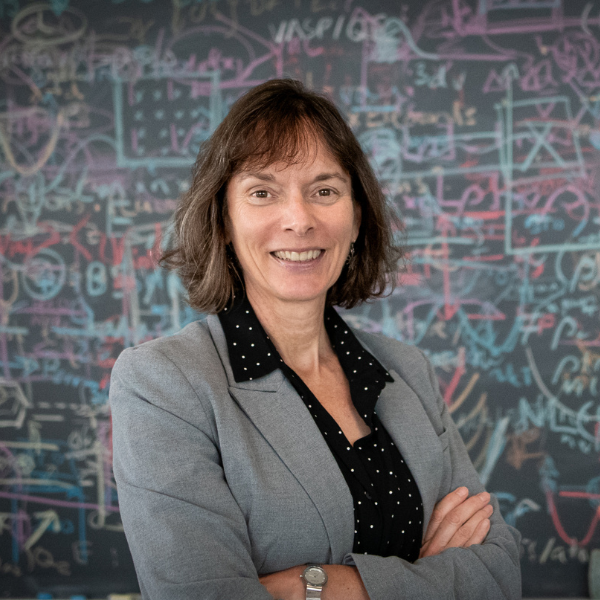
Nicola Spaldin is a member of the Scientific Council of the European Research Council and has been Vice-President for the Physical sciences and Engineering domain since January 2026. She is Professor of Materials Theory at ETH Zurich and, a passionate science educator, has won multiple ETH Golden Owl Awards for teaching excellence. She is a Fellow of the Royal Society, a Foreign Member of the National Academies of Science and Engineering (USA), the French Academy, the Austrian Academy and the Leopoldina, and has received numerous awards for her research.
|
|
What are the current strategic priorities of the European Research Council, and how do you see its role evolving in the coming years?
The European Research Council does not set a direction for research or define research priorities. We are a bottom-up organisation, and as such we aim to fund frontier research that comes directly from the community of researchers, without favouring “fashionable” or specific technology-oriented areas. We support science in the German sense of Wissenschaft, or knowledge, and in addition to the life sciences, physical sciences and engineering, the ERC supports research in the social sciences and humanities, again without setting priority directions. Naturally, as Horizon Europe draws to a close and the next EU framework programme for R&I is being defined, we have strategic objectives, aimed at defending researchers’ ability to pursue curiosity-driven frontier research, not targeted to predefined policy agendas.
|
|
|
|
|
|
MULTIDISCIPLINARY RESEARCH
|
|
|
|
|
|
|
Auditorium Parco della Musica, Rome
|
|
|
Auditorium Parco della Musica, Rome
|
|
Politecnico di Torino, Turin
|
|
|
Auditorium Parco della Musica, Rome
|
|
Auditorium Parco della Musica, Rome
|
|
|
Auditorium Parco della Musica, Rome
|
|
Auditorium Parco della Musica, Rome
|
|
|
|
|
Palazzo della Cultura, Catania
|
|
|
|
If you can't see the message below correctly, go here
If you receive this newsletter without subscribing, it means that you have been added to a list of recipients who may be interested, or you are an employee or affiliate of INFN.
If you no longer wish to receive this newsletter and are not an employee or affiliate of INFN, you can unsubscribe by sending an email to grafica@lists.infn.it.
Particle Chronicle © 2025 INFN
Newsletter Archive
EDITORIAL BOARD
Coordinator Martina Galli;
Project and contents Martina Bologna, Cecilia Collà Ruvolo, Eleonora Cossi,
Francesca Mazzotta, Antonella Varaschin;
Design and mailing coordinator Francesca Cuicchio; ICT service SSNN INFN
INFN - COMMUNICATIONS OFFICE - Piazza dei Caprettari, 70 - 00186 Roma
www.infn.it - news@lists.infn.it
|
|
|
|