Investing in Knowledge: policies, resources, and prospects for public research

31 March 2026

Scientific research is today one of the main drivers of a country’s growth and competitiveness. In a global landscape marked by rapid technological transformations and increasingly intense competition, including in the field of energy resources, investing in knowledge is no longer an option but a strategic choice that requires vision, continuity and planning capacity. It is through this that sustainable development, technological autonomy and the ability to address major contemporary challenges are achieved. Within this framework, fundamental research remains decisive: it is the ground where changes are anticipated and long-term innovations take shape, as demonstrated, for example, by the increasingly central, and at the same time energy-demanding,  role of artificial intelligence.

Italy’s strategy to support research is situated within this context and develops in close connection with the European framework, taking shape as part of an integrated ecosystem in which national and EU policies mutually reinforce one another. At its core lies a key principle: combining adequate resources with stable, multiannual and coherent planning. Continuity and predictability of funding are essential conditions for supporting complex scientific activities, attracting talent, developing major infrastructures and participating effectively in international networks and projects. In this context, the National Research Programme represents the main policy instrument, in line with the priorities of Horizon Europe and the objectives of the European Research Area.

The National Recovery and Resilience Plan (PNRR) has further strengthened this framework, acting as a bridge between national and European levels and mobilising unprecedented resources for research and innovation. The phase now opening, from the three-year research plan to the post-PNRR period, poses a crucial challenge: consolidating what has been launched, ensuring continuity of investment and strengthening the capacity of the research system, and of institutions such as the INFN, to plan, innovate and compete on an international scale.
 

MUR INITIATIVES

The year 2026 opened with the introduction of two significant measures by the Ministry of Universities and Research (MUR), marking an important development in the framework of funding allocated to public research bodies and universities, and therefore to the research system of our country. On the one hand, the new Three-Year Research Plan was approved; on the other, measures were adopted to ensure the continuity of projects and the stability of personnel involved in the National Recovery and Resilience Plan (PNRR). These provisions form part of a broader trajectory that has seen the strengthening of instruments supporting public fundamental research, including the introduction of a performance-based share of funding and the increase of the ordinary fund for research bodies (FOE). These measures directly involve the public research institutions supervised by the MUR and their personnel, including the National Institute for Nuclear Physics (INFN). Overall, the measures introduced outline an evolving framework aimed at making the research system more stable, predictable and integrated at both national and European levels. This analysis illustrates the main innovations introduced and their implications.

The Three-Year Research Plan 2026–2028

The most recent measure is the Three-Year Research Plan, adopted by decree signed on 24 February 2026 by the Minister of Universities and Research, Anna Maria Bernini, in implementation of the budget law. The Plan introduces a new model of planning and funding based on three key elements: a pre-defined timetable for calls, the establishment of a single fund, and three-year resource planning.

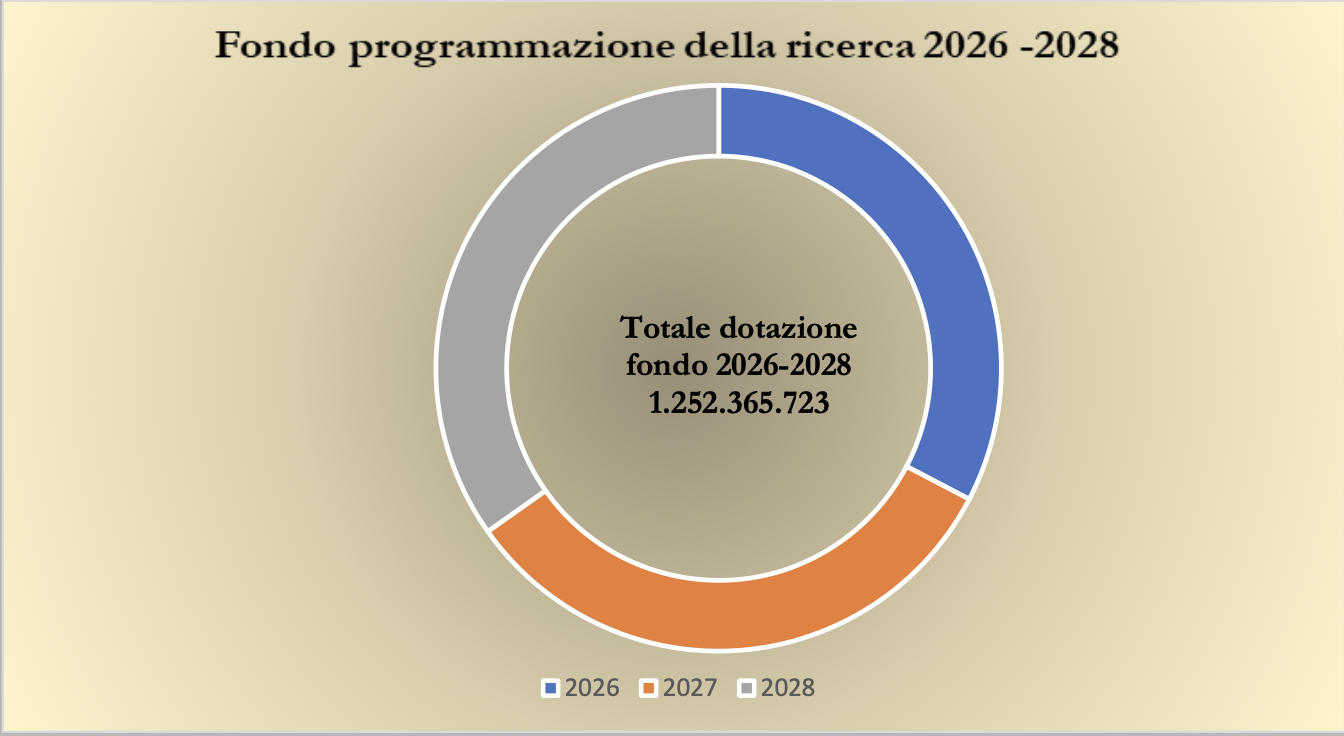
For the period 2026–2028, the total resources envisaged exceed €1.2 billion. The new framework is aimed at universities, research institutions and institutions of Higher Artistic, Musical and Dance Education (AFAM), which can thus rely on greater continuity and planning of activities. The Plan therefore marks a shift from the past, characterised by frequent uncertainty both in the timing of calls and in the disbursement of funding.

In detail, the Plan establishes a three-year timetable that allows advance knowledge, for each year, of the funding instruments activated by the MUR, the methods of participation and the timelines: calls will be published by 30 April, while the results of selections will be announced by 30 September. This mechanism aims to make access to resources more transparent and predictable.

grafico5_mur-2
Chart illustrating the total allocation of the Research Programming Fund for 2026–2028. Source: Three-Year Research Plan 2026–2028. Credits: MUR.

The Research Programming Fund

In support of the Plan, the new Research Programming Fund (FPR) has been established within the MUR, bringing together the main ministerial instruments dedicated to basic and applied research. These include FIRST, FISR, FIS, FISA and FRES, which are thus brought under a single programmatic framework. The Fund also includes funding lines relating to Projects of National Interest (PRIN), as well as support for Italian participation in European partnerships and bilateral agreements.

The FPR allocation for the three-year period 2026–2028 amounts to €259,029,354 for 2026, €257,633,003 for 2027 and €285,703,366 for 2028. A significant increase is planned for subsequent years: €665,901,239 for 2029 and 2030, rising to €687,830,876 in 2031. This projected increase reflects a commitment to consolidating public investment in research over the medium to long term, making it more structural and less dependent on extraordinary measures.

Strengthening of PRIN

In addition to the Fund’s resources, further allocations are directed to PRIN, which the 2026 budget law establishes as annual calls with a minimum structural allocation of €150 million. For 2026, the allocation exceeds €270 million. Overall, the resources available for research through these instruments amount to more than €409 million in 2026, exceed €407 million in 2027 and are estimated at around €435 million in 2028. Funds will be allocated through competitive procedures based on the scientific quality of projects and international peer review standards.


Innovations in the Italian Science Fund

A further innovative element concerns the advance planning of funding lines within the Italian Science Fund (FIS), modelled on European Research Council (ERC) calls. In particular, a Starting Grant call is already scheduled for 2027, aimed at early-career researchers, while for 2028 a Consolidator–Advanced Grant call is planned, targeting researchers in the consolidation phase or with already recognised scientific maturity. The novelty lies precisely in the advance planning of these measures, allowing the scientific community to orient its activities and research strategies more effectively over the medium term.

In the latest issue of Particle Chronicle, the INFN newsletter, we interviewed Nicola Spaldin, Vice-President of the ERC Scientific Council.


New instruments: PRIN Hybrid and Synergy Grant

The reform also introduces new instruments dedicated to innovative and interdisciplinary research, each with its own financial allocation. PRIN Hybrid, funded in 2026 with €59 million, represent a new line aimed at enhancing multidisciplinarity by promoting integration between the humanities and advanced technologies such as quantum technologies, high-performance computing and artificial intelligence. Synergy Grants, with an allocation of €50 million for 2026, are designed to strengthen cooperation between the research system and the productive sector. They support applied research projects requiring the integration of diverse expertise and capable of translating into concrete solutions, with benefits for citizens’ well-being and the country’s competitiveness.

Quantum computing INFN
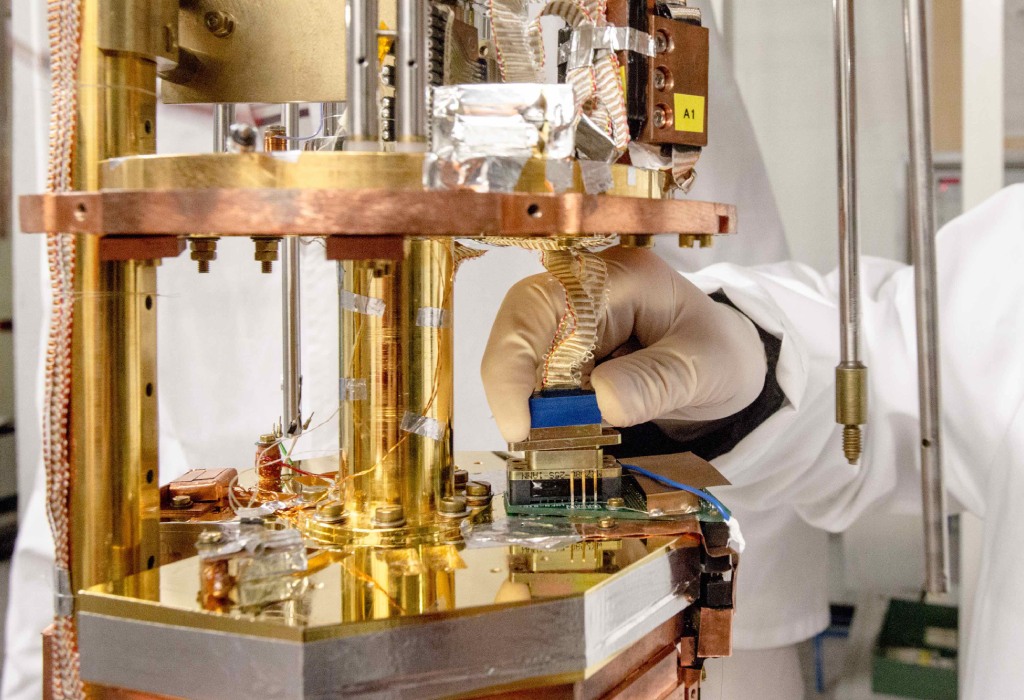
Quantum computing, cryostat. INFN – University of Milano-Bicocca.


Beyond the PNRR: continuity, human capital and new perspectives

The PNRR has represented an unprecedented opportunity to strengthen investment in research and development in our country. Through the Plan, cutting-edge projects have been launched, networks and partnerships have been built at national and international level, and interdisciplinarity has been significantly enhanced. At the same time, the PNRR has contributed to training a new generation of researchers, technologists, as well as administrative and technical staff supporting scientific research. This represents a highly valuable human and scientific asset, which now raises a central question: how to avoid the dispersion of acquired skills and transform them into a structural resource for the research system.

Within this perspective, the decree signed on 6 March 2026 by Minister Bernini implements the extraordinary recruitment and enhancement plan for research personnel provided for by the 2026 budget law. The aim is to make the skills developed within PNRR-funded projects structural, consolidating investments over time.

Specifically, the plan provides for the possibility for universities and public research bodies to recruit up to 2,000 researchers, thanks to total MUR funding of €60.7 million. This measure recognises the value of human capital developed through the PNRR and aims to strengthen the university and research system on a stable basis. In terms of resources, an initial allocation of €18.5 million is foreseen for 2026, rising to €60.7 million annually from 2027. The mechanism adopted provides for co-financing of up to 50% of the cost of new hires by the Ministry, with the remaining share borne by universities and research bodies. This model effectively doubles total investment and structurally strengthens recruitment policies.

Of the 2,000 researchers envisaged, 1,051 are directly linked to PNRR activities: 847 will be recruited in universities and 204 in research bodies supervised by the MUR. For the latter, funding amounts to €7.2 million in 2026, stabilising at €8.7 million annually from 2027, enabling the overall stabilisation of 276 individuals with research or technological contracts.

Project continuity and research infrastructures

Alongside the strengthening of human capital, another strategic element concerns the continuity of projects and infrastructures developed through the PNRR.

With the publication of the rankings of the National Programme for Research, Innovation and Competitiveness 2021–2027, the MUR approved funding for three INFN-led projects: ASTRA, CREST and NAUTILUS. These initiatives represent the direct continuation of projects launched under the PNRR and contribute to consolidating their results.

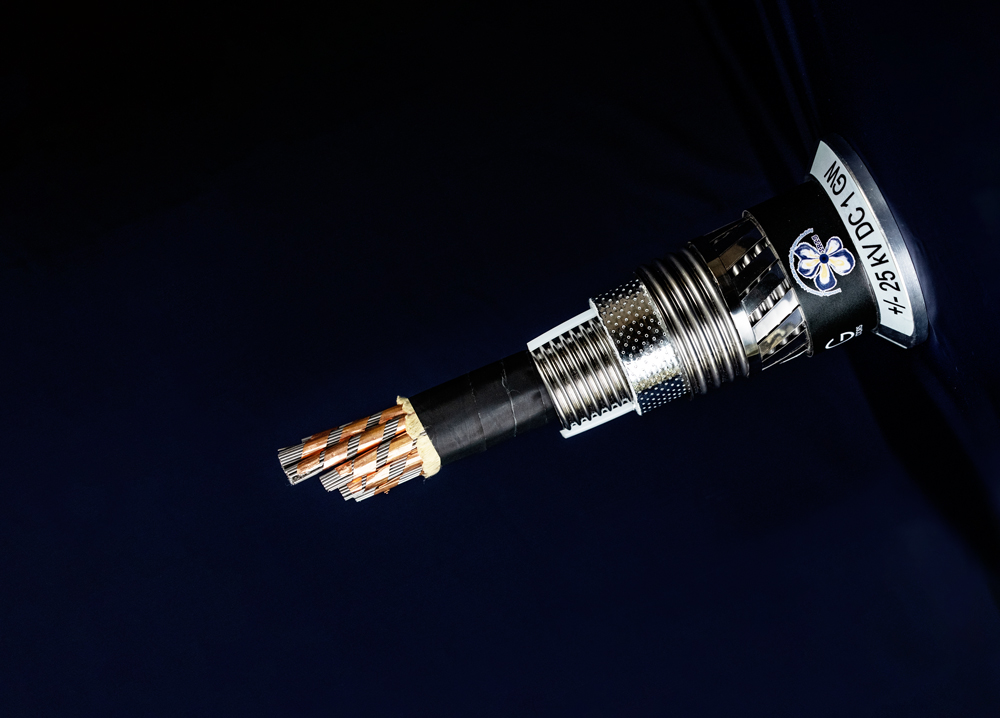
ASTRA, funded with over €23 million and implemented in collaboration with several Italian universities, continues the IRIS project and develops a distributed infrastructure for high-temperature, high-magnetic-field superconducting technologies, with applications ranging from the energy sector to next-generation particle accelerators.

High temperature superconducting cable for energy transport
High temperature superconducting cable for energy transport. Credit: INFN
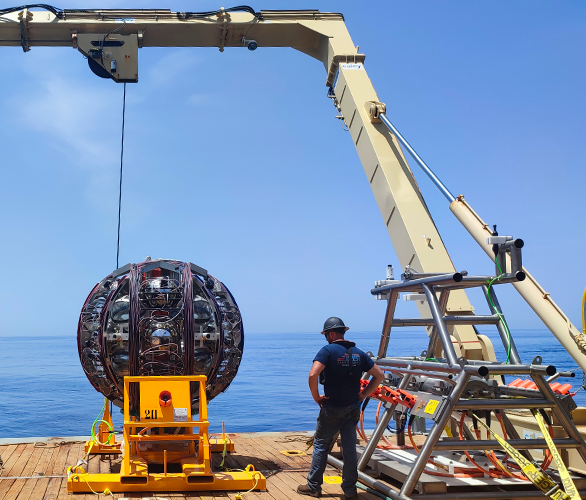
Esperimento Km3net. operazioni in mare. credit INFN
KM3NeT experiment. Offshore operations. (© INFN)

CREST, with funding of €15.5 million, ensures continuity for the TeRABIT project and aims to strengthen the national digital infrastructure for research, promoting interconnection and data exchange between scientific communities at extremely high speeds.

NAUTILUS, funded with over €15.4 million, continues the KM3NeT4RR project and contributes to the development of the ARCA-KM3NeT underwater neutrino telescope off Capo Passero in Sicily, strengthening Italy’s role in multi-messenger astronomy.

Increase in performance-based funding

The performance-based mechanism is a funding instrument aimed at enhancing the performance of research bodies by rewarding those achieving the best results in terms of scientific quality, impact and management capacity. Concretely, it consists of allocating additional resources based on objective and measurable indicators, with the aim of encouraging virtuous behaviour, strengthening efficiency in the use of public funds and promoting greater competitiveness of the research system at national and international level.

By decree signed on 4 February 2026, the MUR allocated €40 million based on criteria related to the quality of scientific output, contribution to strategic infrastructures and the ability to implement PNRR projects

Fondo ordinario degli enti di ricerca, (FOE)

Tutte queste iniziative confluiscono nel Fondo ordinario degli enti di ricerca, (FOE) che rappresenta la principale fonte di finanziamento per il funzionamento degli enti vigilati dal MUR. Nel luglio 2025 il FOE ha raggiunto una dotazione complessiva di 1.485.883.600 euro, con un incremento di 10 milioni rispetto all’anno precedente. Tra i principali enti beneficiari ci sono il Consiglio Nazionale delle Ricerche, con oltre 735 milioni di euro, l’Istituto Nazionale di Fisica Nucleare, con circa 354,9 milioni di euro, l’Istituto Nazionale di Astrofisica e l’Istituto Nazionale di Geofisica e Vulcanologia.

Le risorse del FOE ordinarie e continuative sono assegnate sulla base dei piani pluriennali di attività degli enti e in coerenza con il Programma Nazionale della Ricerca, contribuendo anche a sostenere la partecipazione italiana alle grandi infrastrutture di ricerca europee, come gli European Research Infrastructure Consortium (ERIC).

Ordinary Fund for Research Bodies (FOE)

All these initiatives converge in the Ordinary Fund for Research Bodies (FOE), which represents the main source of funding for the operation of institutions supervised by the MUR. In July 2025, the FOE reached a total allocation of €1,485,883,600, an increase of €10 million compared to the previous year. Among the main beneficiaries are the National Research Council, the National Institute for Nuclear Physics, the National Institute for Astrophysics and the National Institute for Geophysics and Volcanology.


Looking ahead: the Einstein Telescope

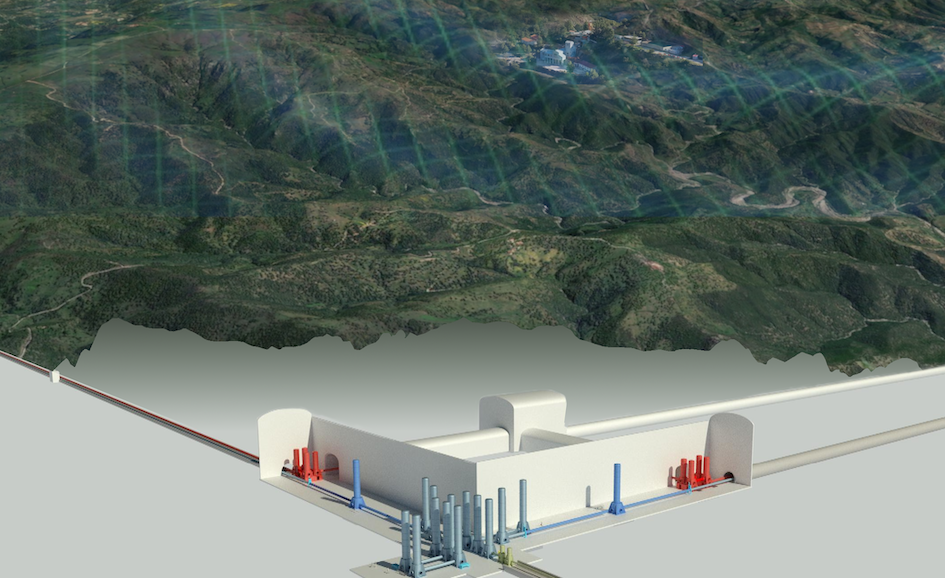
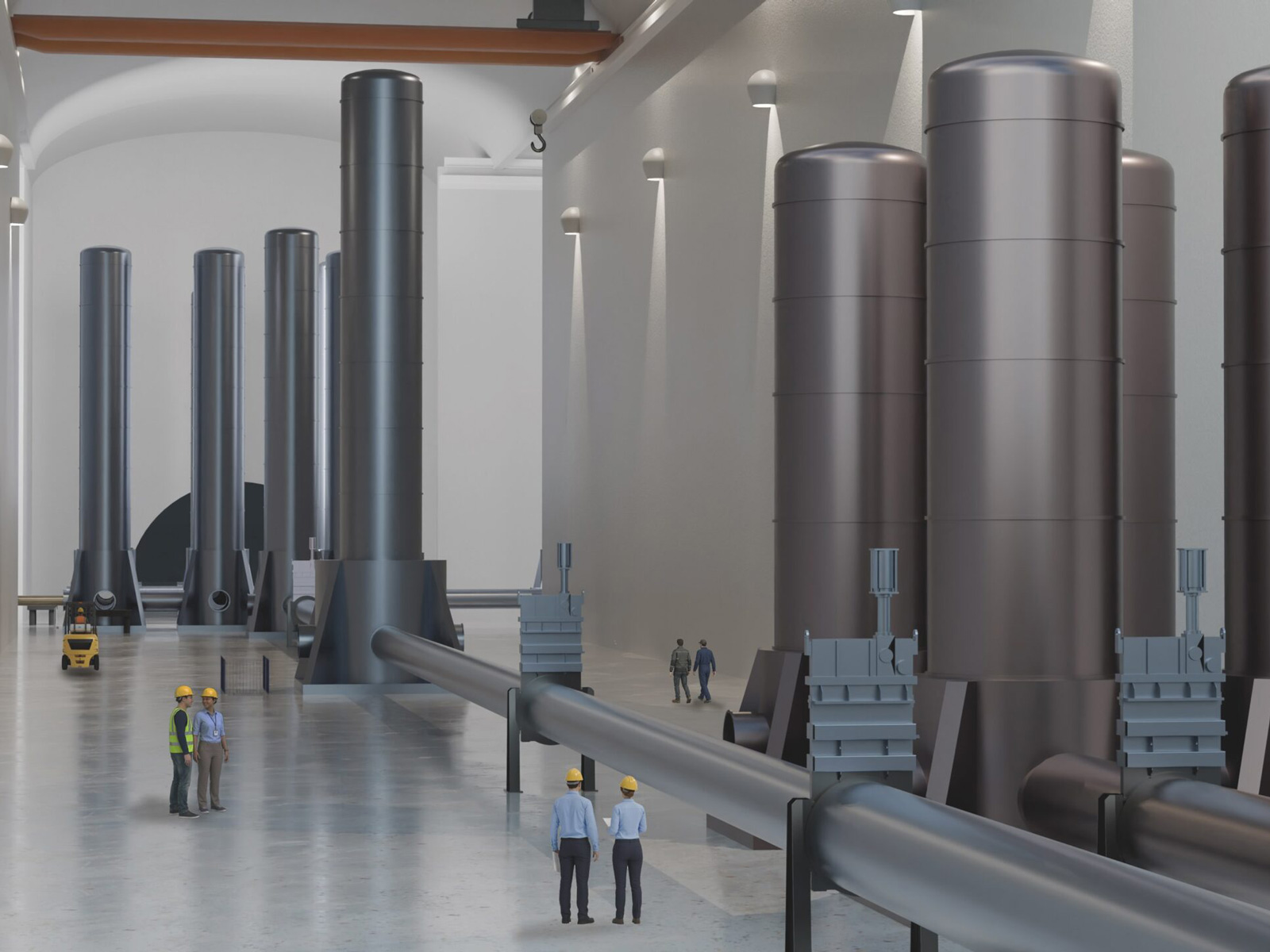
Looking to the future, it is important to recall the joint commitment of the Ministry of Universities and Research and the Region of Sardinia to the Einstein Telescope project, which forms part of a strategy aimed at strengthening Italy’s candidacy of the Sos Enattos site as the location of the major European infrastructure. Within the project, the National Institute for Nuclear Physics plays a central role at scientific, technological and organisational level. It is among the main promoters of Italy’s participation and coordinates a large part of the research and development activities necessary for the construction of the detector, providing advanced expertise developed in the field of gravitational wave physics and large research infrastructures.

Project website: https://www.einstein-telescope.it/

rendering Einstein Telescope
Rendering of a possible configuration of the Einstein Telescope experiment in Sardinia ©INFN/Laboratori Nazionali del Sud
You might also be interested in
borexino lngs

70 Years of Neutrinos

scienziata

Stem passion

03 February 2026 Read more Stem passion

WomenInScience

Nuclear fission and fusion

fondo cosmico

Studying the universe from space

Revolution AI

07 November 2025 Read more Revolution AI