A multiparametric and innovative approach to observe and explain the internal dynamics of the mountain and its deep aquifer, starting from an unusual and rare natural phenomenon. This is the focus of the article Multi-sensor monitoring of a transient event in the Gran Sasso aquifer, Italy, published in the journal Scientific Reports of the Nature group, and the result of a collaboration between the National Institute for Geophysics and Volcanology (INGV), the National Institute for Nuclear Physics (INFN) and the Universities of Pisa, Rome Sapienza and L’Aquila.
The research analysed a loud ‘boom’ heard at the INFN Gran Sasso National Laboratories (LNGS) on the night between 14 and 15 August 2023 and recorded by a wide range of instruments installed both inside the mountain and outside, demonstrating a correlation with variations in the aquifer of the Gran Sasso massif. The boom was not an isolated event but the conclusion of a natural phenomenon that began in May. In the preceding months, anomalies had in fact been observed in the flow rates and pressures of groundwater, probably linked to spring rainfall and its percolation within the Gran Sasso aquifer. Thanks to the multiparametric approach used by the researchers, the study made it possible to obtain an unprecedented view of the internal dynamics of the massif, providing a significant contribution to geophysics and hydrogeology, particularly in underground environments with the presence of human activities (laboratories and motorway).
“The multiparametric approach demonstrated that the boom is directly linked to variations in the aquifer”, explained Gaetano De Luca, INGV researcher and corresponding author of the study. “As this is a rare event recorded with a wide range of instruments, the dataset constitutes a valuable basis for future studies. The pioneering use of Ginger, a highly sensitive ring laser gyroscope, contributes to a better and innovative understanding of the internal dynamics of Gran Sasso”, concluded De Luca.
“The event that occurred in August 2023 is not isolated, – stated Ezio Previtali, director of the Gran Sasso National Laboratories – the mountain often ‘speaks’ to us in the literal sense of the term, producing loud noises for which the experimental halls of LNGS become a sounding board. The study of these geological events is of great importance for understanding the dynamics that take place within the Gran Sasso massif. This result shows how advanced instruments designed for fundamental physics studies, such as Ginger, can also be of great help in the study of other disciplines such as geology and geophysics. In this context – continued the director – the upgrading of the Ginger instrumentation is already planned, which will ensure not only more precise studies of fundamental physics, but also the strengthening of the network of geological instruments studying Gran Sasso. We are also working with INGV to make these instruments usable in other geological contexts where they could be of great help in the study and monitoring of seismic events”, concluded Previtali.
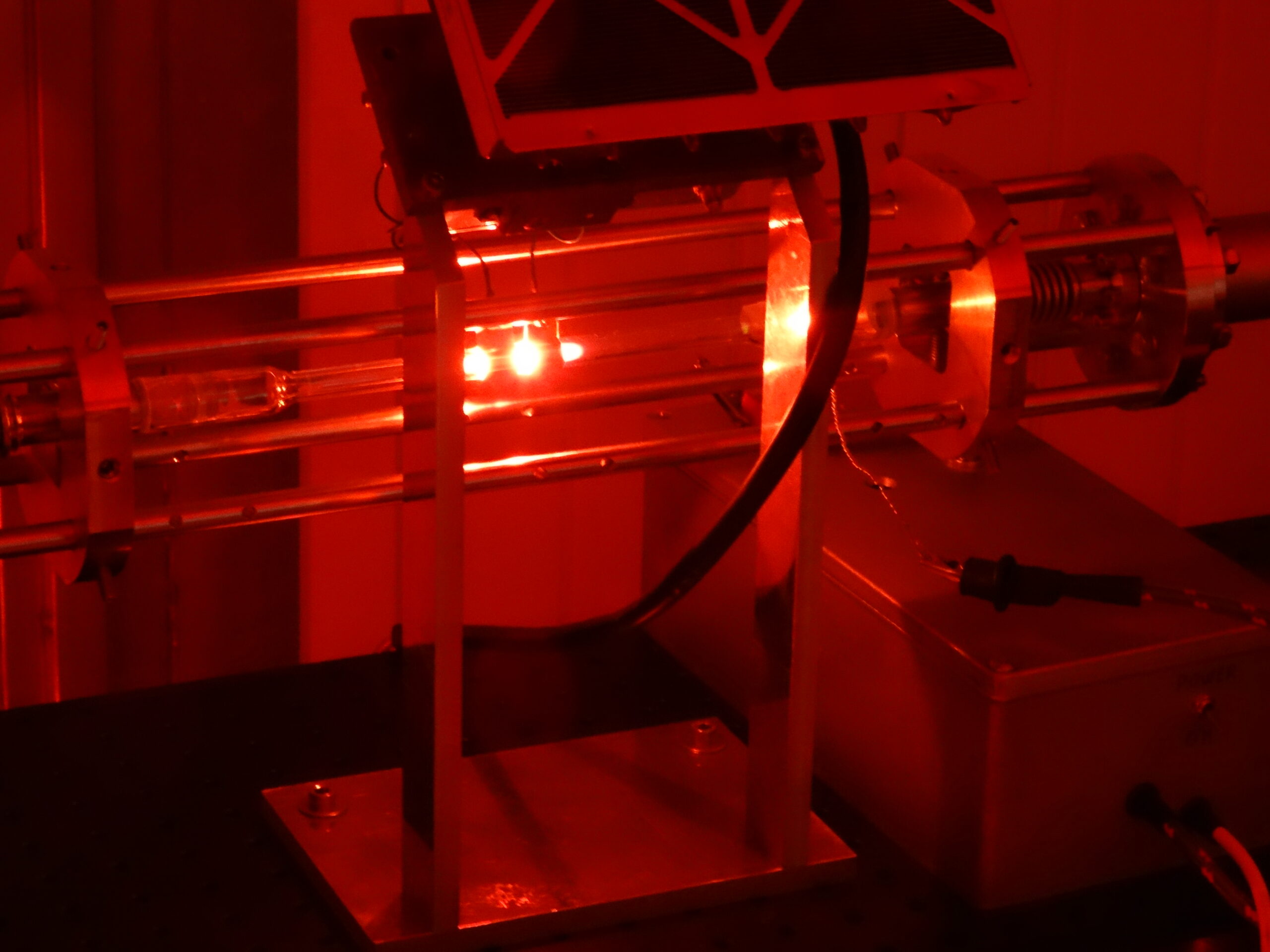
The GINGER experiment – Gyroscopes IN GEneral Relativity, a ring laser gyroscope, operational for about 10 years in the underground Gran Sasso Laboratories, has therefore been one of the key elements of the research. The device, extremely sensitive, is monitoring the local angular velocity of the Earth around the vertical axis with high precision. Together with the GIGS broadband seismometer of the INGV national seismic network, installed at the same site, ground motions and ground rotations were measured, providing a more complete description of the entire natural phenomenon lasting about 3 months. It was also recorded by the National Accelerometric Network of the Department of Civil Protection as well as by an acoustic sensor installed at the Gran Sasso National Laboratories and by the groundwater monitoring system.
This combined analysis of data from different monitoring systems demonstrated a clear correlation with the variations observed in the Gran Sasso aquifer, supporting the hydrogeological interpretation of the dynamics that led to the boom recorded in August 2023.
The results of the study demonstrate how the integration of different monitoring techniques can offer new research perspectives on the internal dynamics of mountains and deep aquifers, confirming the Gran Sasso massif as a natural laboratory of great value for interdisciplinary scientific research.
Link to the study