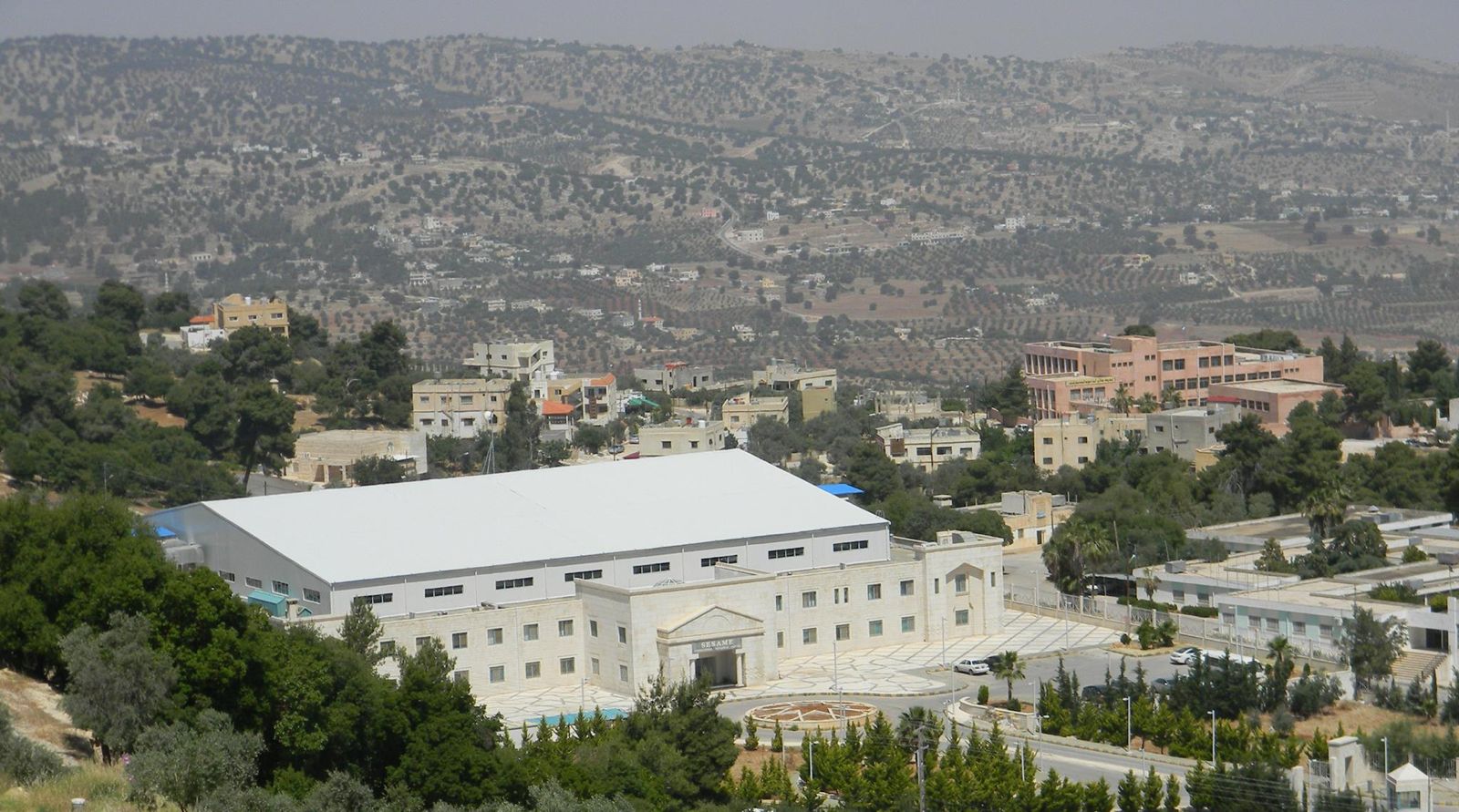
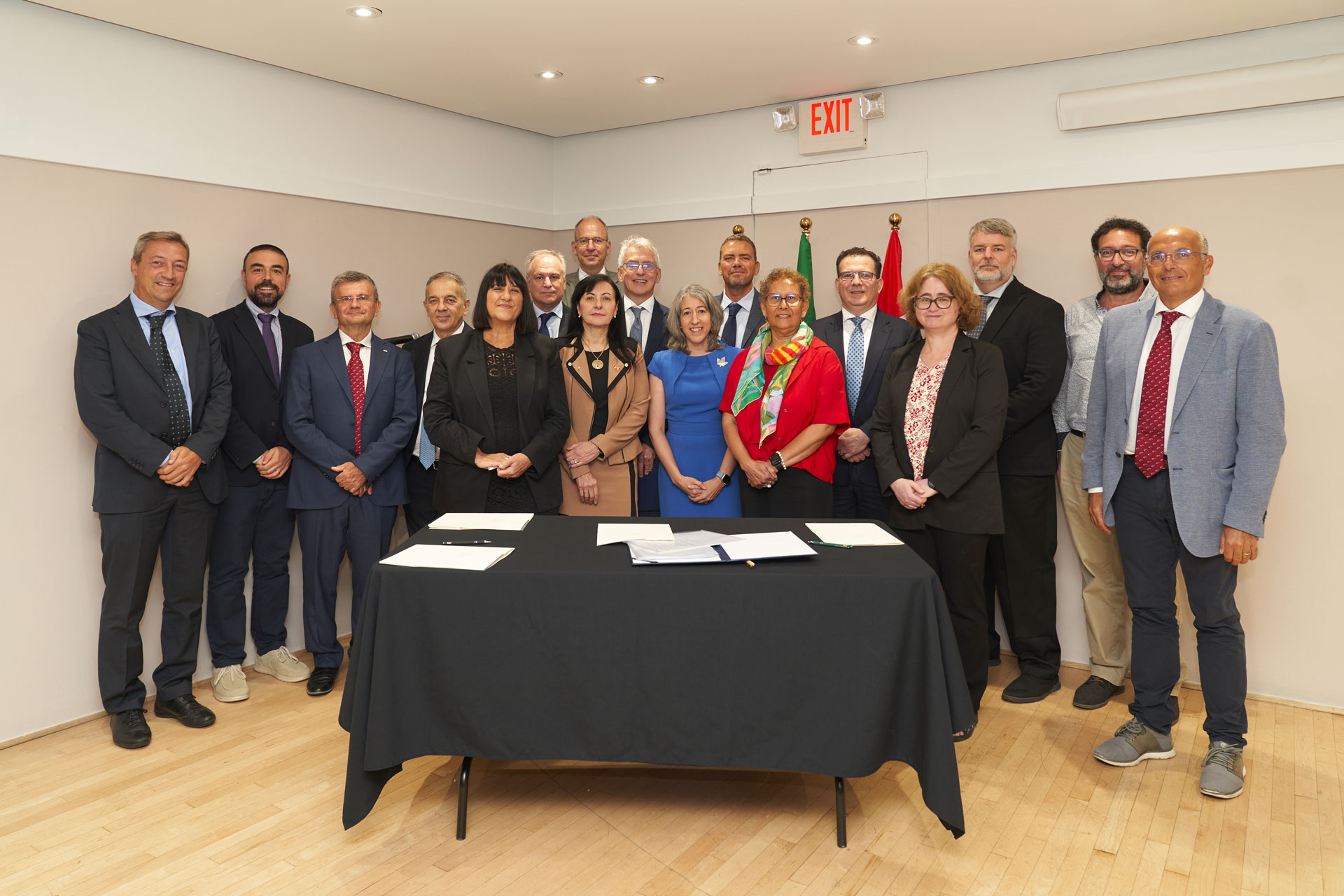
During the SESAME Council meeting, held in Grenoble, France, on 19 and 20 May, the request submitted by the Minister of University and Research, Anna Maria Bernini, on behalf of the Italian Government, to join the international laboratory based in Allan, Jordan, as an associate member was approved. Italy thus officially joins SESAME (Synchrotron-light for Experimental Science and Applications in the Middle East), whose core is an internationally competitive third-generation synchrotron light source, which today represents a resource for the entire MENA region (Middle East and North Africa). It is an extremely powerful microscope, based on an electron accelerator, which enables studies and applications in many fields: from physics to life sciences, from materials science to archaeometric studies. SESAME is therefore a centre of excellence for multidisciplinary research, capable of attracting scientists from many different disciplines and from various countries around the world. And precisely for this reason it is also much more. It is a place where every day people from Cyprus, Egypt, Iran, Israel, Jordan, Pakistan, Palestine and Turkey work together towards a common goal.
“We are deeply pleased that Italy has joined SESAME as an associate member; it is an important act in diplomatic and cultural terms, as well as scientific ones. As INFN, we therefore wish to express our gratitude to the Ministry of Foreign Affairs and International Cooperation and to the Ministry of University and Research, in particular Minister Anna Maria Bernini, for their commitment and conviction in supporting a place of scientific cooperation that represents a fundamental outpost of progress and peace for a troubled region”, concludes Zoccoli.
INFN has supported SESAME since its inception, because of its scientific and cultural value. Through an agreement with the Ministry of Foreign Affairs and International Cooperation and its own funding, INFN installed the experimental station of the infrared beamline, managed by Egyptian scientist Gihan Kamel, who specialised in Italy at the INFN National Laboratories of Frascati and at Sapienza University of Rome. SESAME has also been included in INFN’s CHNet cultural heritage network as a second-level node for collaborations in the study and preservation of historical and artistic heritage. Furthermore, the Institute contributes to the training of laboratory personnel by participating in the European SUNSTONE project, and previously in OPEN SESAME. Italy, thanks to funds provided by the Ministry of University and Research, has also equipped SESAME with its guesthouse, inaugurated in 2019, an essential facility for the operation of the laboratory, enabling it to welcome and host researchers from all over the world.
“Today SESAME is a unique state-of-the-art national research centre capable of being attractive in the MENA region, an area characterised by profound geopolitical difficulties”, emphasises Zoccoli. “SESAME represents one of the highest examples of how science can build bridges between people and nations, promoting collaboration and mutual trust. Researchers from countries marked by tensions and conflicts work together in the laboratory, and at SESAME they find a common space in which to cultivate a shared objective: to devote themselves to science, increase knowledge, and ultimately build a better society”, concludes Zoccoli.
Italy’s official entry into SESAME therefore represents an act of great strategic and symbolic value that strengthens the role of scientific diplomacy and confirms how science can be a fundamental instrument of international cooperation, all the more so in the contemporary global context.