The Young Experimental Physicist Prize 2025 has been jointly awarded to Laura Zani from the INFN Roma 3 Division and Thea Klæboe Årrestad from ETH in Zurich. This prestigious recognition from the European Physical Society (EPS) honors the two young researchers for their outstanding and complementary contributions to experimental particle physics, ranging from advanced data analysis techniques to detector design and management. Specifically, the young researcher from Roma 3 was recognised “for her significant contributions to experimental physics through her work on physics beyond the Standard Model at B-Factories, particularly in the search for dark matter and lepton flavor-violating tau decays, as well as for her major contributions to the construction, commissioning, and operation of the Belle II experiment.”
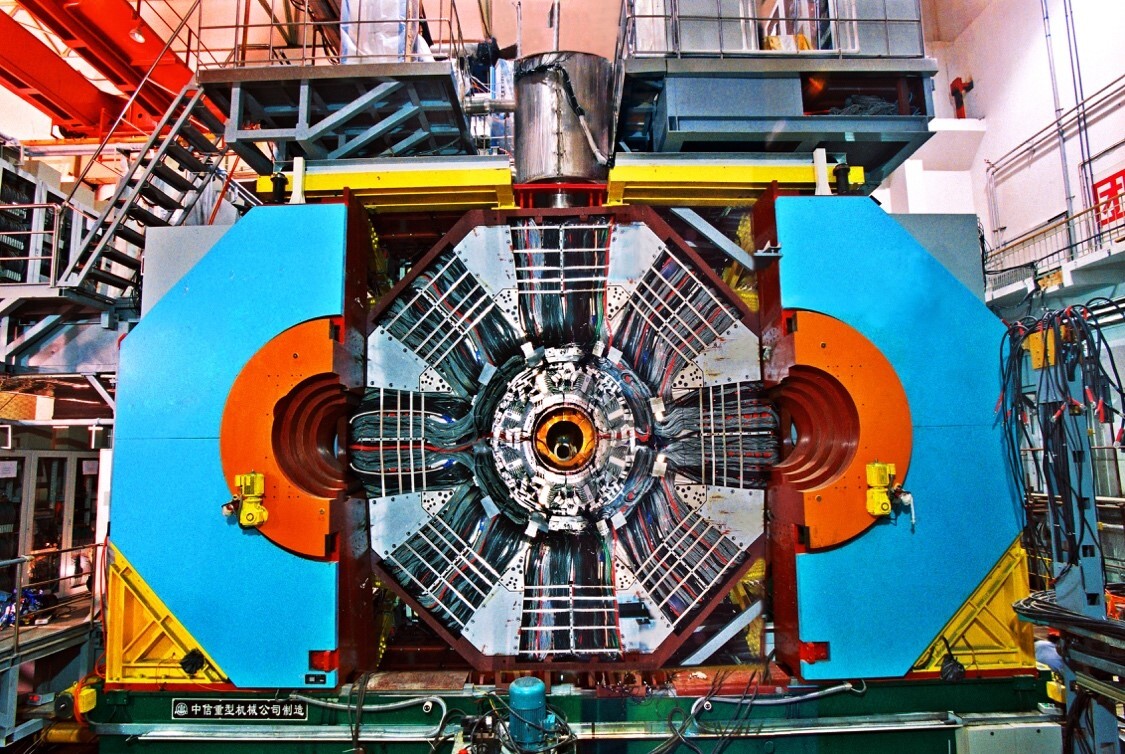
Laura Zani has been honored for her exceptional work in exploring physics beyond the Standard Model and for her key role in the construction and operation of the Belle II experiment at the SuperKEKB accelerator at KEK Laboratory in Tsukuba, Japan. Her research has led to crucial advancements in the search for dark matter mediators and lepton flavor-violating tau decays—two of the most sensitive probes for discovering new physics in the flavor sector.
“I’m deeply honored and thrilled by this prestigious award,” commented Laura Zani. “Receiving the Young Experimental Physicist Prize 2025 from the European Physical Society is not only a major milestone for me, but also a great motivation to continue my research with even more determination. The fact that the award is being presented in Marseille—where I began much of my tau physics studies during my postdoc—makes this moment even more meaningful. I feel a strong responsibility to keep working with passion and rigor to help unveil the secrets of new physics that still lie beyond the Standard Model through the data collected at B-Factories,” Zani concluded.
Graduated at the University of Pisa, Zani carried out the first physics analysis of the Belle II experiment during her PhD, setting stringent limits on particles belonging to the so-called “dark sector.” As Belle II entered full operational mode, she assumed major responsibilities within the collaboration, becoming coordinator of the Tau Physics Analysis Working Group, and later, system manager for the Silicon Vertex Detector. In these roles, Zani made crucial contributions to improving the detector’s performance, calibration, and data quality—key elements for ensuring the reliability of Belle II’s precision measurements. She also played a pivotal role in understanding the detector’s tracking performance and systematic uncertainties, resulting in unprecedented sensitivity limits on several rare tau decay modes.
Thanks to her ability to lead both the technical operations of the detector and cutting-edge data analysis—as well as her contributions to international conferences, outreach activities, and internal review processes—Laura Zani is now a prominent figure within the Belle II collaboration and in the wider international flavor physics community.
As for the other awards granted by the European Physical Society, the Main Prize was awarded to three theorists from the University of Bern: Jürg Gasser and Heinrich Leutwyler, for their work on effective theories for QCD, and Martina Lüscher, for her contributions to lattice QCD—a research field that has benefited from major Italian contributions from the outset, thanks to a very active and influential scientific community.
The Giuseppe and Vanna Cocconi Prize was awarded to the LAT and GBM collaborations of NASA’s Fermi mission, in which Italy participates through INFN, INAF, and ASI, “for revolutionizing gamma-ray astronomy and multi-messenger astronomy.”