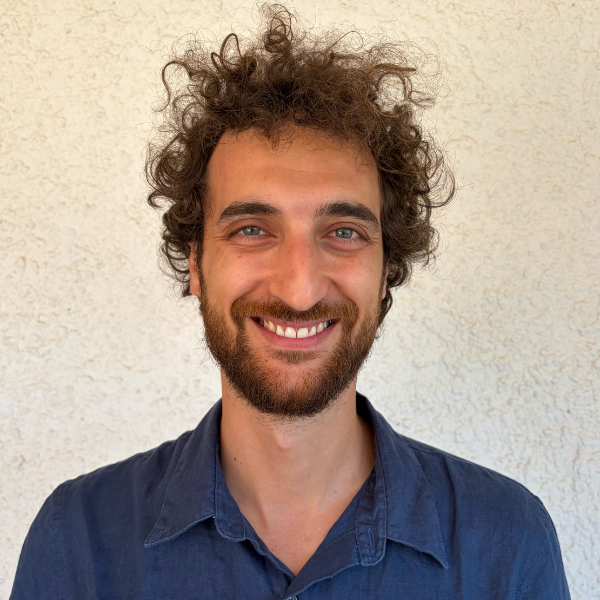
The European Research Council announced the list of winners of the Starting Grants on 3 September. The funding, totalling €705 million, goes to 421 projects by emerging researchers, including Alessandro D’Elia, researcher at INFN Frascati National Laboratories, who has received €2,046,881 in funding for his QUASAR project.
QUASAR (Enabling Quantum Search for Axion with Magnetic field-Resistant qubits) is a project dedicated to the search for dark matter, one of the major questions still open in modern physics. In particular, the project aims to detect axions, hypothetical particles that could constitute a significant part of the dark matter present in the universe.
To search for them, QUASAR will develop new quantum technologies capable of detecting individual microwave photons produced by the conversion of axions in the presence of intense magnetic fields. At the heart of the project will be a new type of superconducting qubit, based on niobium diselenide, a material made of niobium and selenium, designed to operate even under conditions that are incompatible with traditional quantum circuits.
By combining innovative materials and quantum technologies, QUASAR aims to make the search for axions more sensitive and efficient, opening a new path towards the exploration of the invisible universe.
The project involves INFN and the Institute for Photonics and Nanotechnologies of CNR.
Alessandro D’Elia is an experimental physicist specialising in the development of superconducting quantum devices for dark matter research. After obtaining his PhD in Nanotechnology from the University of Trieste and conducting research at the University of Cologne on two-dimensional materials, since 2021 he has been working at INFN Frascati National Laboratories, where he focuses on quantum circuits, single-microwave-photon detection and axion searches. He was Principal Investigator (PI) of the INFN RESILIENCE Young Grant, dedicated to the development of magnetic-field-resistant quantum devices based on van der Waals materials, and is now PI of the 2026 ERC Starting Grant QUASAR. His scientific activity combines quantum sensing, circuit QED, innovative superconducting materials and axion searches, with more than 50 scientific publications and numerous national and international collaborations.