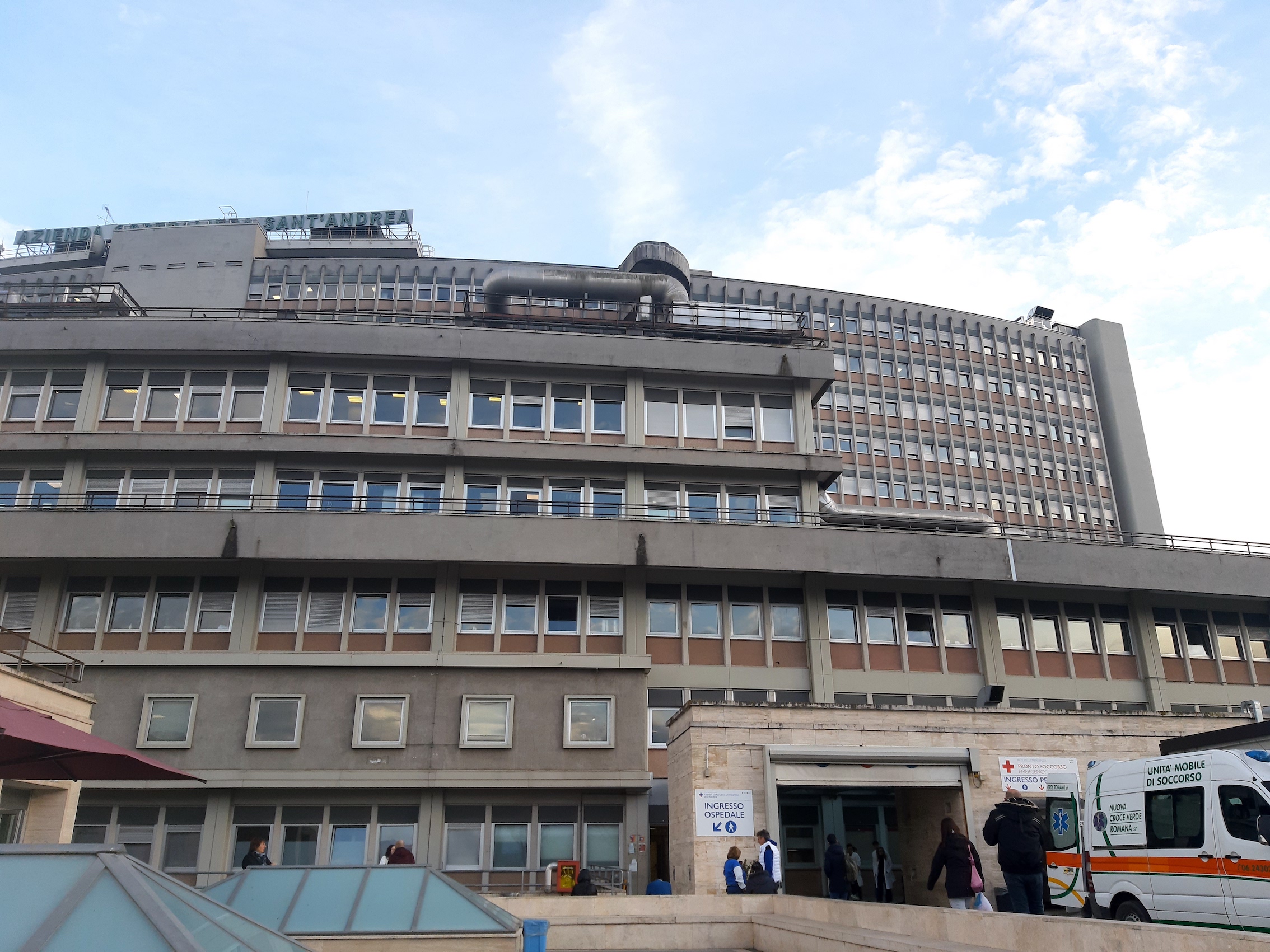
The procedure was performed at Sant’Andrea University Hospital using an innovative probe capable of precisely detecting tumor tissues for removal during surgery, developed by the National Institute for Nuclear Physics (INFN) and Sapienza University of Rome
On Friday, June 27, 2025, at the Sant’Andrea University Hospital, in the Thoracic Surgery Unit directed by Erino Angelo Rendina, the first surgical operation was successfully carried out as part of the experimental project entitled “Radioguided surgery with beta probe in patients with pulmonary neuroendocrine tumors (NET) eligible for radical surgery”. Principal Investigator of the project is Antongiulio Faggiano from the Specialised Endocrine-Metabolic Medicine Unit, with project promoters Professors Riccardo Faccini from the Department of Physics and Andrea Isidori from the Department of Experimental Medicine at Sapienza University of Rome.
This procedure is part of a pilot study evaluating radioguided surgery for pulmonary NETs using a portable intraoperative beta radiation probe, developed through a collaboration between Sapienza’s Department of Physics and INFN.
The probe is an innovative tool capable of detecting positrons, particles emitted by radiopharmaceuticals commonly used in PET diagnostics. It has shown high sensitivity in identifying tumor cells marked with a radiotracer specific to neuroendocrine tumors. This makes the probe highly effective in guiding the surgeon’s hand precisely to the lesion site, even when microscopic or in difficult-to-reach areas.
Previously tested successfully on gastro-entero-pancreatic neuroendocrine tumors and prostate cancer, this study aims to assess the feasibility of extending the technique to thoracic lymph node metastases in patients undergoing radical surgery for primary pulmonary NETs and lymph node dissection.
The analysis of data collected by the probe during the procedure will provide initial insights into its ability to detect pathological lymph nodes, ahead of future surgical procedures. A final evaluation of the data is expected by the end of the year.
The trial is being conducted entirely at the Sant’Andrea University Hospital, home to the ENETS Centre of Excellence for Neuroendocrine Neoplasms, and it is based on a multidisciplinary collaboration between the Units of Specialised Endocrine-Metabolic Medicine, Thoracic Surgery, Nuclear Medicine, Health Physics, Pathology, INFN and the company NUCLEOMED s.r.l., which designed the beta probe used in the project.
This trial represents a significant technological advancement, positioning Sant’Andrea Hospital and Sapienza University at the forefront of precision medicine and cancer treatment.
The study is funded under the PNRR-M4C2-I1 “HEAL ITALIA” program – Extended Partnership 6 – Spoke 4, financed by the European Union – NextGenerationEU (Project PE_00000019, CUP B53C22004000006, protocol PE6421852C156157).