On 5 May, at 04:05 California time (13:05 in Italy), the Martian lander, InSight (Interior Exploration using Seismic Investigations, Geodesy and Heat Transport), was successfully launched from the Vandenberg base in America, to start its NASA mission to Mars. Equipment on board the lander included LaRRI (Laser Retro-Reflector for InSight), a laser microreflector developed by INFN with the support of the Italian Space Agency (ASI). The task of the InSight mission is to explore the depths of the Red Planet, to understand how rocky planets, such as the Earth, are formed. The instruments on board include a seismometer to detect Martian earthquakes, a probe for monitoring the heat flow from inside the planet and, of course, the LaRRI microreflector, which is an instrument designed and constructed by the SCF_Lab research group from the INFN National Laboratories in Frascati, in a joint programme with ASI-Matera, dedicated to geodetic measurement. Using new satellites in orbit around Mars, the Italian laser microreflectors will provide the precise position of the landers and rovers during their exploration, forming a network of Martian geodetic reference points, a test of Einstein’s general relativity complementing the lunar one carried out with the Apollo reflectors (measured by ASI-Matera) and a decidedly better definition of the 0 Meridian of Mars (a kind of “Mars Greenwich”).

Theoretical physics helps unveil the molecular mechanisms of extra-chromosomal DNA in tumours

Caterina Biscari receives the Gold Medal of the Government of Catalonia
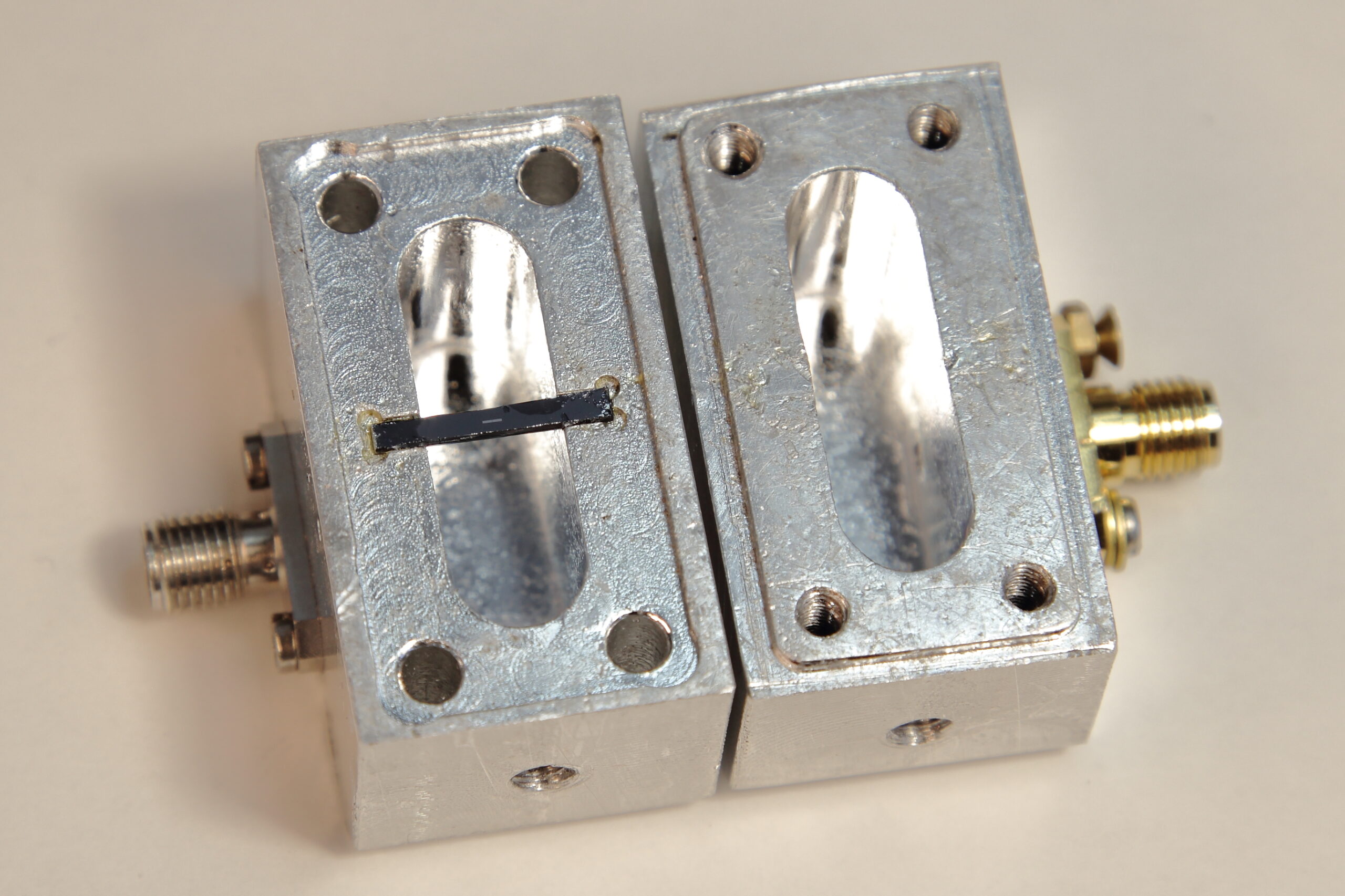
At INFN Frascati National Laboratories, the first quantum oscillations of a “made in Italy” transmon qubit

Art, science and research: the 5th edition of the Art&Science Across Italy Master gets underway at CERN

Fundamental physics and emerging technologies: Italy and the United States renew their collaboration in Washington