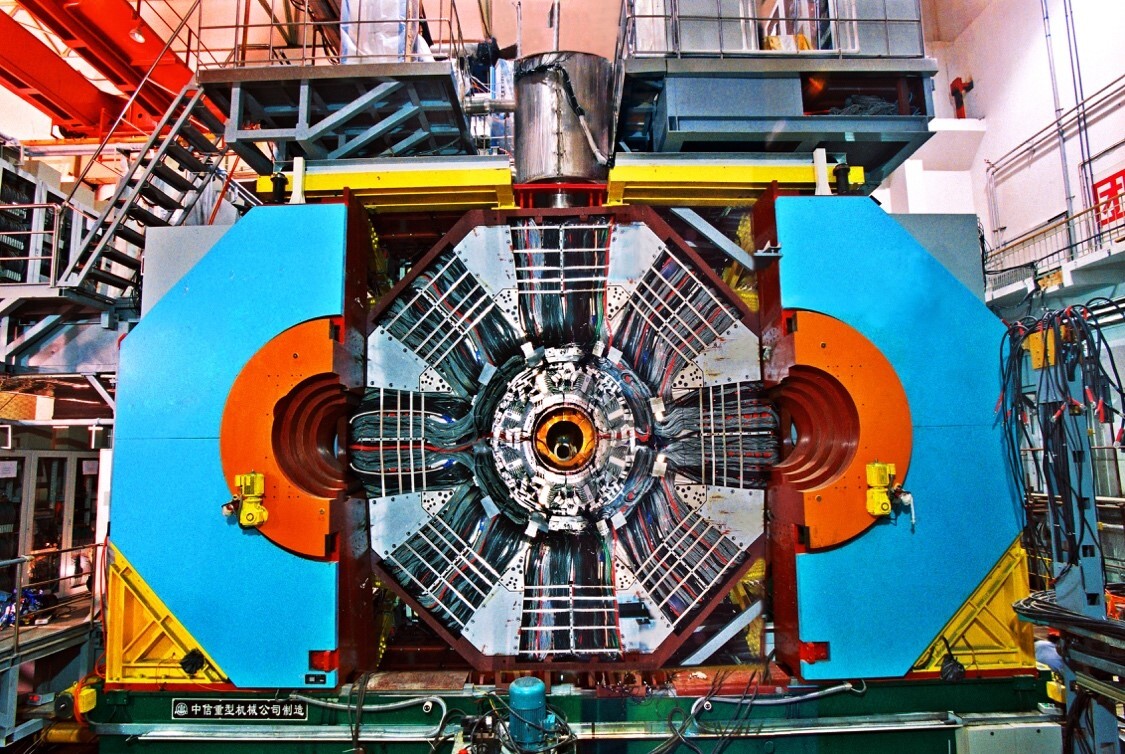
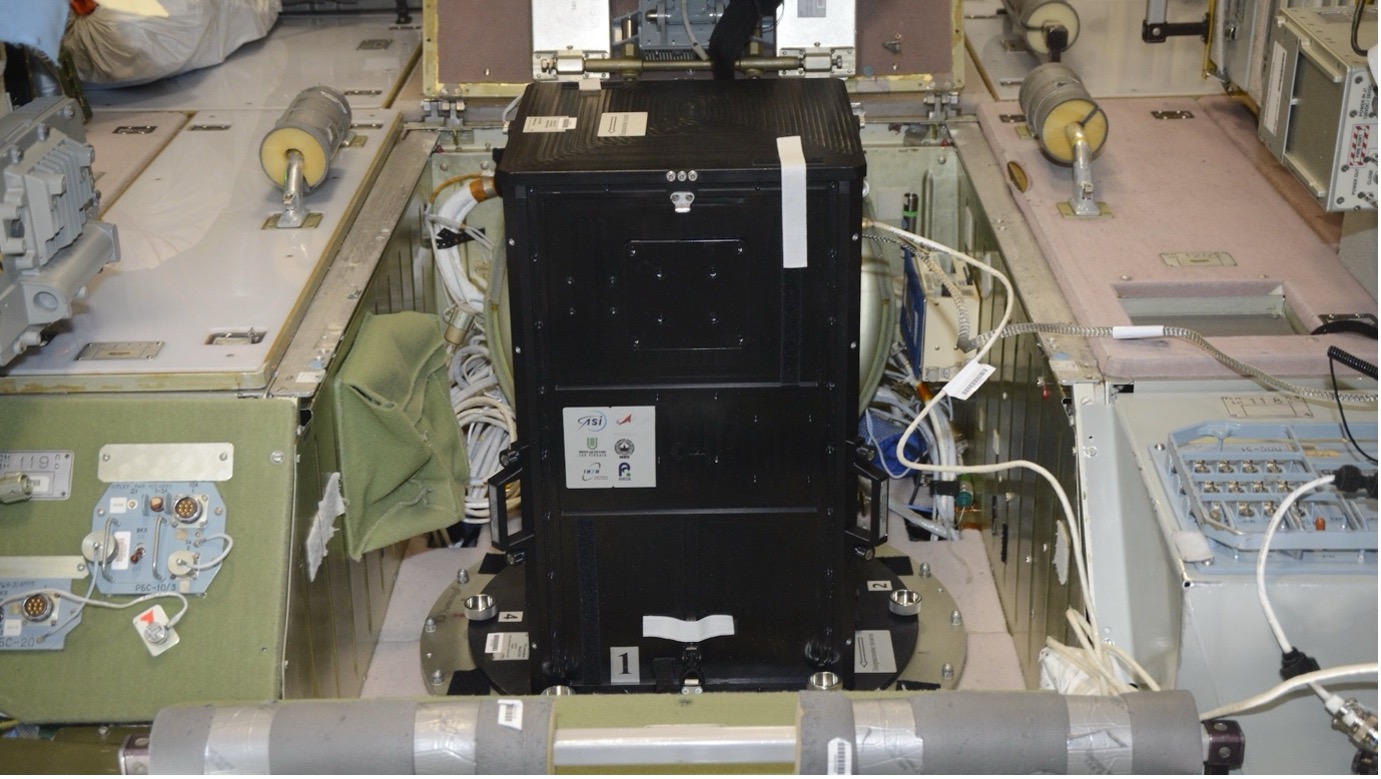
 The JEM-EUSO collaboration recently published in the journal Astronomy&Astrophysics the classification of 24,000 meteors observed systematically for the first time from space in the ultraviolet band with the Mini-EUSO (Multiwavelength Imaging New Instrument for the Extreme Universe Space Observatory) detector, installed aboard the International Space Station.
Meteors are celestial bodies that enter Earth’s atmosphere and, due to friction with the atmosphere, increase their temperature and burn, emitting radiation. Typically, they are observed by ground-based telescopes to reconstruct their mass, direction and flux by detecting light emitted in the visible spectrum. However, the opportunity to analyze these celestial objects from space, as Mini-EUSO has done, has significant advantages, including the possibility of conducting an observational campaign with a wide field of view and of long duration, independent of atmospheric conditions on the ground.
The results published by JEM-EUSO are based on the analysis of the first 40 data-taking sessions. To date, Mini-EUSO has conducted more than 100 sessions. The data collected by Mini-EUSO may contain other useful information to further test current models regarding the expected flux of meteors and identify more reliable ones. To this end, researchers are continuing the analysis of the data not only to improve on the results already obtained, but also investigating whether atypical events, such as meteors of interstellar origin, or evidence of new extremely dense states of matter, predicted but never observed so far, can be identified among the data.
Mini-EUSO is a telescope of the Italian Space Agency, developed by an international collaboration led by INFN. Mini-EUSO was launched on Soyuz MS-14 on August 22, 2019, after being selected by the Italian Space Agency for Luca Parmitano’s Beyond mission and it was installed in 2019 on the International Space Station (ISS) where, for the past five years, it has been recording ultraviolet emissions of cosmic, atmospheric and terrestrial origin from a window located inside the Zvezda module, facing Earth.

Theoretical physics helps unveil the molecular mechanisms of extra-chromosomal DNA in tumours

Caterina Biscari receives the Gold Medal of the Government of Catalonia
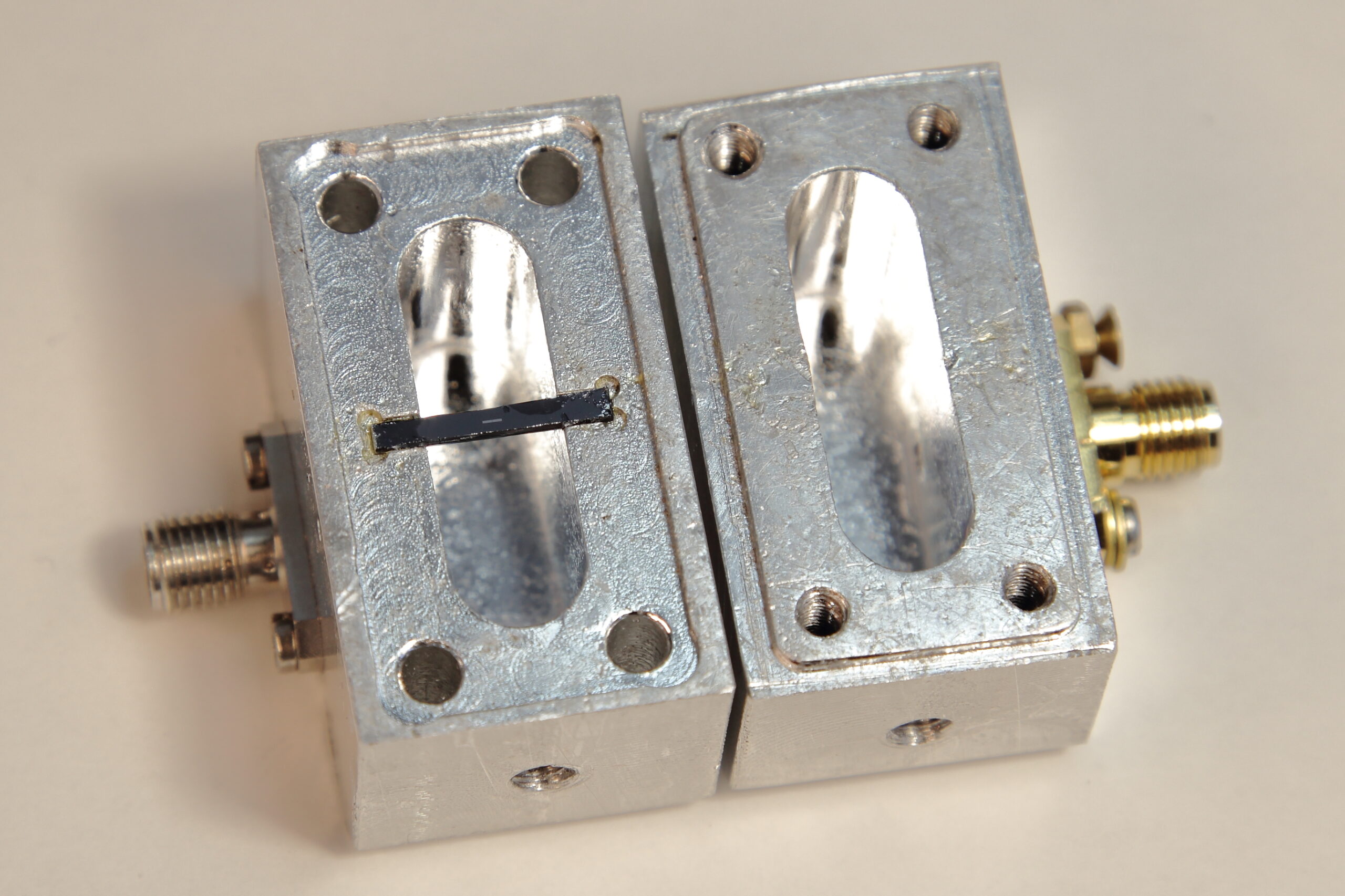
At INFN Frascati National Laboratories, the first quantum oscillations of a “made in Italy” transmon qubit

Art, science and research: the 5th edition of the Art&Science Across Italy Master gets underway at CERN
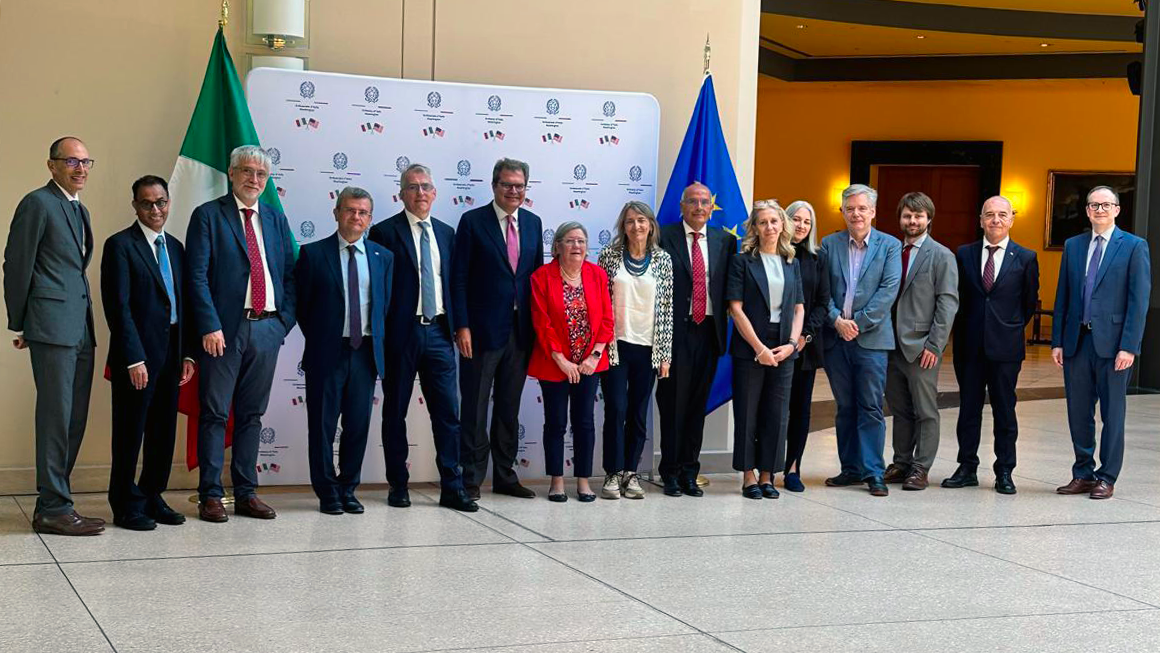
Fundamental physics and emerging technologies: Italy and the United States renew their collaboration in Washington