The MEG II experiment’s scientific collaboration, which includes the participation of INFN, is presenting a new result today, April 23, 2025, during a seminar at the Paul Scherrer Institute (PSI) in Switzerland.
“This is an important step forward in the search for the decay of a positive muon into a positron and a photon which, if observed, would represent clear evidence of physics beyond the Standard Model, opening the door to an entirely new horizon,” says Alessandro Baldini, researcher at INFN Pisa, co-spokesperson of the international MEG II Collaboration.
The new analysis of MEG II data did not reveal any significant excess of events compared to the expected background. As a result, a new upper limit on the probability of this process has been established, which is currently the most stringent in the world. The new results, based on data collected in 2021 and 2022, are described in a paper published on arXiv [link] and submitted to the journal Physical Review Letters.
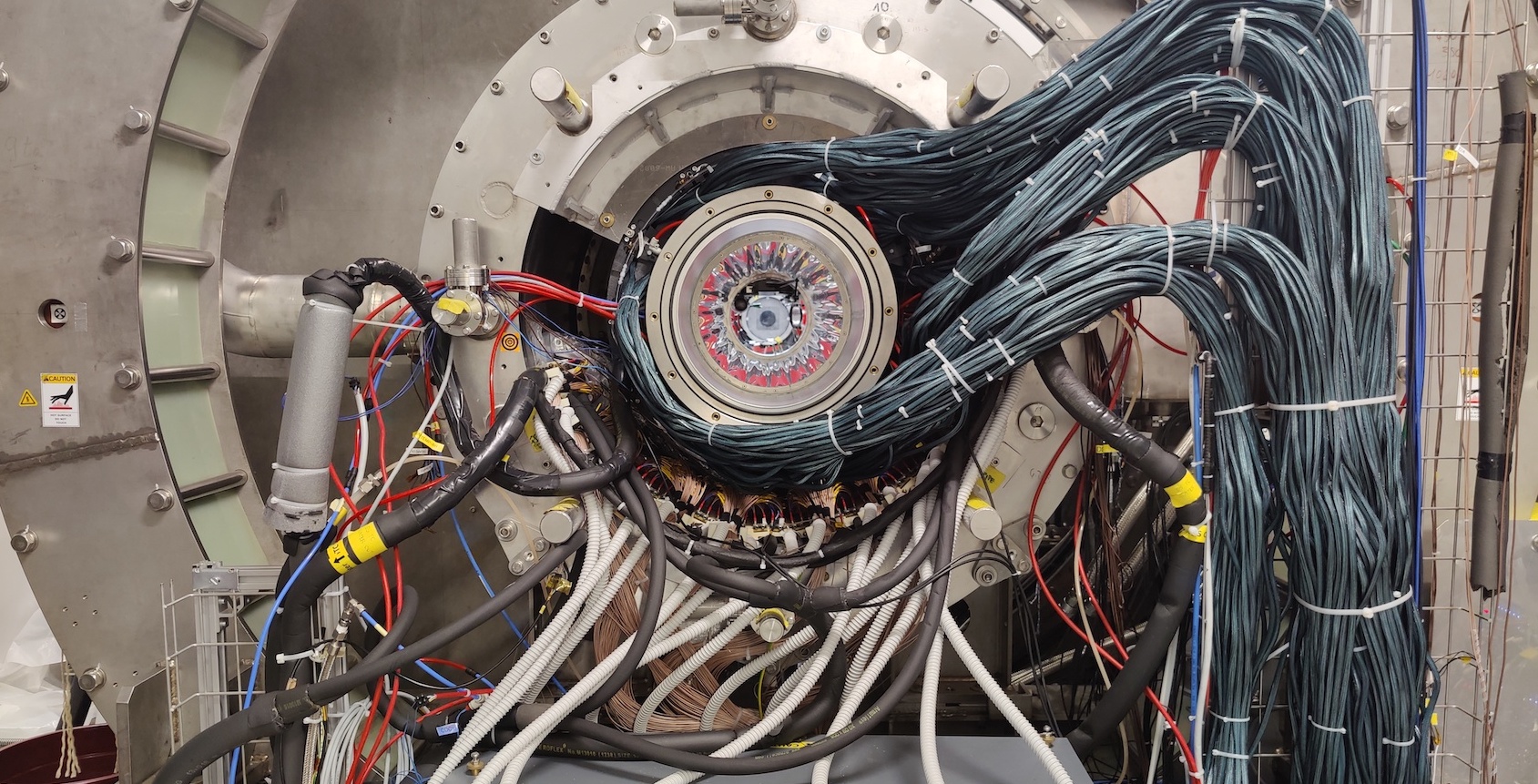
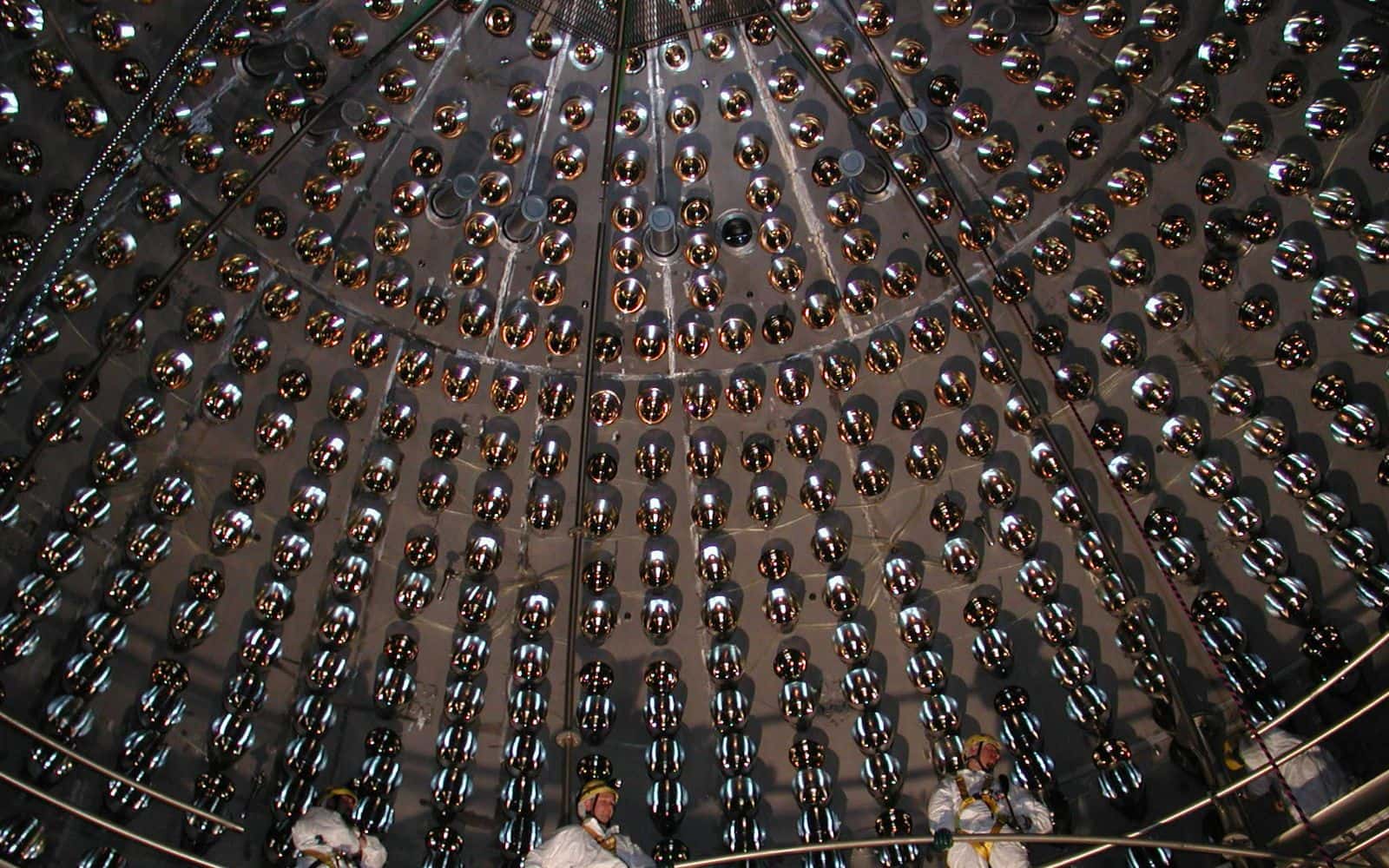
In the MEG II experiment, muons from the world’s most intense continuous muon beam are stopped on a thin target placed at the center of a superconducting magnet. The decay products are tracked by cutting-edge detectors: an ultra-light gas drift chamber and a series of scintillating plastic tiles reconstruct the positron’s trajectory and time of flight, while photons are detected using a 900-liter liquid xenon calorimeter.
The new MEG II result updates and improves the previous limit, which was obtained by combining data from the earlier MEG experiment with 2021 data from MEG II and presented in 2023 [link]. This improvement is due to the larger data sample collected in 2022, which is four times greater than that of 2021 alone, marking the first measurement based entirely on data from MEG II.
MEG II continued data taking in 2023 and 2024 and will proceed in the 2025–2026 period as well. The final MEG II dataset is expected to be about four times larger than the one currently presented. The goal is to improve the sensitivity to this decay by one order of magnitude compared to the predecessor experiment, MEG.
The MEG II collaboration includes over 70 physicists from research institutions in Italy, Japan, the United Kingdom, Russia, Switzerland, and the United States, including INFN. Italian researchers have played a leading role, guiding the construction and operation of the positron detectors.