70 Years of Neutrinos

27 February 2026

Seventy years ago, in 1956 at the height of the Cold War, two American scientists, Frederick Reines and Clyde Cowan, working in the United States at Los Alamos National Laboratory, devised a fundamental experiment in the history of science. Using the nuclear reactor at the Savannah River Site in South Carolina as a source, they succeeded, for the first time in the world, in detecting the antineutrinos emitted by the reactor, confirming the existence of these elusive and tiny particles, as abundant in the universe as they are elusive. To achieve this, they built an experimental apparatus installed 12 metres underground, to shield it from cosmic rays, consisting of tanks containing water and scintillating liquids on which they had installed photomultiplier tubes. A technique which, technologically and experimentally refined, we still find in the most modern neutrino detection experiments. Their results were published on 20 July of that same year in Science and in 1995 earned Reines the Nobel Prize (Cowan had died in 1974). A discovery that profoundly marked twentieth-century physics, but whose history begins much earlier and is intertwined with the socio-political events of the time.

The origins of the neutrino

Neutrinos are elementary particles that play a fundamental role in particle physics, astroparticle physics and cosmology. The history of the neutrino has its roots in the discovery of the atomic nucleus. At the beginning of the twentieth century, it was understood that almost all the mass of an atom is concentrated in a very small and extremely dense nucleus, with a radius about one hundred thousand times smaller than that of the atom itself. The rest consists of empty space, populated by electrons that remain in the vicinity of the nucleus, distributed according to probability waves described by quantum mechanics. It was precisely by studying what happens inside the nucleus that the first clues emerged which would lead to the discovery of the neutrino. In 1896 Henri Becquerel discovered radioactivity, understanding that some atomic nuclei are unstable and spontaneously transform by emitting radiation. It was understood that there are three types of nuclear transformation: alpha radioactivity with the emission of a helium nucleus, beta radioactivity with the emission of an electron (or a positron), and gamma radioactivity with the emission of high-energy photons. These processes are natural and spontaneous, and their understanding revolutionised nuclear physics. It is, however, beta decay that proves to be the most enigmatic, and it is here that the story of neutrinos begins.

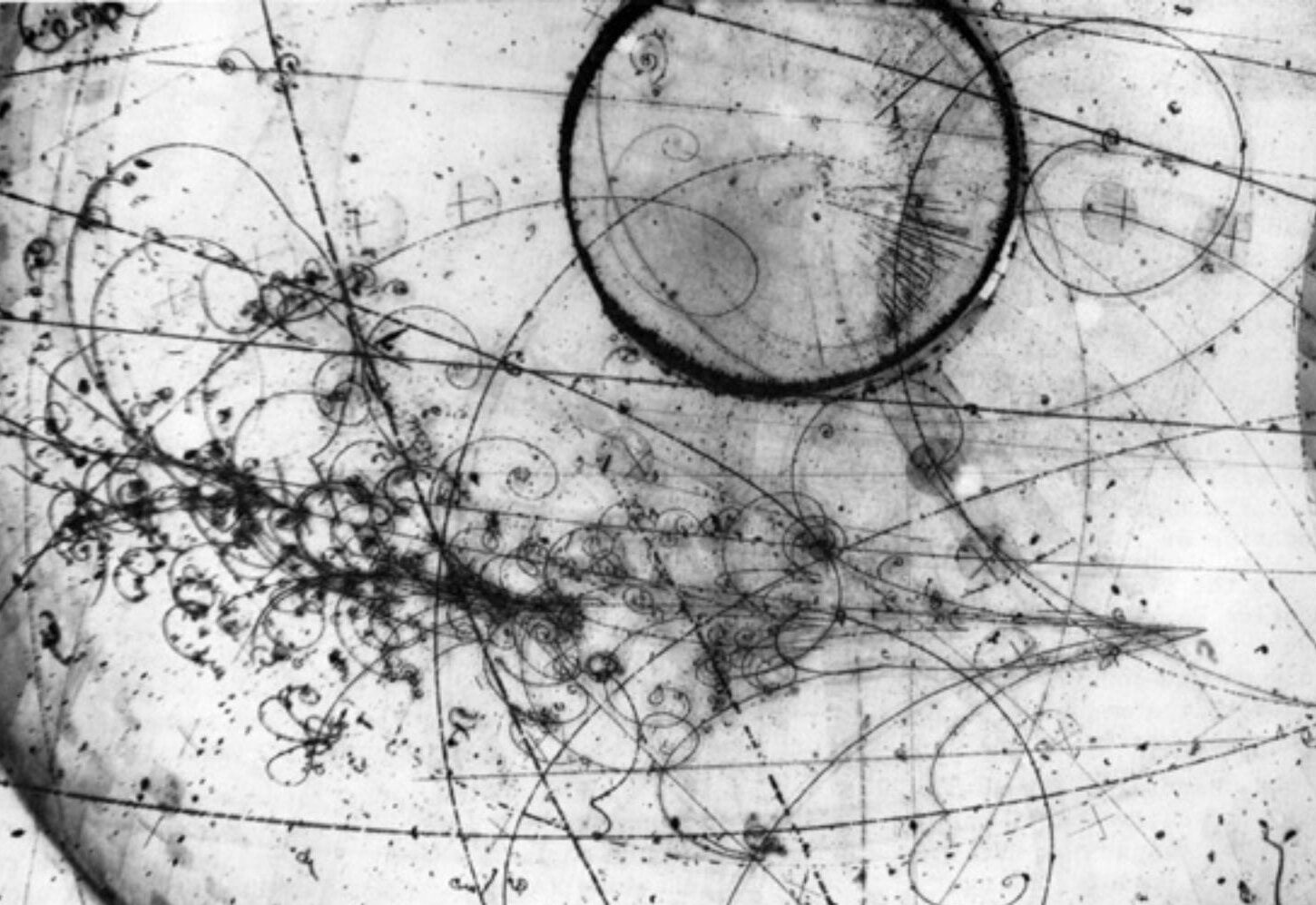
camera a bolle del Fermilab
Image of the interaction of neutrinos in the Fermilab bubble chamber taken in April 1976 (© FERMILAB)

When physicists began to measure with precision the energy of the electrons emitted in beta decays, they were faced with a surprising result: the electron was emitted with an apparently random energy, contrary to what was predicted by the laws of classical physics. This apparently implied a violation of the principle of conservation of energy: an unacceptable hypothesis for science. But this was not the only problem. Subsequent studies showed that another fundamental quantity, angular momentum, also seemed not to be conserved in the process. Among those who contributed to these analyses was Franco Rasetti, collaborator of Enrico Fermi. Finally, with the birth of quantum mechanics, an even deeper difficulty emerged: the electron could not be confined inside the nucleus before decay. The uncertainty principle formulated by Werner Heisenberg forbade it. An electron trapped in such a small space should have possessed an enormously greater energy than that observed. Beta decay therefore seemed incomprehensible. It violated energy, appeared to violate spin, and contradicted the fundamental principles of the new quantum mechanics.

immagine che rappresenta Nobel laureate Wolfgang Pauli.
Nobel laureate Wolfgang Pauli. credit

From this conceptual crisis would be born one of the boldest ideas of twentieth-century physics: the hypothesis of the existence of the neutrino. In 1930 Wolfgang Pauli proposed a solution which he himself described as desperate, so revolutionary was it for the time. Pauli hypothesised that together with the electron another particle, invisible and neutral, was emitted. This new particle would explain why the electron did not have a fixed energy: the energy available in the decay was in fact shared between the electron and this unknown entity, which would later take the name neutrino. The idea was so unconventional that Pauli did not immediately publish it in a scientific journal, but wrote it in a letter which is today preserved at CERN in Geneva.

The term neutrino, which refers to something neutral and small, was introduced by Enrico Fermi, then engaged in Rome with the group of scientists who went down in history as the Via Panisperna Boys, which included, among others, Ettore Majorana and Bruno Pontecorvo, protagonists of fundamental developments in neutrino physics. Within a few years Pauli’s hypothesis spread rapidly in the scientific community, but crucial questions remained: what the mechanism of emission of the electron and the neutrino was, and where these particles were located before decay.

The turning point came in 1934, when Fermi formulated the theory of beta decay, introducing the concept of the weak force: a new fundamental interaction of nature, responsible for the processes that occur inside the atomic nucleus. In his theory, the electron and neutrino are not particles already present in the nucleus before decay but are created at the very instant of the process. Thus, a principle destined to become central in modern physics was affirmed: particles can be created and annihilated. In beta decay, electron and neutrino are born together and are emitted simultaneously; precisely for this reason the energy is not concentrated in a single particle but is distributed between the two.

I ragazzi di via Panisperna”
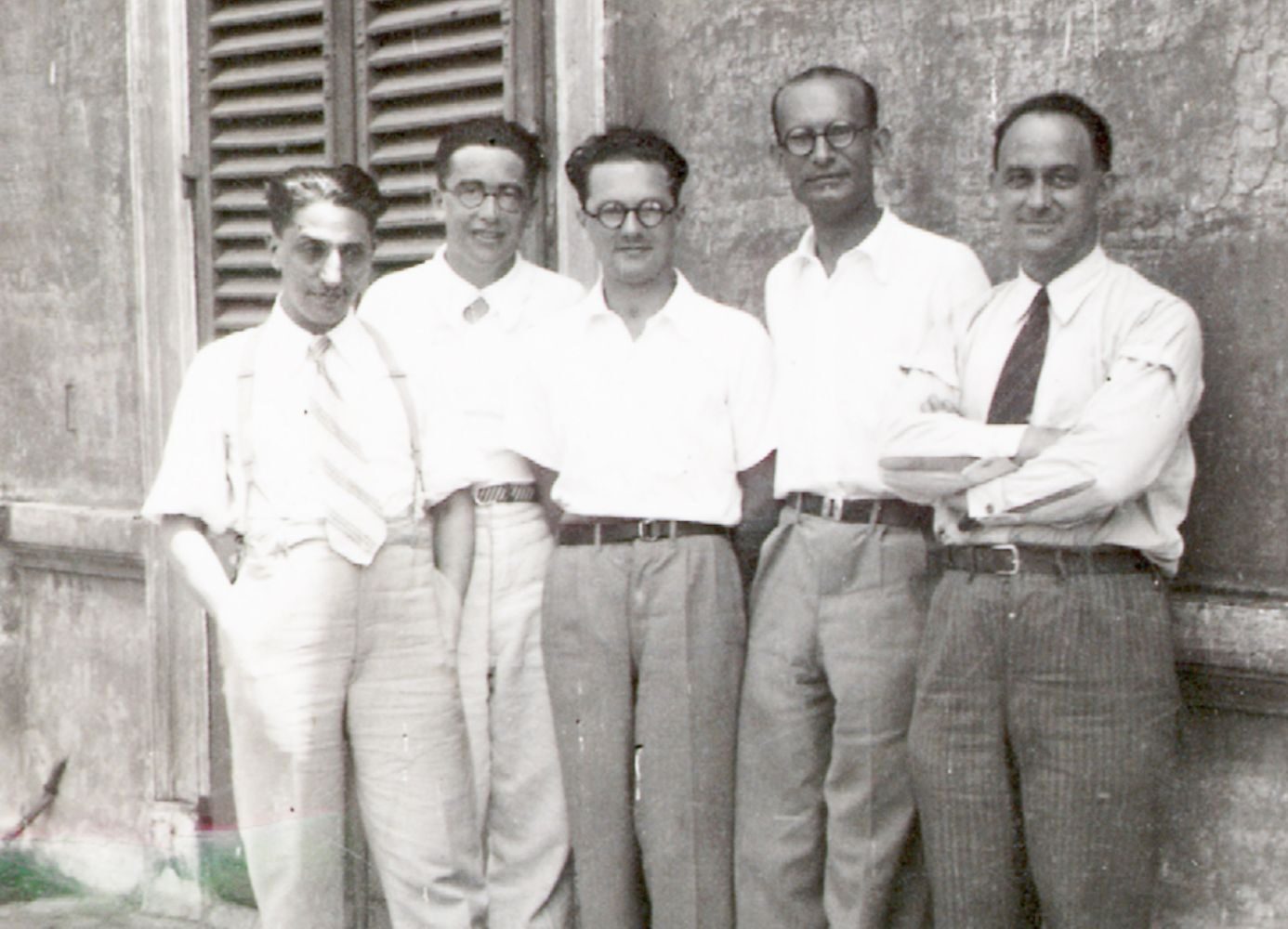
“I ragazzi di via Panisperna”, from left: Oscar D'Agostino, Emilio Segrè, Edoardo Amaldi, Franco Rasetti and Enrico Fermi. (© Amaldi Archive, Department of Physics, Sapienza University, Rome)

There was therefore a theory, but for it to enter fully into physics an experimental confirmation was required. The physicists Rudolf Peierls and Hans Bethe calculated the probability that a neutrino could strike an atomic nucleus, to understand how it might be detected. The result was surprising: the probability of interaction between a neutrino and matter proved to be extraordinarily small. The neutrino thus proved to be an extremely elusive particle, very difficult to observe. This represented an enormous problem for physics, which needed experimental verification. This confirmation would arrive only many years later, in 1956. Seventy years ago. What makes neutrinos so difficult to detect is the fact that they interact exclusively through the weak interaction; moreover, they are the only particles with this characteristic. The probability that a neutrino interacts with matter is of the order of 20 orders of magnitude (one hundredth of a billionth of a billionth) smaller than that of a photon of similar energy: a value so low as to allow them to escape from the centre of the Sun, to cross the universe or to be produced in a nuclear reactor and pass through the Earth without colliding with almost anything. Precisely thanks to this ability to pass undisturbed through extremely dense and inaccessible regions, neutrinos carry precious information about environments otherwise impossible to explore. However, intercepting them is extremely difficult: to detect them, gigantic fluxes of particles and very large detectors are required. The first artificial source of neutrinos used by physicists for fundamental research was a nuclear reactor. The first uranium fission nuclear reactor was switched on in December 1942 under the guidance of Enrico Fermi, who at only 37 years of age had received the Nobel Prize in Physics in 1938 “for his identification of new radioactive elements produced by irradiation with neutrons and for his discovery of nuclear reactions brought about by slow neutrons”. After the Nobel ceremony, Fermi did not return to Italy: from Copenhagen, where his friend Niels Bohr resided, he embarked for the United States, where he would make a decisive contribution to the development of nuclear physics, while in Europe the Second World War had already broken out.

Another Italian physicist, Bruno Pontecorvo, a pupil of Fermi, devoted himself to the study of elementary particles and would make a very important contribution to nuclear physics. Pontecorvo studied neutrinos, muons and electrons, and intuited that two distinct types of neutrino might exist, an extraordinarily innovative idea for the time, which he did not, however, fully develop in those years. In 1946 he began to devise and propose experimental methods to detect neutrinos. In a document of that year, the first in which the conceptual structure of chlorine-based detectors that would only be built many years later for the study of solar neutrinos was explicitly outlined, Pontecorvo described a pioneering approach destined to mark the history of particle physics. That work, however, remained unknown for about twenty years: it was classified for military reasons, in a historical period in which science, politics and war were deeply intertwined. It was the context of the post-war period and the beginning of the Cold War, when fundamental research on elementary particles moved along the thin boundary between pure knowledge and strategic applications.
poltergeist-2
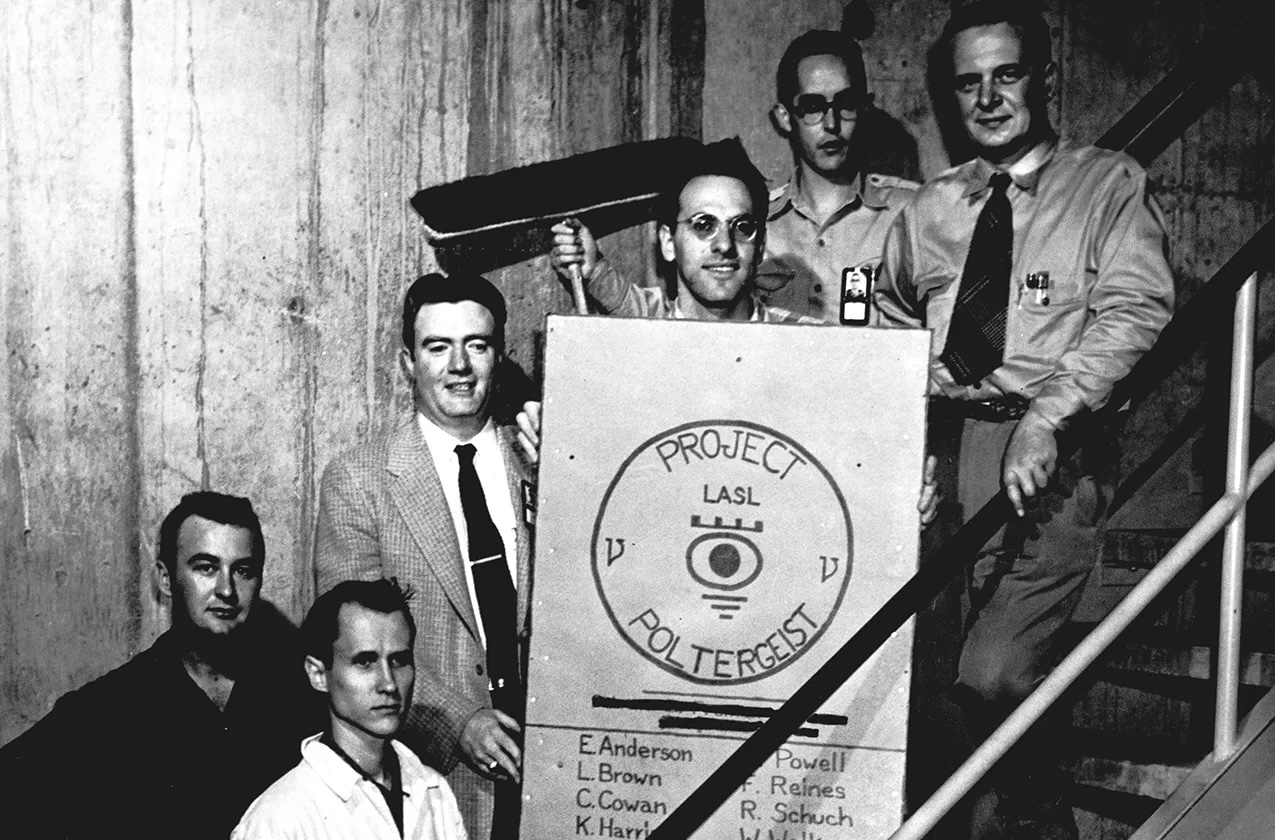
Gli scienziati del Progetto Poltergeist.

In the United States, in 1953, scientists Frederick Reines and Clyde Cowan set up, near the Savannah River Site nuclear fission reactor, a detector of considerable size for the time. The experiment was part of Project Poltergeist, a name chosen precisely to evoke the elusiveness of the neutrino, a particle as ephemeral as a ghost. The experimental apparatus consisted of a series of detectors containing tanks of water and scintillating liquids, substances that emit light when traversed by charged particles. This light, called Cherenkov light, represented the detector signal of the interaction of the antineutrino produced in the reactor. After years of attempts and refinements, the determination of the two physicists was rewarded: in 1956, they announced the observation of the first antineutrino, a fundamental milestone in the history of particle physics.

In the same years, while the first direct experimental evidence of the neutrino’s existence was being obtained in the United States, independent and significant neutrino research was also being conducted in Hungary. At the Atomki Institute (Institute for Nuclear Research), physicists Gyula Csikai and Sándor Szalay studied the decay of helium-6, an ideal system for observing the recoil effect associated with neutrino emission, i.e., the “missing” momentum carried away by the invisible particle. The two researchers managed to record, in a bubble chamber, the image of an event compatible with the decay of helium-6, in which the nucleus emits an electron and a neutrino. This was a result of great importance, providing further experimental evidence of the neutrino’s existence. However, that photograph was never published. In 1956, Hungary was invaded by the Soviet Union, and their scientific activity was swept away by geopolitical events. This chapter of physics history has been recently recognised with Atomki being designated a Historic Site of Particle Physics by the European Physical Society.

The Three Families of Neutrinos

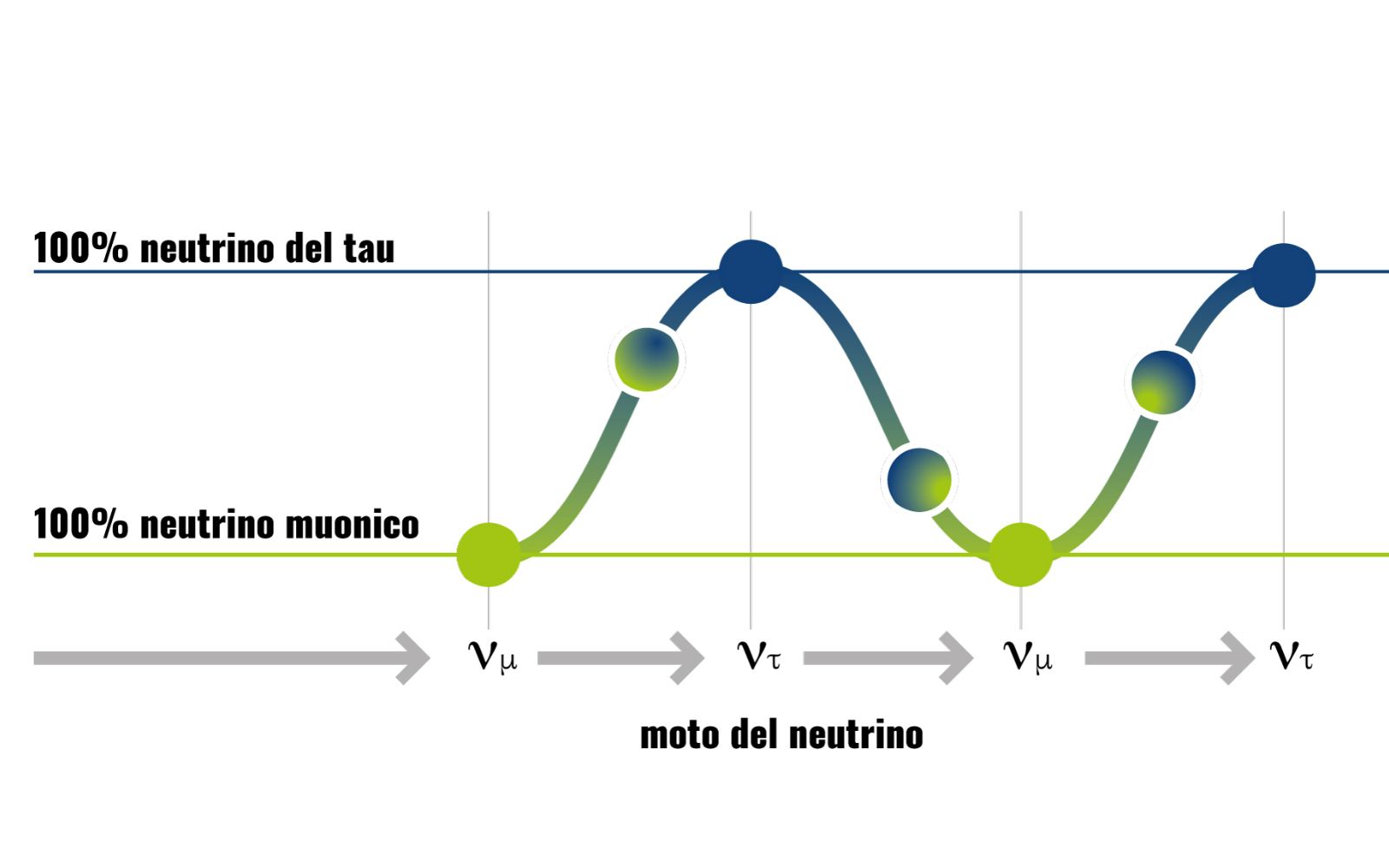
In the 1960s, following an idea by Bruno Pontecorvo, physicists Leon Lederman, Melvin Schwartz, and Jack Steinberger conducted an experiment destined to mark a turning point in particle physics. Using a neutrino beam produced by an accelerator, they managed to demonstrate that the hypothesis of multiple types of neutrinos was correct. Their results showed that neutrinos were not only those associated with beta decay, introduced in the 1930s by Enrico Fermi, which were of the electron type, but that there existed at least a second, distinct type of neutrino. This was the first experimental evidence of the muon neutrino, a discovery that earned the three physicists the Nobel Prize in Physics in 1988. In subsequent years, the picture was completed: today we know that there are three types of neutrinos, each associated with a charged particle of the same “family”. There is the electron neutrino, linked to the electron; the muon neutrino, associated with the muon; and the tau neutrino, partner of the tau particle, discovered in the 1970s by Martin Lewis Perl. The discovery of the three families of neutrinos represented a fundamental step in the construction of the Standard Model of elementary particles and opened new perspectives in the study of the deeper properties of matter.

Infografica Oscillazione del neutrino
Infografica Oscillazione del neutrino (© INFN)

From the 1970s onwards, neutrino physics has taken on an increasingly central role in fundamental research. Neutrinos have become objects of study because they represent a unique tool for investigating the weak interaction: unlike many other particles, they are unaffected by the strong or electromagnetic interactions, but only by the weak force (as well as gravity). At the same time, the neutrino has established itself as a privileged probe of the universe. Coming from the Sun, from the hearts of stars, from supernova explosions, and from other cosmic sources, neutrinos carry direct information about regions otherwise inaccessible. For this reason, a deep understanding of their nature and characteristics is essential, and for this purpose, artificial sources capable of producing intense and stable fluxes have been created, together with ever larger and more sophisticated detectors in the world’s main laboratories. Among these, a leading role is played by the Gran Sasso National Laboratories of INFN, built in a unique location, 1400 metres deep under the Gran Sasso massif thanks to the brilliant insight of physicist Antonino Zichichi, recently deceased, who with extraordinary vision proposed to orient them towards CERN, from which, many years later, a neutrino beam generated by an accelerator would be sent and detected by the OPERA and ICARUS experiments, the latter later moved to Fermilab in the USA, where it is currently taking data as part of the Short-Baseline Neutrino (SBN) programme. At the Gran Sasso Laboratories, neutrino-dedicated experiments have achieved results of great international significance, including the Borexino experiment.

entrata galleria LNGS
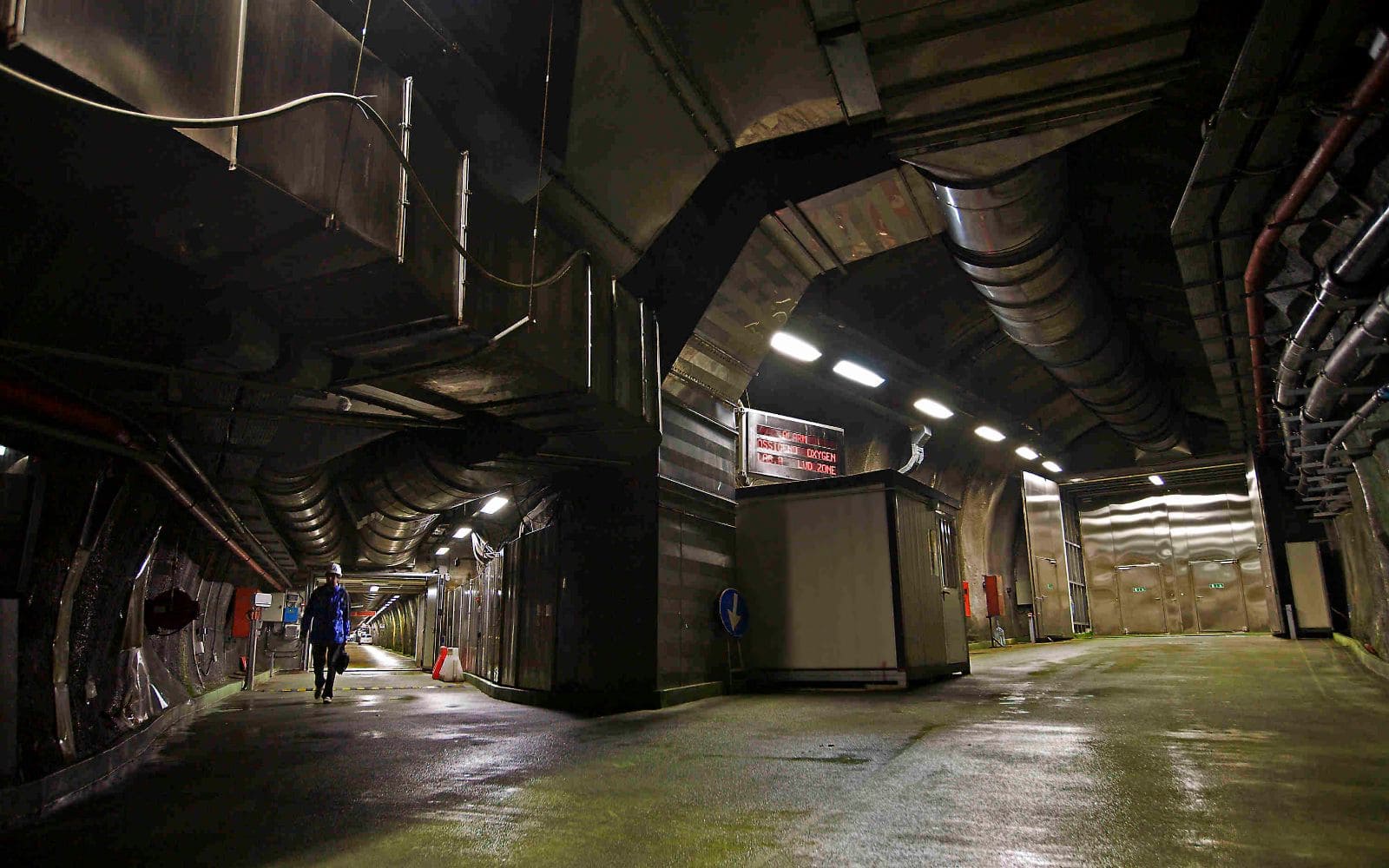
The entrance to the underground tunnel of the Gran Sasso Laboratories (© INFN).

Studying the Sun with Neutrinos and Studying Neutrinos with the Sun

In 1920, Sir Arthur Eddington proposed that the source of energy in stars was nuclear fusion. Shortly before, Francis William Aston had developed the mass spectrometer, an instrument capable of precisely measuring the mass of atoms, showing that the helium nucleus is slightly lighter than four hydrogen atoms. Eddington realised that this mass difference could be converted into energy, according to Einstein’s relation. It would take about twenty years of theoretical and experimental research to fully understand the mechanisms of stellar fusion. In the Sun, energy is produced mainly through two cycles of nuclear reactions: the proton-proton chain and the CNO (carbon-nitrogen-oxygen) cycle. These reactions produce neutrinos that immediately escape the solar core and reach the Earth in about eight minutes, providing “real-time” information on what is happening at the heart of the Sun. Photons, on the other hand, take hundreds of thousands of years to emerge from the surface. In the 1970s, Raymond Davis Jr. initiated in the United States, at the Homestake Mine in South Dakota, the first large experiment on solar neutrinos. The detector, known as the Homestake Experiment, used a large amount of chlorine, following an idea originally proposed by Pontecorvo. However, Davis observed a number of neutrinos lower than theoretical predictions: this gave rise to the “solar neutrino problem”, which was later resolved thanks to discoveries by two experiments using gigantic and spectacular detectors in Japan and Canada.

superkamiokande l

In the 1980s, the Kamiokande experiment in Japan became operational, a huge water Cherenkov detector equipped with thousands of photomultipliers, capable of observing Cherenkov light produced by particles generated by neutrino interactions with water. Kamiokande provided the first “image” of the Sun in neutrinos, directly demonstrating that they indeed come from the solar core. In the early 1990s, at the Gran Sasso National Laboratories of INFN, the GALLEX experiment (Gallium Experiment) used a gallium detector to measure low-energy solar neutrinos, particularly those produced in the proton-proton fusion chain, which dominates in the Sun. GALLEX confirmed the deficit of electron neutrinos compared to theoretical predictions, providing a decisive contribution to understanding the so-called “solar neutrino problem” and preparing the ground for its resolution.

A few years later, in Canada, the Sudbury Neutrino Observatory (SNO) became operational, a detector designed to separately measure electron neutrinos and the total flux of all neutrino families (known in physics as flavours). SNO decisively demonstrated that solar neutrinos change type during their journey from the Sun to the Earth (a phenomenon called oscillation), thus solving the “solar neutrino problem” and providing fundamental evidence that neutrinos have mass. The discoveries obtained in Japan, studying neutrinos produced by cosmic rays in the atmosphere by physicist Takaaki Kajita with the Super-Kamiokande experiment, and in Canada, by physicist Arthur B. McDonald observing solar neutrinos with the Sudbury Neutrino Observatory, were awarded the 2015 Nobel Prize in Physics.

The Institute National for Nuclear Physics, with its newsletter Particle Chronicle, publish in its latest issue a double interview with the two eminent scientists.

Read the interview with Takaaki Kajita and Arthur McDonald

In the 2000s, the Borexino experiment at the Gran Sasso National Laboratories studied solar neutrinos with unprecedented precision thanks to a detector filled with an ultra-pure scintillating liquid, pseudocumene. Borexino directly measured both the main fusion chains, publishing between 2007 and 2016 the best available measurements on proton-proton chain neutrinos and directly confirming that neutrinos in the Sun undergo oscillations amplified by passage through matter; additionally, in 2022, the first experimental measurement of the CNO cycle in the Sun. Furthermore, it provided the best measurement of geoneutrinos, neutrinos produced by the natural radioactivity of the Earth, providing fundamental information on the contribution of radiogenic heat inside the planet.

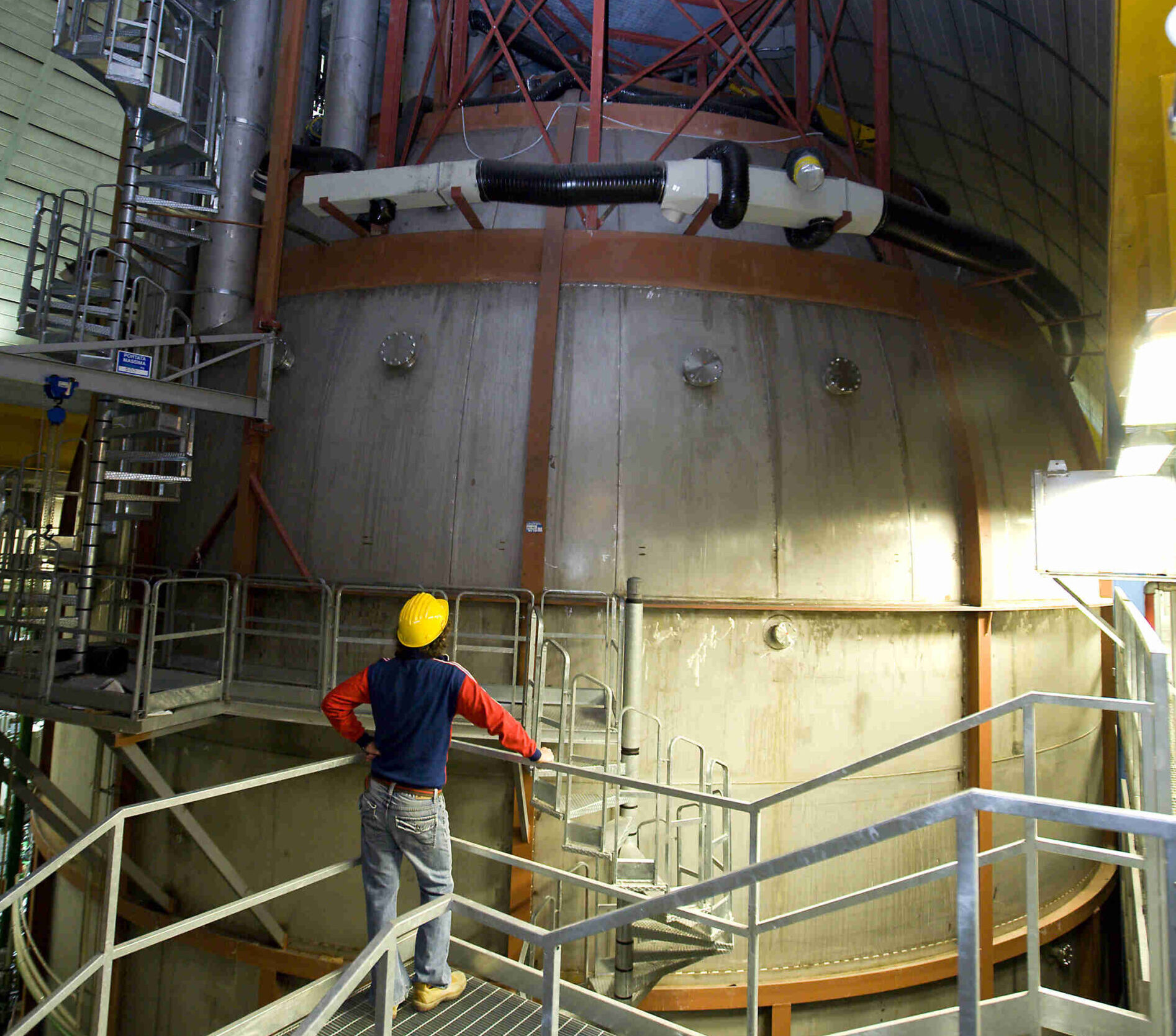
L'esperimento Borexino ai Laboratori nazionali del Gran Sasso dell'INFN

Neutrinos from Supernovae and Galaxies

In 1987, the explosion of supernova SN 1987A in the Large Magellanic Cloud provided the first direct observation of neutrinos from a star in explosion, opening the path to neutrino astrophysics. Today, physicists and astrophysicists also study ultra-high-energy neutrinos from extragalactic sources, such as active galactic nuclei powered by supermassive black holes. The largest detector in the world is IceCube, installed in the ice of the South Pole: it is the first astrophysical neutrino telescope and has identified ultra-high-energy neutrinos of cosmic origin. Among these is a 2017 event, in which IceCube detected a cosmic neutrino in association with ultra-high-energy gamma photons observed by various space-based gamma telescopes, including the Large Area Telescope of the Fermi satellite, developed by NASA with significant participation from INFN. This was the first time a neutrino detector was used to locate an astrophysical object subsequently observed with other “cosmic messengers”, a discovery that fits into the framework of the recent multimessenger astronomy, a new approach to exploring the universe that allows the same astrophysical event to be investigated through different cosmic messengers, carrying complementary information.

In the Mediterranean Sea, at depths between 2,500 and 3,500 metres, KM3NeT is under construction, a large multisite underwater detector destined to become the largest neutrino telescope in the northern hemisphere.

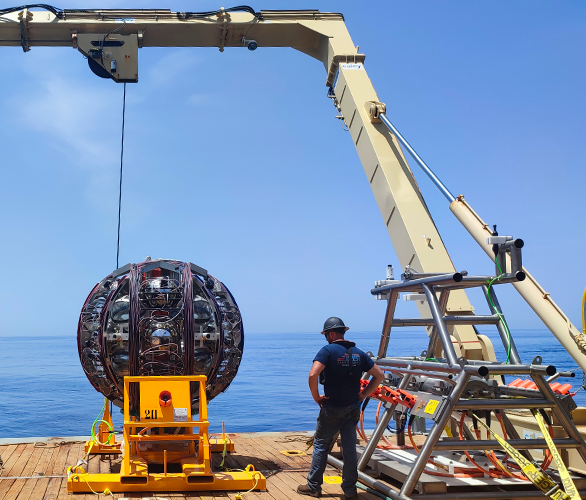
In 2025, KM3NeT observed a cosmic neutrino of exceptionally high energy (about 220 PeV), the most energetic ever observed so far, whose astrophysical origin is still under study. The KM3NeT neutrino telescope will be a giant deep-water infrastructure distributed over two detectors, ARCA and ORCA. The KM3NeT/ARCA detector (Astroparticle Research with Cosmics in the Abyss) is primarily dedicated to studying the highest-energy neutrinos and their sources in the universe. It is located at a depth of 3,450 m, about 80 km off the coast of Portopalo di Capo Passero, Sicily. Its detection units (DUs), 700 m high, are anchored to the seabed and positioned about 100 m apart. Each DU is equipped with 18 Digital Optical Modules (DOMs), each containing 31 photomultipliers. In its final configuration, ARCA will comprise 230 DUs. Data collected are transmitted via a submarine cable to the onshore station of the INFN Gran Sasso South Laboratories.

The KM3NeT/ORCA detector (Oscillation Research with Cosmics in the Abyss) is optimised to study the fundamental properties of neutrinos. It is located at a depth of 2,450 m, about 40 km from the coast of Toulon, France. It will consist of 115 DUs, each 200 m high and spaced 20 m apart. Data collected by ORCA are sent to the onshore station at La Seyne-sur-Mer. KM3NeT is an international collaboration and a major research infrastructure included in the European Strategy Forum on Research Infrastructures (ESFRI) roadmap. INFN is among the major research organisations involved in KM3NeT, with active groups at the Gran Sasso South Laboratories and at the Bari, Bologna, Catania, Florence, Genoa, Naples, Padua, and Rome sections, as well as the affiliated group in Salerno, in collaboration with the corresponding universities.

Esperimento Km3net. operazioni in mare. credit INFN

New Frontiers in Neutrino Research

Neutrino physics was therefore born within nuclear studies and, over the course of about a century, has gradually expanded to become one of the most dynamic fields of fundamental research. Today, it connects particle physics, astrophysics, and cosmology, offering a privileged perspective on the most extreme phenomena in the universe, from supernova explosions to large-scale cosmic evolution. The numerous theoretical and experimental discoveries, also made possible by the development of cutting-edge technologies, have profoundly transformed our understanding of these elusive particles. However, fundamental questions remain, at the heart of the work of international scientific collaborations in which INFN participates, including experiments hosted at the INFN Gran Sasso National Laboratory.

Neutrinos and Antineutrinos

One of the crucial questions concerns the very nature of the neutrino: is it a particle distinct from its antiparticle, or does it coincide with it? Elementary particles possess a property called spin, discovered in the 1950s, which we can imagine as a kind of rotation on themselves, similar to tiny spinning tops. The neutrino, however, behaves in a particular way: because it only feels the weak force and due to its tiny mass, it effectively spins in only one direction. Since it has an extremely small mass and interacts only via the weak interaction (and gravity), in nature we always observe it with only one possible “orientation”. This behaviour implies a violation of the so-called parity symmetry, one of the fundamental symmetries in physics.

The phenomenon is interpreted by two possible theoretical hypotheses awaiting experimental confirmation. In the formulation proposed by Paul Dirac, neutrino and antineutrino are distinct particles. In the hypothesis advanced by Ettore Majorana, the neutrino could coincide with its own antiparticle, the two particles having only opposite spin. Determining whether the neutrino is a Dirac or Majorana particle remains today one of the central topics of international research.

LNGS cuore
LNGS cuore

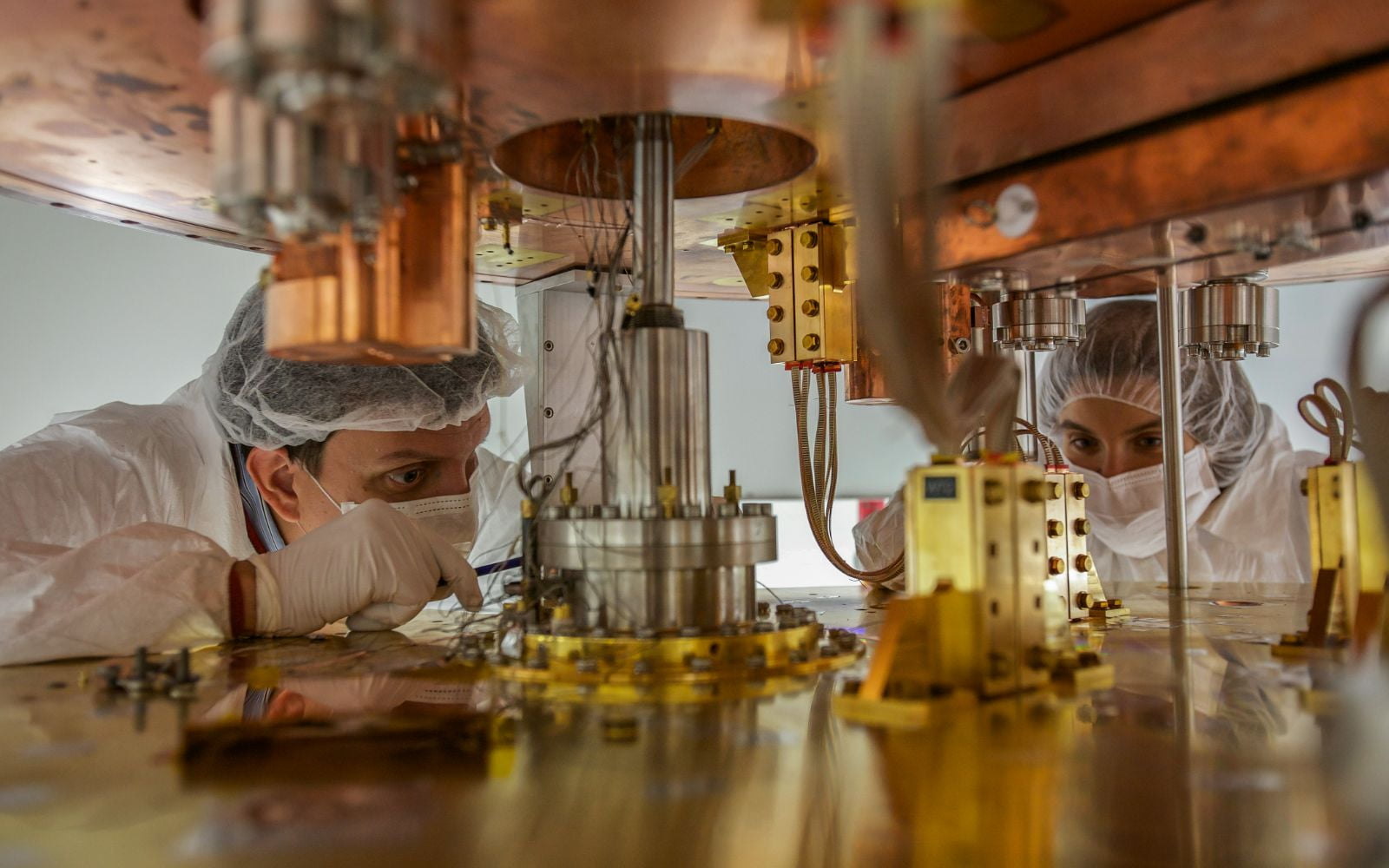
The Institute National for Nuclear Physics is at the forefront of the search for the Majorana neutrino. Demonstrating this property would be a decisive step in understanding the fundamental laws of nature and could help explain why matter dominates over antimatter in the universe. This research is conducted mainly at the Gran Sasso National Laboratories, where extremely sensitive cryogenic experiments are carried out, designed to observe a very rare phenomenon: neutrinoless double beta decay. The possible discovery of this process would indicate that the neutrino is a Majorana particle. Key experiments in this scientific challenge include CUORE, a detector made of tellurium crystals shielded by ultra-pure lead recovered from a Roman ship sunk two thousand years ago off Sardinia, CUPID-0, and the future CUPID and LEGEND (successor to the GERDA experiment), representing the technological evolution of previous research. Operating at temperatures close to absolute zero, these detectors can measure extremely rare energy signals, compatible with events that may occur perhaps only once over extremely long timescales.

The Mass of Neutrinos

We know that neutrinos have mass, but determining its exact value is one of the great open challenges in physics. So far, no experiment has measured it directly: we can only establish an upper limit. The most advanced experiment in this research is KATRIN, hosted at the Karlsruhe Institute of Technology, Germany. KATRIN studies the tritium decay with extremely high precision. By analysing the energy of the electrons emitted in this process, scientists can infer information about the neutrino mass. The most recent results show that the neutrino mass is less than about half a millionth of the electron’s mass: an incredibly small value, confirming how light these particles are compared to all other known particles.

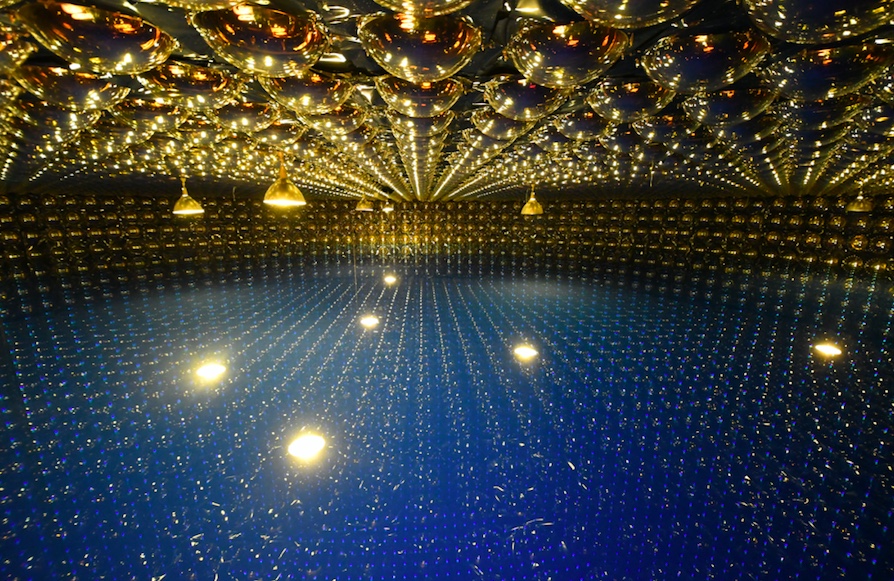
JUNO experiment: acrylic sphere at the centre of the detector and photomultipliers

The JUNO experiment is one of the most ambitious international projects in neutrino physics. Located in China, about 700 metres underground beneath the city of Jiangmen, JUNO is a huge underground observatory using a sphere of over 20,000 tonnes of scintillating liquid to detect neutrinos and antineutrinos with extremely high precision. JUNO’s main scientific goal is to determine the neutrino mass ordering, measuring with great accuracy how antineutrinos produced by two nearby nuclear power plants oscillate during their journey to the detector. JUNO’s international collaboration, with participation from INFN and numerous other scientific institutions, makes it one of the protagonists of the new generation of neutrino detectors, with a research programme spanning decades.

The Cosmic Neutrino Background

The Cosmic Neutrino Background (CνB) is one of the most fascinating predictions of the Big Bang model, and also one of the most difficult to verify experimentally. According to theory, the cosmic neutrino background exists everywhere. Just as the Cosmic Microwave Background exists (the fossil radiation emitted about 380,000 years after the Big Bang), there should also be a “sea” of primordial neutrinos produced when the universe was just born, which have travelled almost undisturbed until today. The cosmic neutrino background is a very solid prediction of standard cosmology but extremely difficult to verify experimentally. It represents a very ambitious scientific and technological challenge that will unfold in the coming years. It may be less difficult to measure the combined effect of these neutrinos using cosmological measurements. Indeed, although extremely light, the relic neutrinos from the Big Bang are so numerous that their gravitational effect on the collective motion of galaxies and the formation of cosmic structures could be observable. The ESA Euclid satellite and the ground-based Vera Rubin telescope will provide new cosmological maps in the coming years, potentially giving us valuable information on neutrino mass.

The Mystery of Matter–Antimatter Asymmetry

One of the great questions of physics concerns the asymmetry between matter and antimatter in the universe. Theories indicate that, immediately after the Big Bang, matter and antimatter were produced in nearly identical amounts. Yet today, everything we know, from stars to planets to ourselves, is made of matter. What happened to antimatter? Why did it mysteriously disappear? One of the most fascinating hypotheses is that the mechanism responsible for this asymmetry is also related to neutrinos. Some of their still partly unknown properties may have favoured, in the first moments of the universe, the prevalence of matter over antimatter, determining its fate. Understanding the role of neutrinos in this process is one of the central challenges of contemporary physics and could help explain why the universe exists in the form we know today.

The Future is Long Baseline

The future of neutrino physics lies in increasingly complex and monumental experiments, based on neutrino beams travelling hundreds or even thousands of kilometres before being detected. These are the so-called long-baseline (LB) experiments, in which accelerators produce intense neutrino beams “shot” towards gigantic detectors located far from the source. The goal is to study neutrino oscillations with extreme precision, that is, their ability to transform from one type to another during the journey. By observing how they change along the path, scientists can obtain crucial information on their fundamental properties.


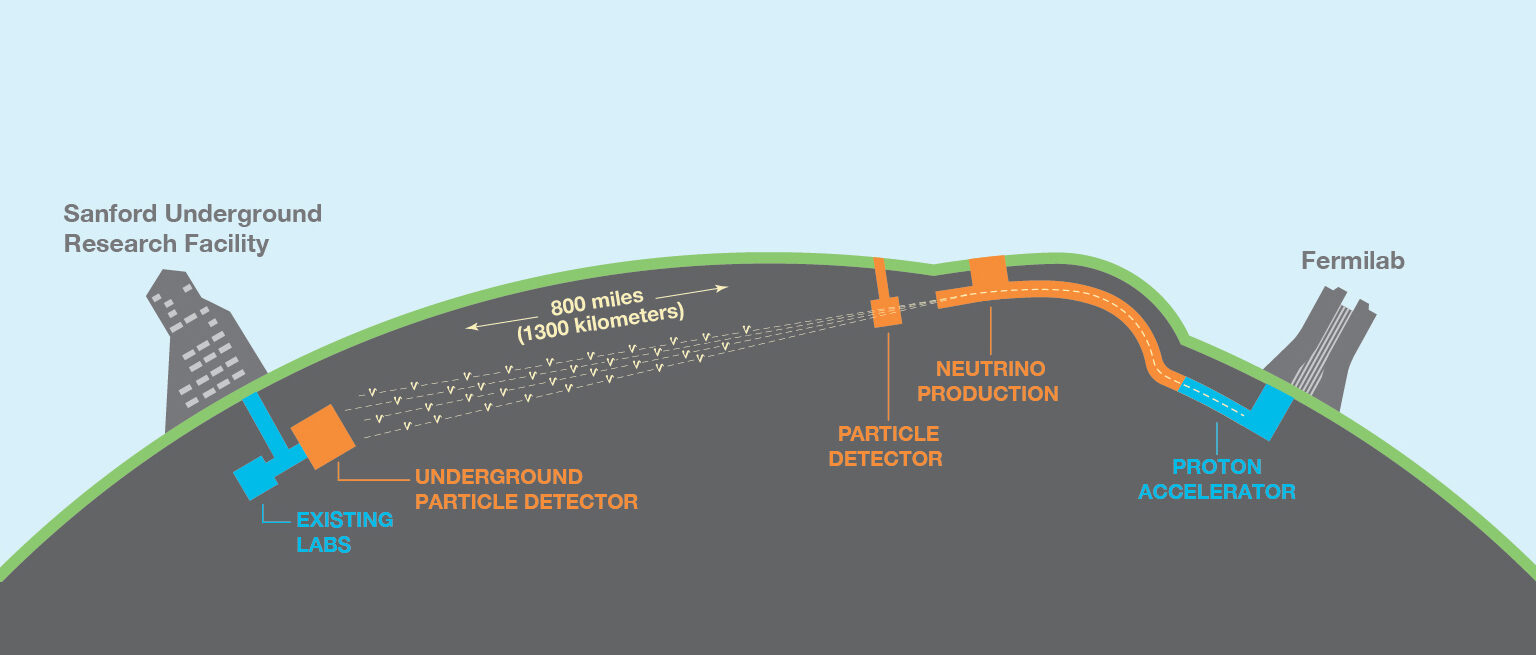
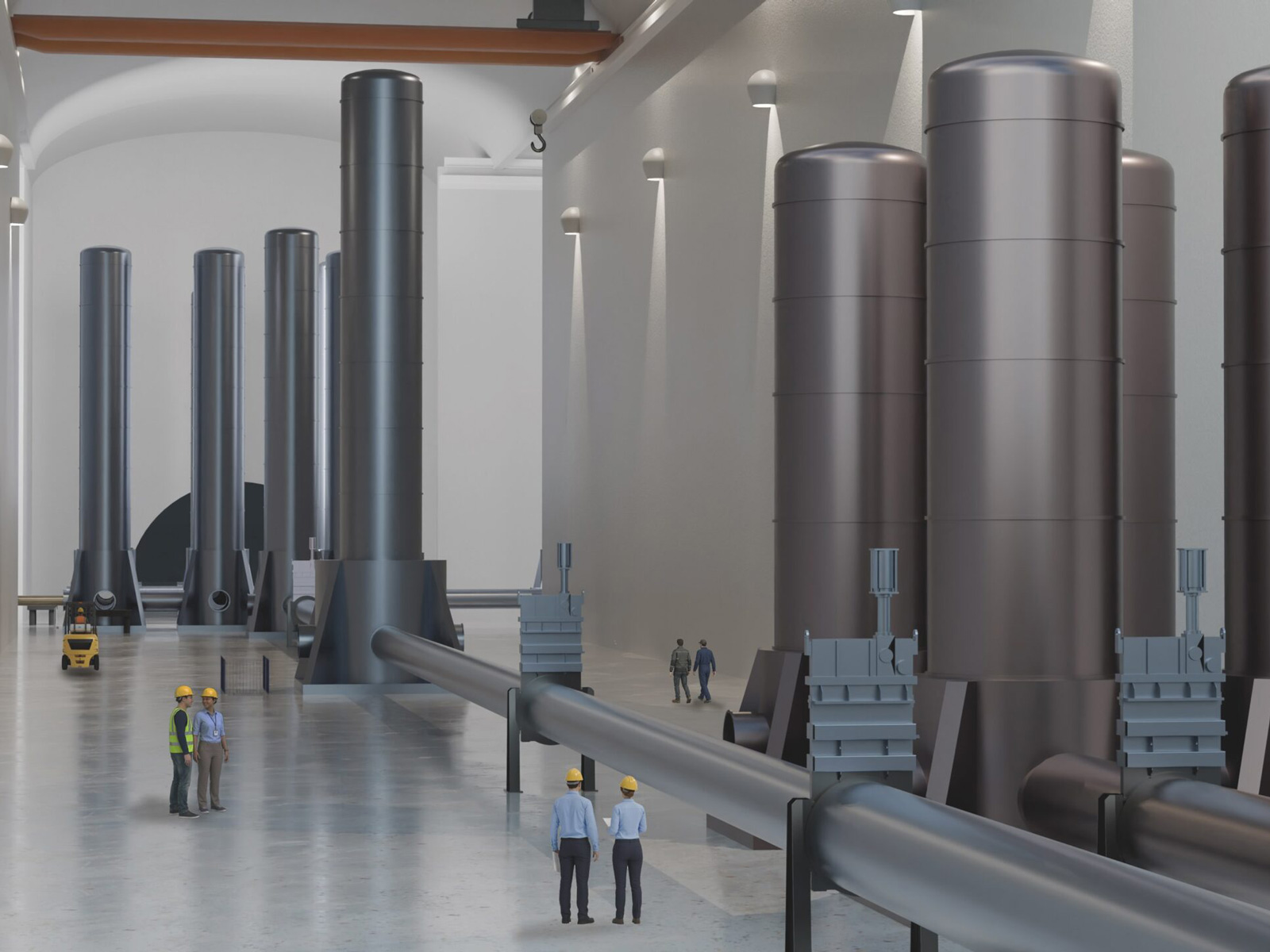
In the United States, the Deep Underground Neutrino Experiment (DUNE) is under construction, a large international project involving two underground detector complexes approximately 1,300 kilometres apart. The neutrino beam will be produced at Fermilab (FNAL), near Chicago, using a new high-intensity superconducting accelerator. The neutrinos will then travel to the Sanford Underground Research Facility (SURF) in South Dakota, where the main underground detector (Far Detector) will be installed. A detector near the source (Near Detector) will instead measure the initial characteristics of the beam. Italy, through INFN, provides a decisive contribution to both the Near and Far Detectors and is also involved with the ICARUS experiment, currently operational, whose technology will later be used in DUNE’s large-scale detectors.

attachment-lbnf-dune-graphic-mi-km-2016-2

In Japan, work continues on another large long-baseline experiment: Hyper-Kamiokande. The heart of the project will be a next-generation detector, consisting of an enormous water tank located about 600 metres deep, with a volume over eight times larger than its predecessor, Super-Kamiokande. The detector will be about 300 kilometres from the J-PARC accelerator, which will produce the neutrino beam. In parallel with the construction of the main detector, the J-PARC neutrino beam is being upgraded and intermediate and near-source detectors are being built, essential for characterising the beam at the start of its long journey. In this project, called Tokai-to-Hyper-Kamiokande (T2HK), Italian participation is extensive, involving several INFN sections and numerous universities.

These major future experiments have, among their scientific missions, the ambitious goal of studying neutrino oscillations to determine whether there is a difference between neutrinos and antineutrinos in oscillations. If such a difference exists, a violation of the symmetry between matter and antimatter, it could be the key to understanding the greatest and oldest “disappearance” in cosmic history: the disappearance of antimatter from the primordial universe. Understanding the nature of neutrinos and their behaviour, therefore, also brings us closer to explaining why the universe exists in the form we know today.


Content: Ufficio Comunicazione INFN – COMUNICAZIONE ISTITUZIONALE E MEDIA


You might also be interested in
scienziata

Stem passion

03 February 2026 Read more Stem passion

WomenInScience

Nuclear fission and fusion

fondo cosmico

Studying the universe from space

Revolution AI

07 November 2025 Read more Revolution AI

The quest for dark matter