Thanks to nuclear physics, we know that heavy elements can transmute, both naturally through radioactive decay and in the laboratory under neutron or proton bombardment. This also applies to precious elements like gold, whose production, starting from the transformation of common metals such as lead, has been the dream of alchemists and beyond. In an article published in the journal Physical Review C, the ALICE scientific collaboration presents the measurement of lead transmutation into gold achieved through a new mechanism involving missed collisions between lead nuclei at the LHC at CERN. https://journals.aps.org/prc/abstract/10.1103/PhysRevC.111.054906
Lead nuclei, accelerated to ultra-relativistic speeds, generate intense electromagnetic fields that produce photon pulses. When lead nuclei do not collide and thus do not produce nuclear interactions, electromagnetic interactions occur that can lead to the emission of neutrons or protons from the nucleus that absorbs these photons. The lead nucleus then becomes thallium, mercury, or gold, depending on whether 1, 2, or 3 protons are emitted. Although less frequent than the creation of thallium or mercury, the results show that the LHC currently produces gold at a rate of about 89,000 nuclei per second. Gold nuclei emerge from the collision with very high energy and hit collimators at various points, where they immediately fragment into single protons, neutrons, and other particles. Gold exists only for a very short fraction of a second and in a very small quantity.
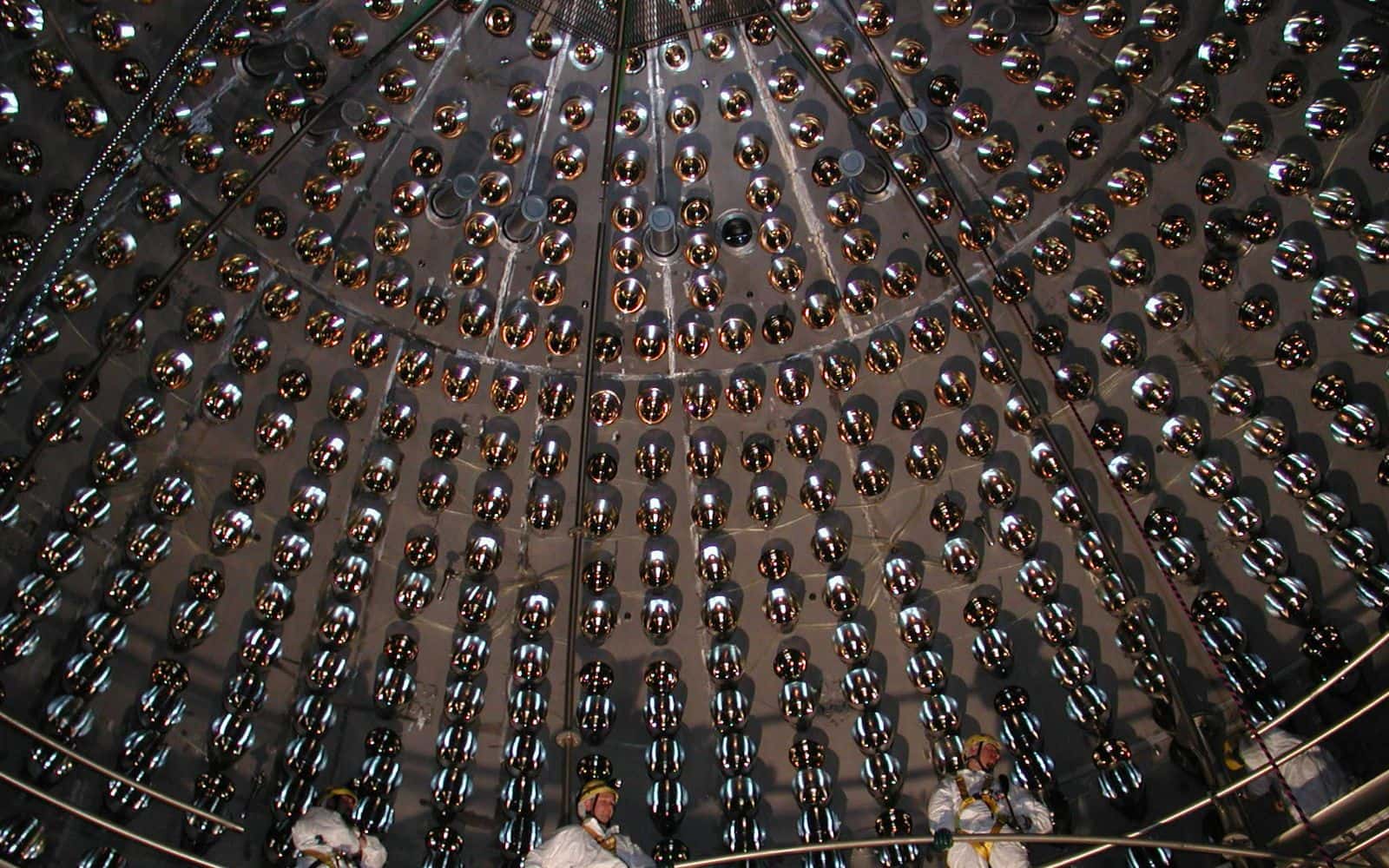
To measure the production of gold atoms, the ALICE team used zero-degree calorimeters (ZDC), detectors designed and built by Italian groups from the INFN divisions of Turin and Cagliari. From 2015 to 2018, during LHC Run 2, 86 billion different isotopes of gold were produced across the four LHC experiments.
“The ancient dream of alchemists to transmute lead into gold has been realized by science at the LHC. For the first time, lead has been transmuted into gold by harnessing light, that is, photons,” emphasizes Chiara Oppedisano, researcher at the INFN division of Turin.