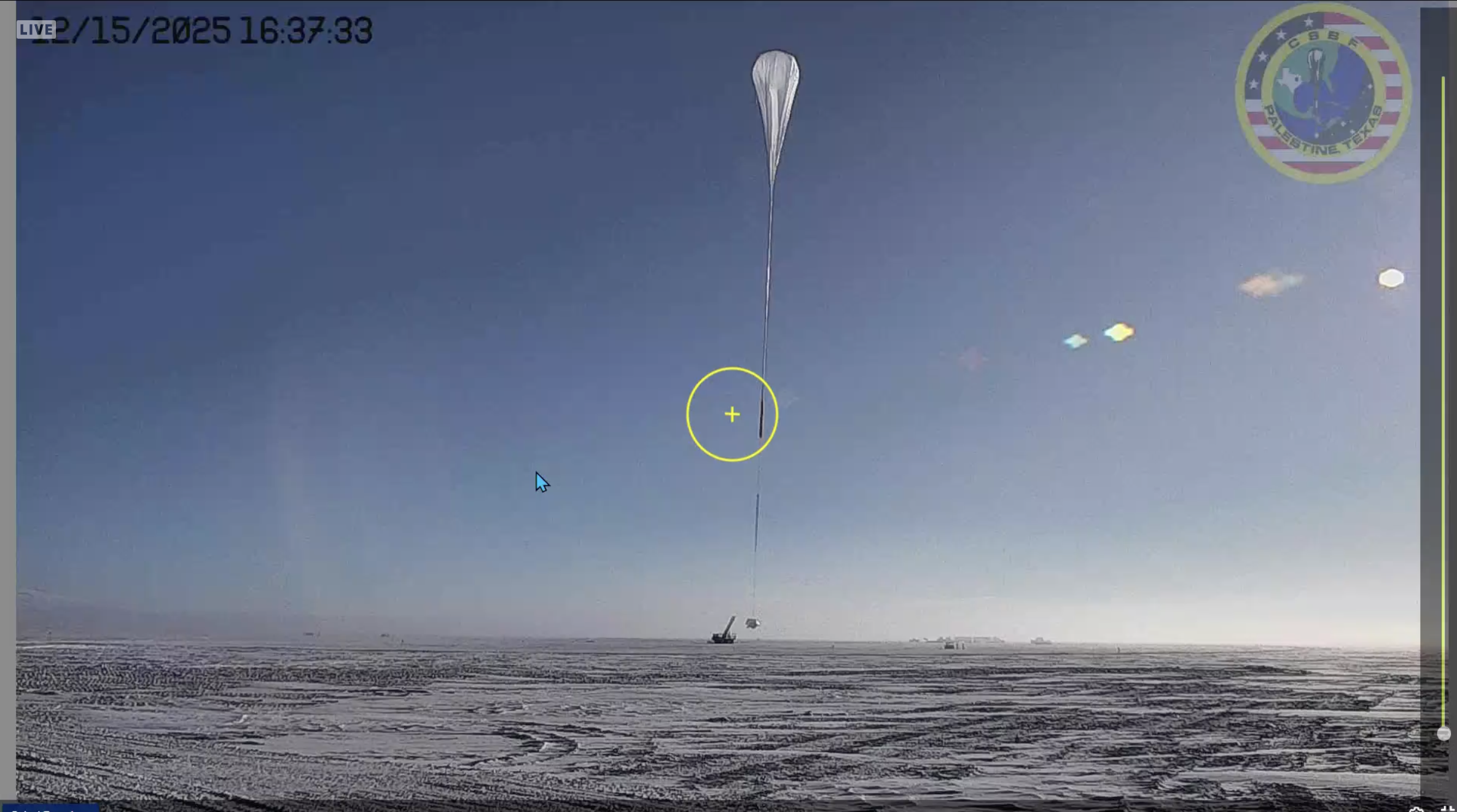
The GAPS experiment (General AntiParticle Spectrometer), dedicated to the study of antimatter in cosmic rays, has successfully launched from Antarctica. The launch took place from NASA’s McMurdo base on Monday 15 December at 17:37 (Italian time), corresponding to 05:37 on Tuesday 16 December in New Zealand, thanks to a large stratospheric balloon that carried the scientific payload to an altitude of about 37 kilometres. Initial checks have confirmed that all systems are functioning properly, and the experiment is now acquiring its first data.
The NASA-supported GAPS collaboration involves research institutions from the United States, Japan and Italy. The Italian participation, supported by the Italian Space Agency (ASI), includes researchers from the National Institute for Nuclear Physics (INFN) and from the Universities of Florence, Pavia, Bergamo, Naples, Turin, Rome Tor Vergata and Trieste.
The launch took place as part of the activities of the LDB (Long Duration Balloon) base of NASA’s Columbia Scientific Balloon Facility (CSBF), a unique facility in the world operating in Antarctica at around 78 degrees south latitude. Here, the particular atmospheric conditions allow stratospheric balloons to carry out long-duration flights, even lasting several weeks, following circular trajectories around the South Pole. This enables scientists to collect large amounts of data in an ideal environment for the study of cosmic rays.
GAPS’s scientific goal is ambitious: to study the extremely rare antimatter component present in cosmic rays, energetic particles coming from space, with particular attention to low-energy antinuclei, such as antiprotons, antideuterium and antihelium. The possible observation of these signals could provide fundamental clues about the nature of dark matter, one of the major open questions of modern physics.
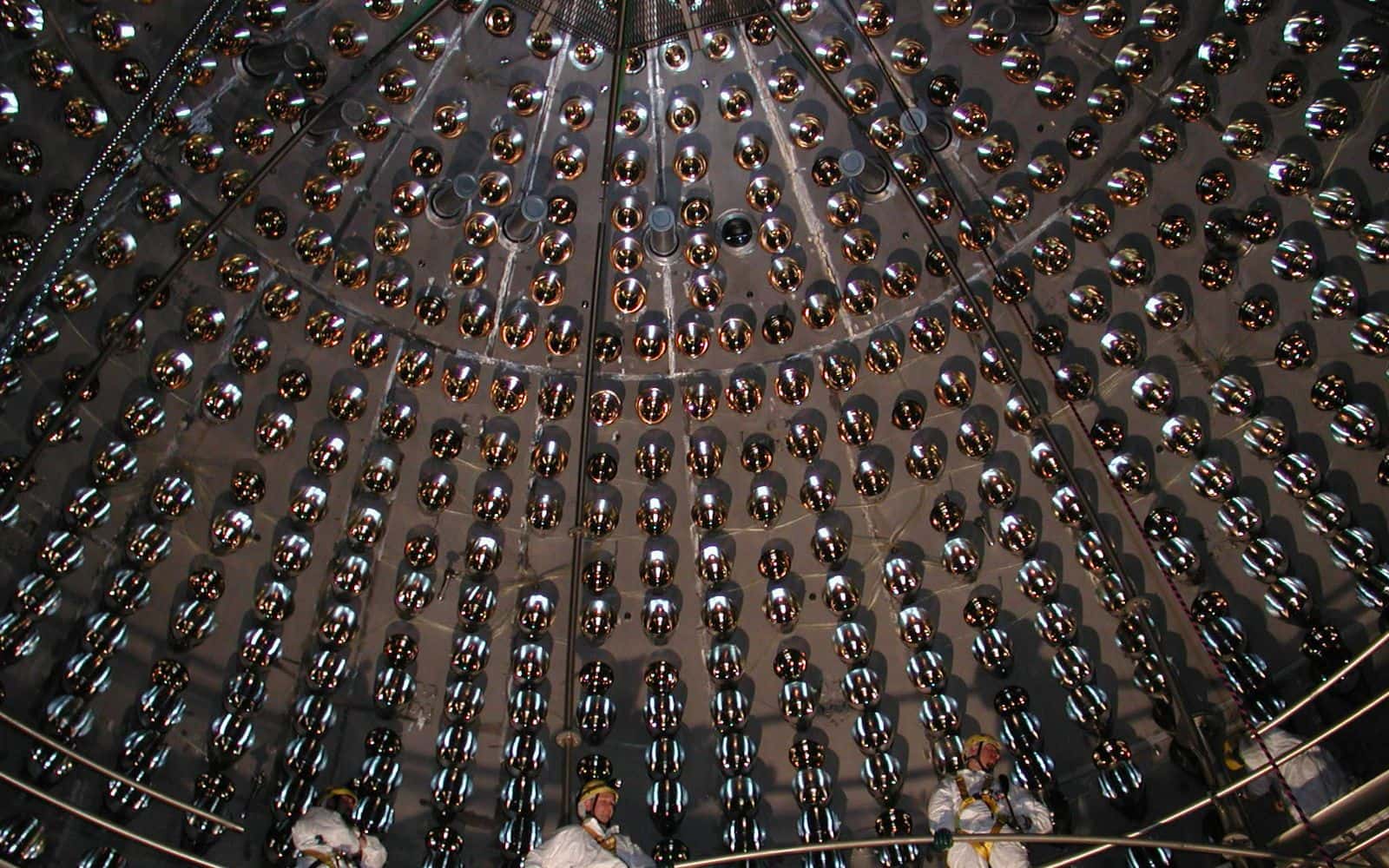
To do this, GAPS uses an innovative technique. When an antimatter particle enters the detector, it is captured by the atoms of the material and forms an ‘exotic’ atom, namely an atom in which the nuclear antimatter particle, with negative charge, orbits around the positively charged nucleus. The annihilation of the antinucleus and the decay of the exotic atom emit characteristic signals. By analysing these signals, scientists can precisely identify the type of antiparticle observed.
A key contribution to the development of the experiment comes from Italy. The Italian component of the collaboration has designed and built the tracker, the system that measures the arrival direction of cosmic rays, based on silicon sensors, a sophisticated readout and power-supply electronics system, capable of identifying very few events of interest within an enormous flux of cosmic particles.
“We are pleased to announce that the GAPS experiment has finally taken flight”, comments Mirko Boezio, INFN researcher and national coordinator of the Italian GAPS collaboration. “After the Antarctic campaign of 2024, during which adverse wind conditions had prevented the launch, this year the goal was achieved in just one week. This success demonstrates how the commitment and dedication of researchers from different countries, united by a common goal, can make a significant contribution to science, helping to unveil some of the mysteries of the universe, such as the nature of dark matter. We thank all the Italian colleagues who have collaborated over the years and who are currently analysing the first data”.
“The launch of the GAPS experiment – adds Elisabetta Cavazzuti, GAPS project manager for ASI – is the culmination of years of work, achieved also thanks to the well-established expertise that the Italian research group, supported by the Italian Space Agency, has made available to the international project. Scientific projects involving experiments flown on stratospheric balloon platforms represent unique research opportunities as well as training opportunities for young researchers, because they allow scientific teams to contribute directly to all phases of design, development, testing, operations and data analysis”.