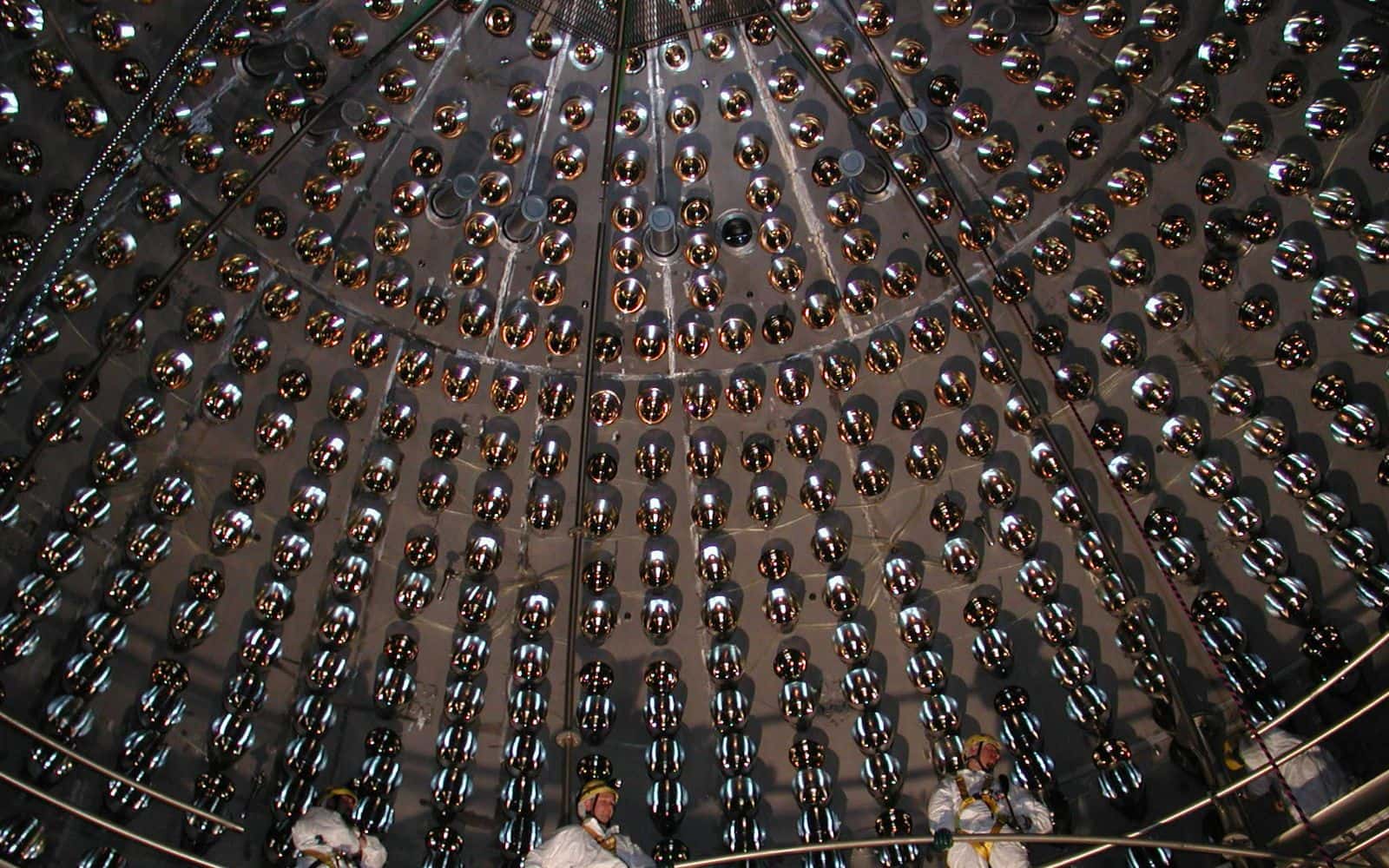
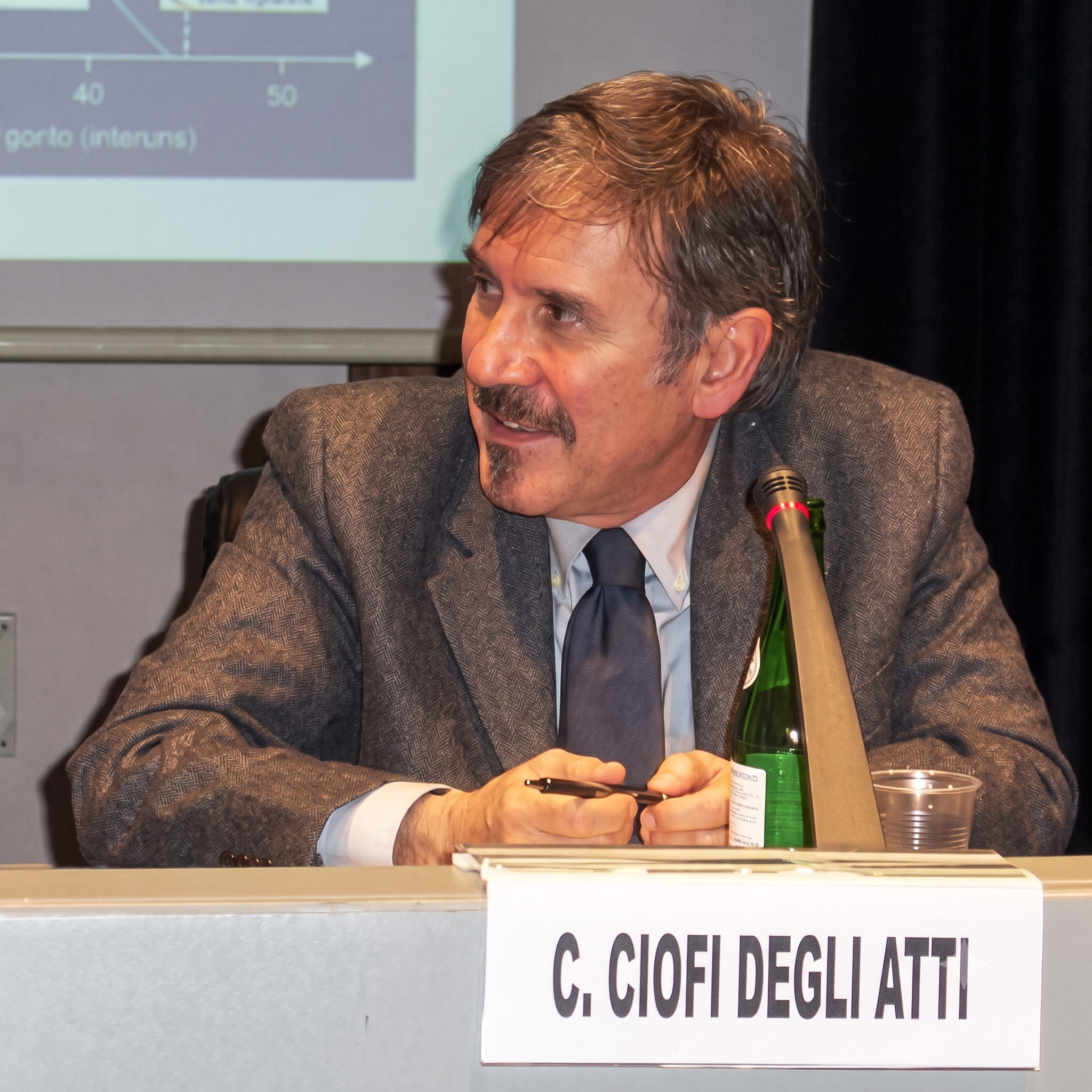
For ten years, in the bowels of the Gran Sasso mountain, the Borexino experiment has been scanning the sky above us and the heart of our planet, installed at the INFN Gran Sasso National Laboratories (LNGS). The tenth anniversary of Borexino’s full operation and of the collection of scientific data was celebrated at LNGS and at the Gran Sasso Science Institute (GSSI) with an event that attracted the most important physicists and astrophysics in the world, including Art McDonald, Nobel Prize winner in Physics in 2015 for his neutrino studies, Yoichiro Suzuki, Head of Super-Kamiokande, one of the world’s most important neutrino experiments, Victor Matveev, Director of the JINR in Dubna, the most important Russian physics research centre, Masayuki Nakahata, one of the authors of the measurement of the latest supernova explosion detected on Earth, Alexei Smirnov, author of the MSW effect explaining neutrino oscillation, Laura Cadonati, Deputy Head of the LIGO collaboration who, along with the colleagues from the Virgo collaboration, made the historic discovery of gravitational waves, Jim Cao, Vice President of IHEP, the Chinese high energy physics institute, and many others. Their host was Gianpaolo Bellini, creator of Borexino and its coordinator for 22 years, while opening the proceedings were Fernando Ferroni, President of INFN and Stefano Ragazzi, Director of LNGS. With important results ranging from the measurement of the properties of solar neutrinos in a wide energy spectrum, of the Sun’s energy at the time of its generation, to the detection of geoneutrinos and to the first observation in a vacuum of the neutrino oscillation phenomenon, Borexino has had and still has significant resonance in all major international conferences, giving fundamental contributions to our advances in physics, astrophysics and geophysics. These results were made possible thanks to the technological success of Borexino, which holds the world record for the “most radio-pure” experiment in its sector. The experiment, the result of a collaboration between European countries (Italy, Germany, France, Poland), the United States and Russia, will continue its data acquisition for a few more years, improving the accuracy of the measurements already taken as well as addressing new ones.