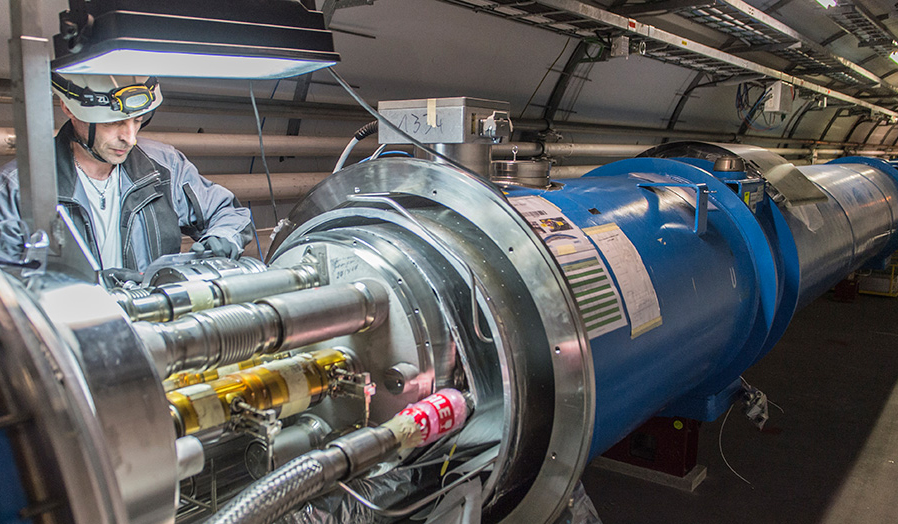
 After a two-year break, the LHC, the super particle accelerator of CERN in Geneva, is giving end to the last check before launching its second period of activity, the Run 2, thus restarting its research. Even more powerful, it will achieve energy levels hitherto never explored by physicists in the laboratory. The machine was switched off on 14 February, 2013 to enable work to be carried out that has led to its increase in performance. With a slight delay due to a technical accident occurred in a connection between a magnet and its diode, Run 2 is about to begin. Thus, shortly, the first proton beams will be injected into the 27-kilometre ring of the particle accelerator, while the first particle collisions are expected in the next months. In the enhanced version, the LHC will operate with almost double the energy of its predecessor, reaching 13 TeV at the point of particle collision. This will allow physicists to look for signs of physics beyond the Standard Model, the theory that today represents our best description of nature, of elementary particles and their interactions. It will also be an opportunity to verify theories that in the first stage were impossible to test, from dark matter, to super-symmetry and extra dimensions.

The song of the whales returns off the coast of Sicily

INFN and INAF express solidarity with their colleagues at INGV

Mariafelicia De Laurentis Elected President of SIGRAV
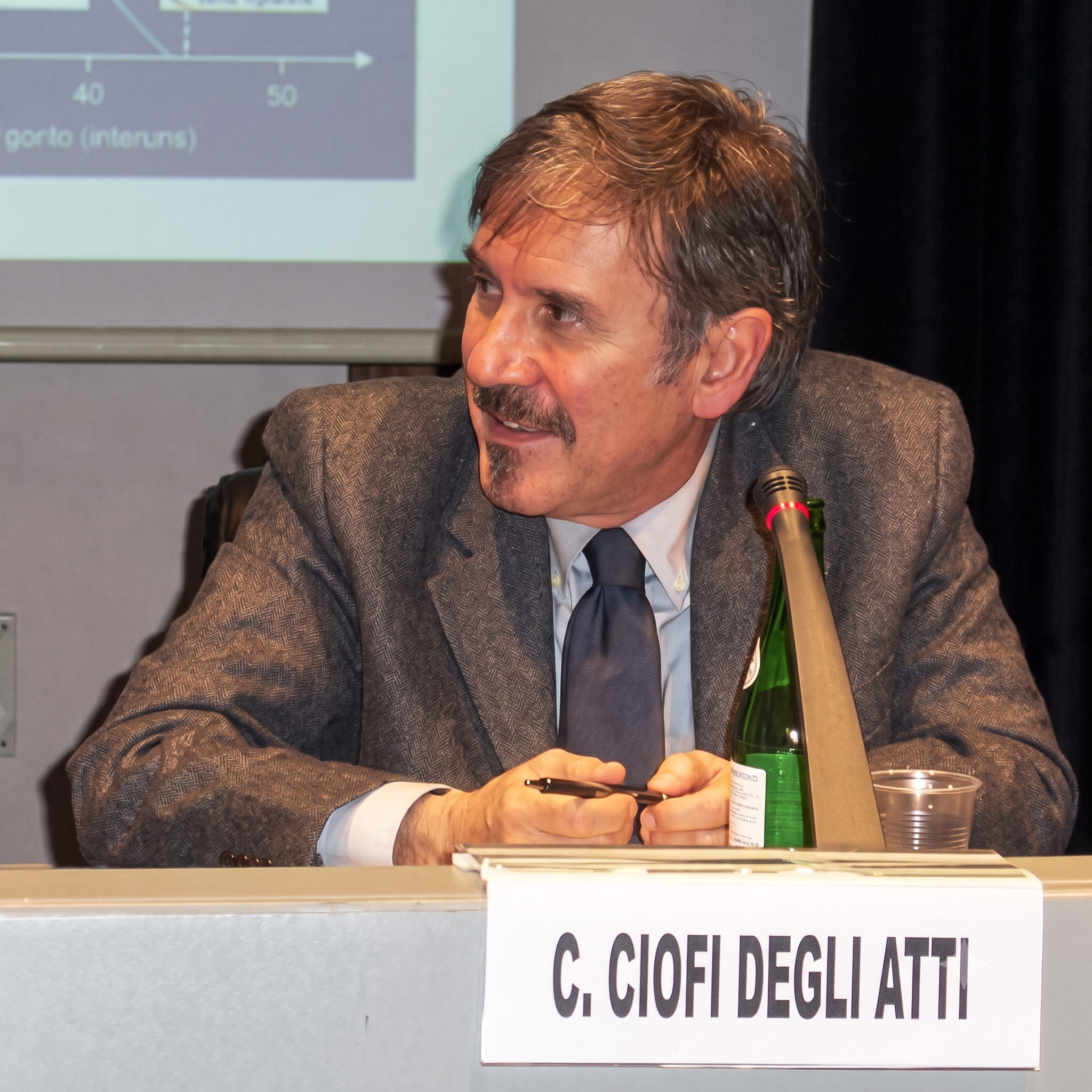
Farewell to Claudio Ciofi degli Atti
03 July 2026
Read more Farewell to Claudio Ciofi degli Atti