The Collaboration of the ICARUS (Imaging Cosmic And Rare Underground Signals) experiment, led by Nobel Prize winner Carlo Rubbia, has presented the first results on neutrino oscillations in the Booster Neutrino Beam at Fermilab, in the United States, searching for a possible disappearance of muon neutrinos. The results are described in a scientific article made available on the ArXiv platform and submitted to the journal Physical Review D for publication. The analysis is based on data collected by ICARUS in the period 2022–2023, corresponding to about 2.05×10²⁰ protons on target, and represents the first search for neutrino oscillations carried out by the ICARUS experiment since it has been operating at Fermilab.
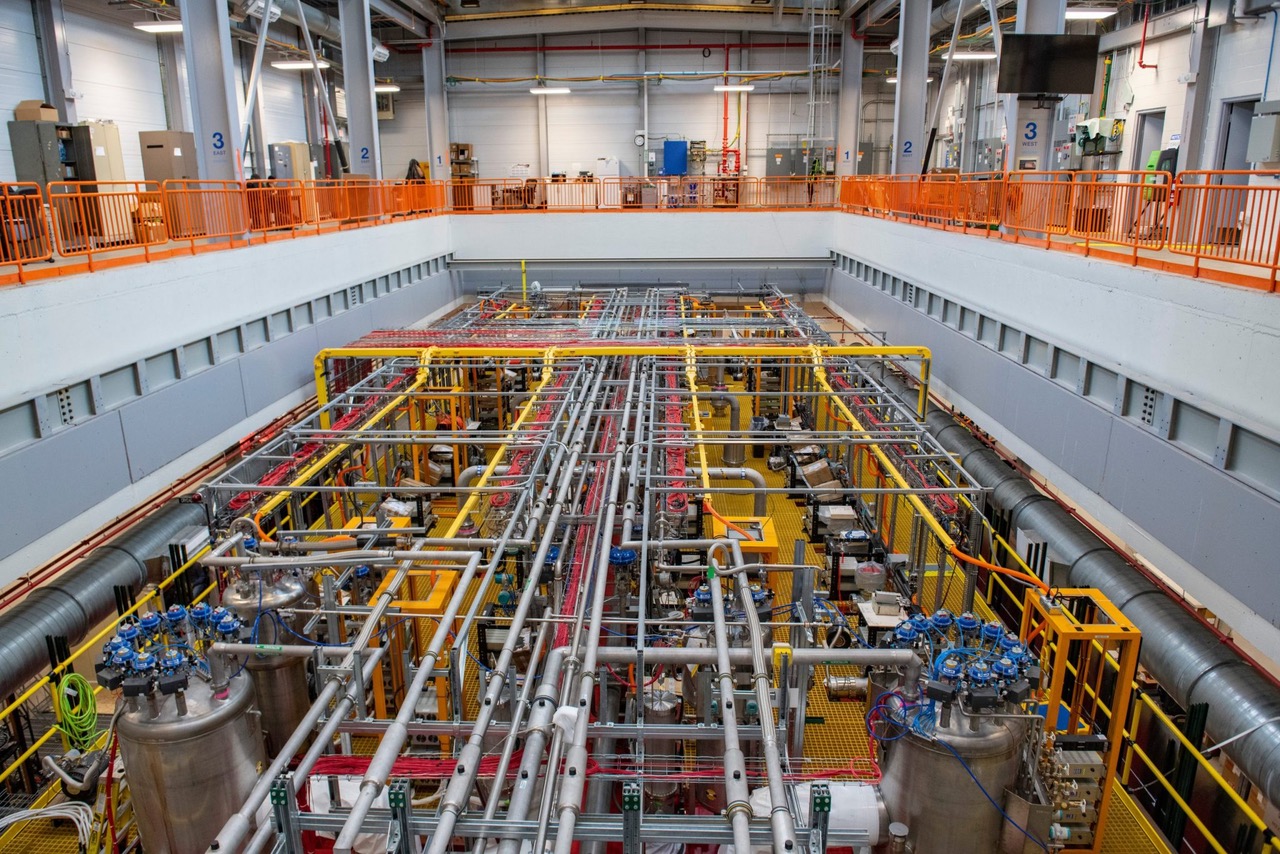
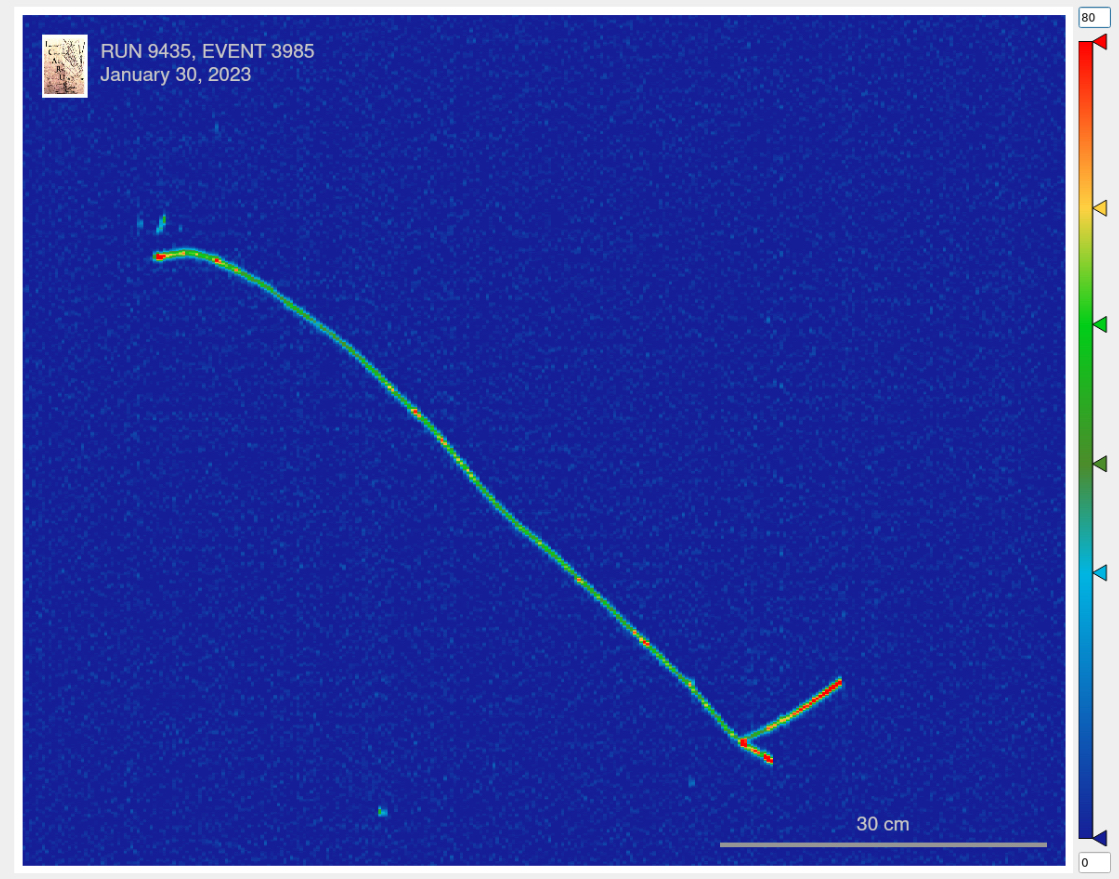
ICARUS is a time projection chamber detector containing 760 tonnes of ultra-pure liquid argon, capable of visualising and reconstructing, with millimetre precision, the position of neutrino events by measuring the time taken by the signals produced by their interaction to reach the readout electrodes. After carrying out important research at the INFN Gran Sasso National Laboratories, and being upgraded at CERN, ICARUS has been taking data at Fermilab since 2020 as the farthest detector within the Short Baseline Neutrino (SBN) programme in the search for the “sterile neutrino”. It is currently the largest detector of this type in the world operating on a neutrino beam. Its distinctive features include the three-dimensional reconstruction of particle tracks with millimetre-scale resolution, the calorimetric measurement of the energy of electrons, muons and hadrons, and an excellent ability to distinguish between electrons and photons, which is fundamental for the identification of electron neutrinos.