 At the beginning of March, opened by a lecture from Nobel Laureate Carlo Rubbia, the 16th edition of the biennial meeting International Workshop on Neutrino Telescopes was held. The Conference, organised by the INFN of Padua, in collaboration with the Department of Physics of the University of Padua, was hosted in Venice by the Venetian Institute of Science, Letters and Arts. More than one hundred physicists, most coming from abroad, took part in the workshop in order to outline the state of the art of neutrino physics, a research field from which we expect major progress in the knowledge of our universe. Great importance was given to neutrino telescopes: from the IceCube experiment in the South Pole, to the Km3NeT project, the European initiative promoted by INFN for an underwater observatory in the Mediterranean Sea off Cape Passero, in Sicily. Much of the discussion was also dedicated to the Gran Sasso National Laboratories of INFN, the largest underground laboratory in the world for astroparticle physics research, which hosts, among others, the solar neutrino and “double beta” decay detectors for the study of extremely rare processes and for the search for dark matter. Among the projects of the near future, the large-scale international projects for the study of neutrino oscillation, such as Juno (Jiangmen Underground Neutrino Observatory), in China, LBNF (Long Baseline Neutrino Facility), in the United States and Hyper-Kamiokande in Japan were finally presented. )

The song of the whales returns off the coast of Sicily
INFN and INAF express solidarity with their colleagues at INGV

Mariafelicia De Laurentis Elected President of SIGRAV
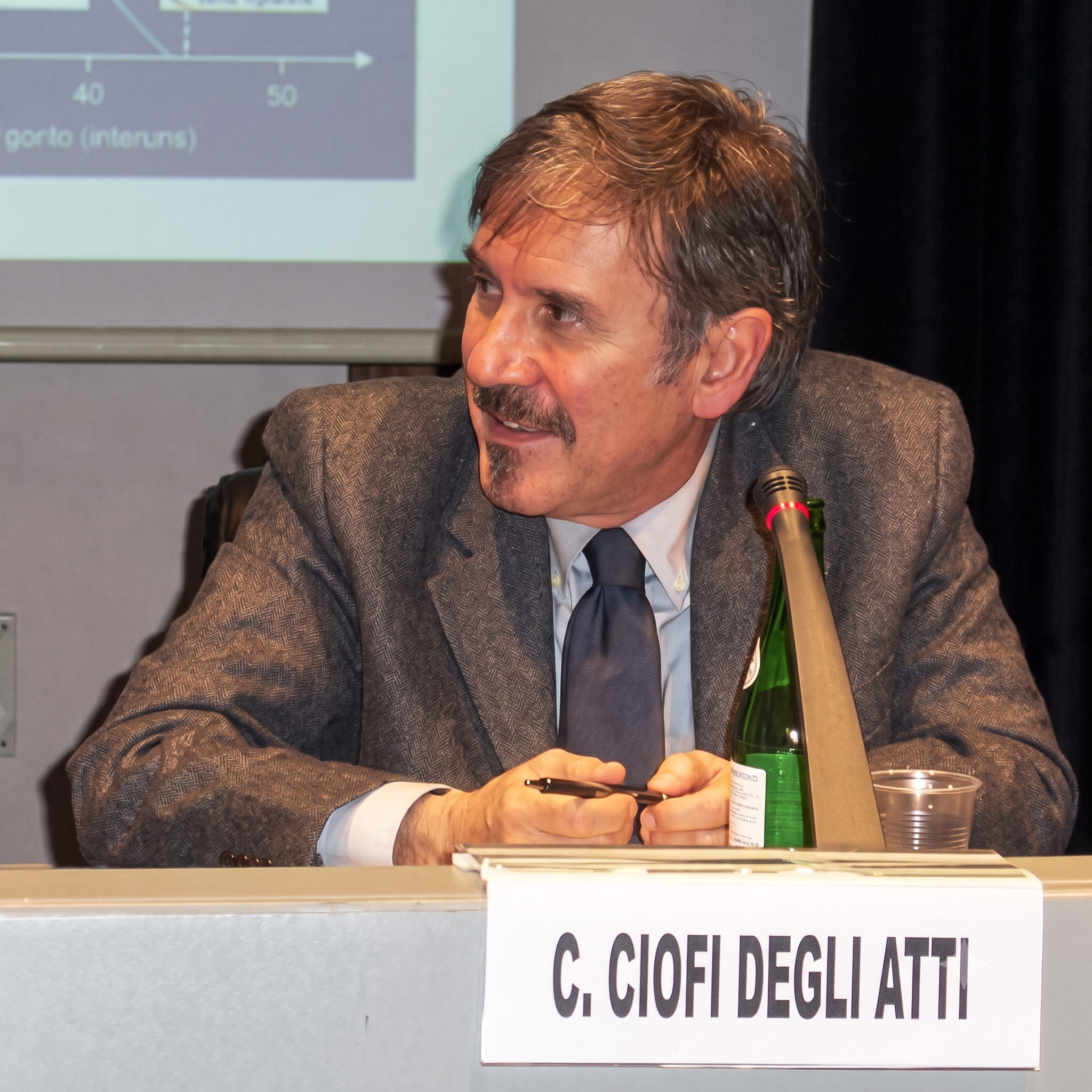
Farewell to Claudio Ciofi degli Atti
03 July 2026
Read more Farewell to Claudio Ciofi degli Atti