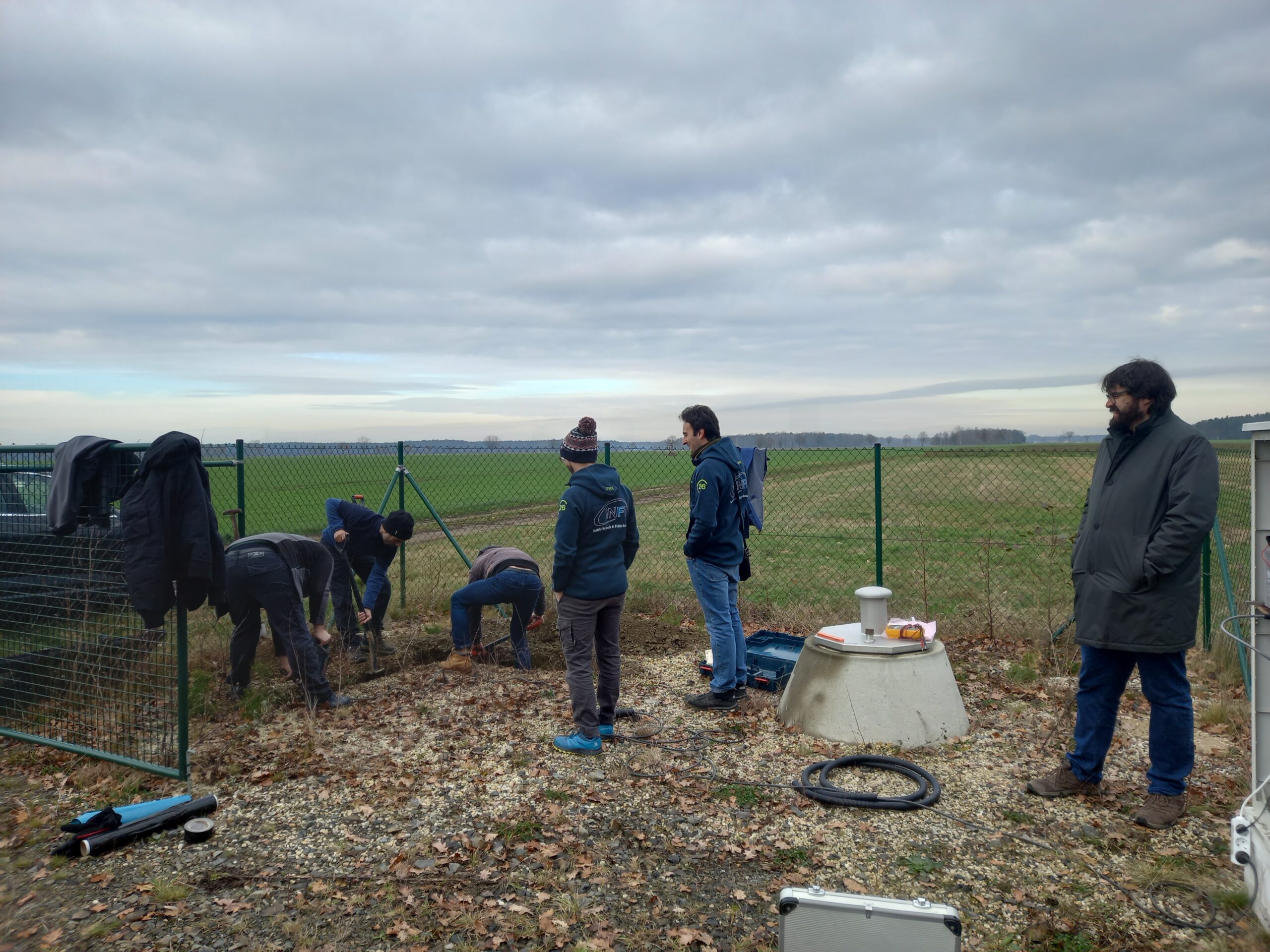
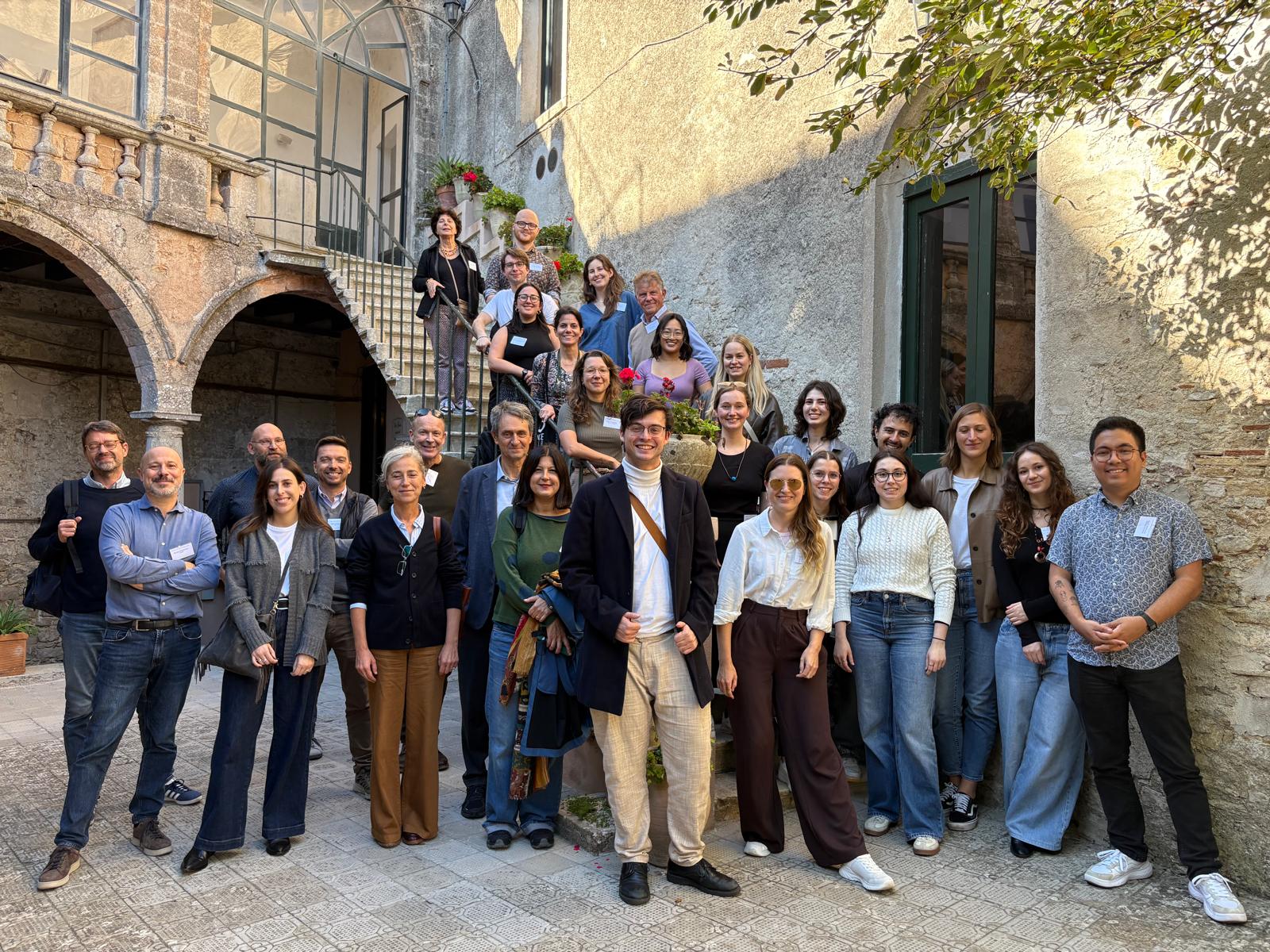
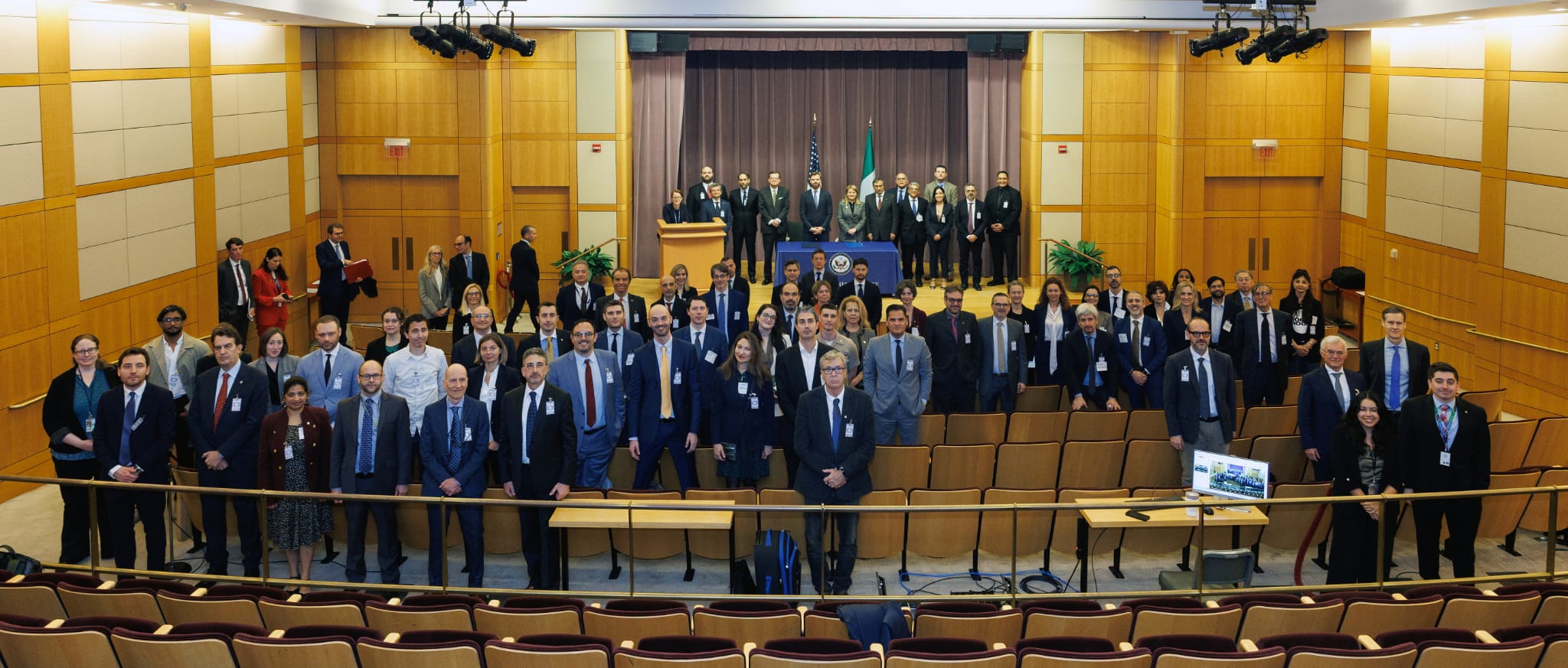
A joint group of researchers from the INFN divisions of Rome and Cagliari, the University of Naples Federico II, the Karlsruhe Institute of Technology (KIT), and the Deutsches Zentrum für Astrophysik (DZA) installed on November 25 an advanced measurement station for electromagnetic noise near Bautzen, in Saxony, at the site proposed to host the Einstein Telescope. The installation of high-precision magnetometers, provided by the INFN division of Milan Bicocca in collaboration with the Pisa section of the National Institute for Geophysics and Volcanology (INGV), is essential for identifying and studying disturbance sources of both natural and anthropogenic origin in the area. These measurements are crucial to ensure that the site or sites selected to host the Einstein Telescope research infrastructure offer the environmental quiet required for the extraordinary sensitivity demanded by the future interferometer for gravitational-wave detection.
“Data and methodology sharing between the Italian and German groups is a key element”, emphasises Luca Naticchioni, researcher at the INFN division of Rome and member of the Italian research team involved in the mission in Saxony. “The goal is to provide the international Einstein Telescope scientific collaboration with the most complete possible environmental characterisation, a fundamental prerequisite for the construction of the future gravitational observatory”.
The initiative is part of a close collaboration between researchers engaged in the characterisation of two of the European sites proposed to host ET: Sos Enattos, in Sardinia, and Lusatia, in Germany. The cooperation is also strategic in light of the option of a double-L Einstein Telescope configuration: this proposal envisages the possibility of constructing two distinct observatories, one in Sardinia and one in Lusatia, which would operate in coincidence to maximise sensitivity and the ability to localise cosmic sources. The data collected from electromagnetic-noise monitoring, as well as from seismic noise, are vital for qualifying both sites. After Sardinia, it will now also be possible in Saxony to study the background electromagnetic noise in order to understand its potential impacts on the Einstein Telescope.