6 October 2026
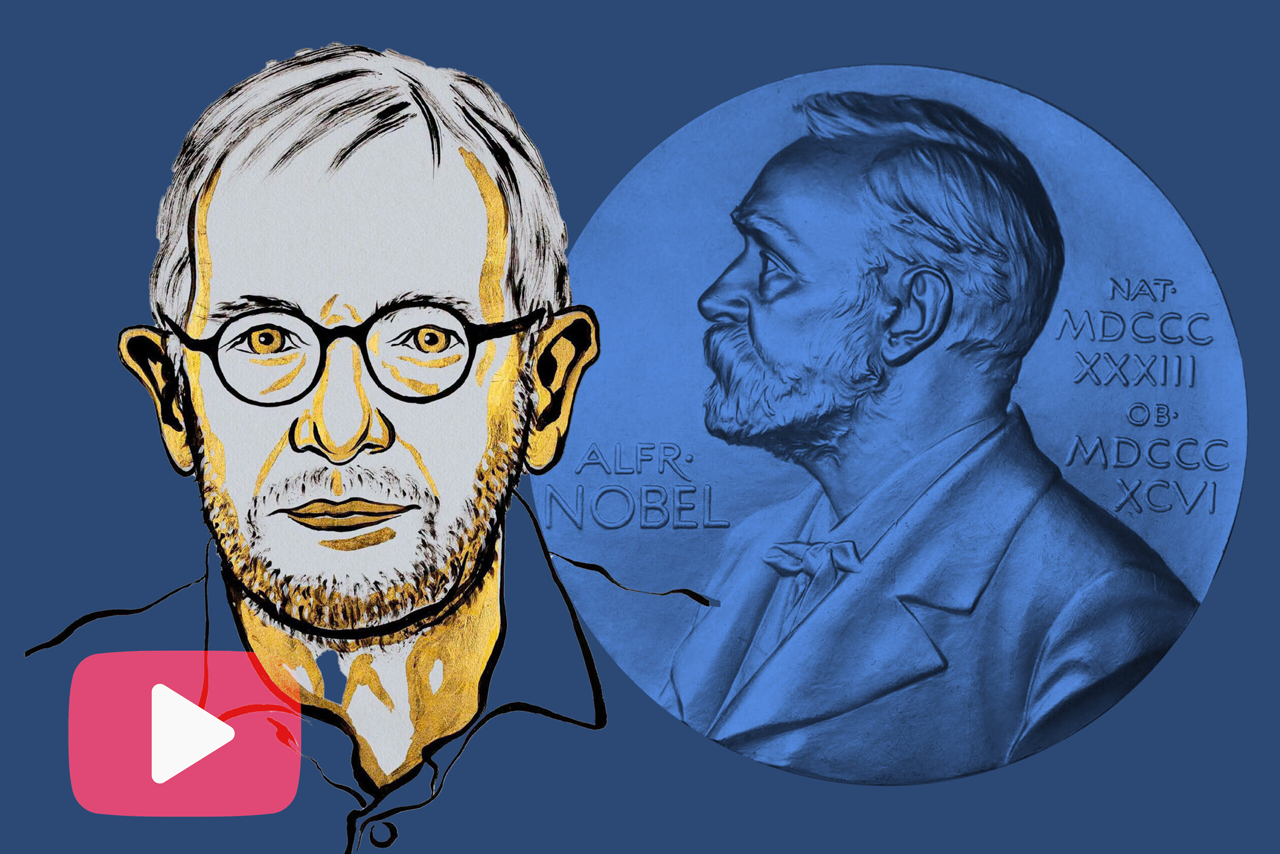
The 2026 Nobel Prize in Physics has been awarded to Francis Halzen “for decisive contributions to the IceCube Neutrino Observatory and the discovery of high-energy neutrinos of astrophysical origin”.
Halzen’s work paved the way for the study of ultra-high-energy neutrinos from the cosmos. These particles are observed by the IceCube experiment in Antarctica, which Halzen helped conceive and develop, and by the KM3NeT underwater neutrino observatory in the Mediterranean Sea.
A statement by Antonio Zoccoli, President of INFN
“On behalf of the National Institute for Nuclear Physics, I would like to extend our warmest congratulations to Francis Halzen on being awarded the Nobel Prize in Physics. We are truly delighted to see this prestigious honour recognise his extraordinary contribution to the physics of cosmic neutrinos and, in particular, to the construction and scientific achievements of the IceCube experiment.
The Nobel Prize awarded to Francis, who is a friend, a colleague, and a member of INFN’s International Evaluation Committee, is an important recognition for the entire neutrino and astroparticle physics community. These are frontier fields of fundamental physics research to which INFN has made, and continues to make, essential contributions.
INFN is deeply involved in the construction of the KM3NeT underwater observatory in the depths of the Mediterranean Sea off the coast of Sicily, as well as in major underground experiments at its Gran Sasso National Laboratories. Among these, Borexino achieved remarkable scientific successes under the leadership of Gianpaolo Bellini and Frank Calaprice.
Scientific infrastructures such as IceCube and KM3NeT are part of the new era of multi-messenger astronomy, which combines information from different cosmic messengers to investigate some of the most profound open questions about our Universe. These projects are complementary to facilities dedicated to the detection of gravitational waves, such as Virgo and LIGO, and to the future next-generation detector Einstein Telescope, which we hope will be hosted in Sardinia.”
Further reading
Nobel Physics
70 Years of Neutrinos
Neutrinos
Interview with Takaaki Kajita and Arthur McDonald, winners of the 2015 Nobel Prize in Physics for their research on neutrinos
Multi-Messenger Astronomy
KM3NeT Press Kit and the Most Energetic Cosmic Neutrino Ever Observed
Illustration by Niklas Elmehed © Nobel Prize Outreach.