PNRR and Research: Beyond 2026

1 November 2026

From the response to the pandemic crisis to a new season of investment: the contribution of the National Recovery and Resilience Plan to the growth and future of physics research

From Crisis to Transformation: The Strategic Role of Research

The COVID-19 pandemic represented one of the most severe economic and social crises in recent European history. To support the recovery of Member States and foster economic growth, in 2020 the European Union launched NextGenerationEU, an unprecedented investment programme designed not only to address the consequences of the crisis but also to build a more digital, resilient and internationally competitive Europe. Within this framework, each country developed its own programme of reforms and investments. In Italy, this took shape as the National Recovery and Resilience Plan (PNRR), approved in 2021 with a total budget of approximately €194.4 billion to be deployed by 2026. It is, in effect, the largest public investment programme implemented in the country in recent decades. The Plan was structured around six missions covering areas regarded as strategic for development: digitalisation, innovation, competitiveness, culture and tourism; the green transition and ecological transformation; sustainable mobility infrastructure; education and research; inclusion and social cohesion; and healthcare. A seventh mission linked to the REPowerEU programme was subsequently added, focusing on strengthening Europe’s energy autonomy

institutions-and-bodies_2
The European Parliament in Strasbourg. (Photo credit: Wikimedia Commons)

Among the various areas of intervention, research and innovation occupied a central role. Through Mission 4, “Education and Research”, the PNRR allocated unprecedented resources to strengthening scientific infrastructures, developing advanced technologies, training new skills and creating collaborative networks among research organisations, universities and industry. The objective was to enhance Italy’s capacity to generate knowledge and innovation, increasing the competitiveness of the national research system within the European and international landscape. Five years after the launch of the Plan and with project completion scheduled for 2026, it is already possible to begin assessing its impact. Beyond the achievement of its formal targets, the PNRR offers an opportunity to reflect on the legacy it will leave for Italian research, and physics in particular: infrastructures, expertise, technologies and collaborations that are expected to generate benefits well beyond the programme’s duration. It is within this context that the contribution of INFN can be understood, having participated in the Plan both as coordinator and as partner in numerous strategic initiatives for the future of research.

.

INFN and the PNRR: a Scientific, Organisational and Management Challenge

For the National Institute for Nuclear Physics (INFN), participation in the PNRR represented an unprecedented challenge in terms of scale, complexity and implementation timescales. Throughout the programme, the Institute managed €319 million in funding, a volume of resources comparable to its ordinary annual budget. This commitment required not only scientific and project-planning capabilities, but also a major organisational and administrative effort to ensure compliance with the programme’s deadlines and objectives. Unlike traditional research programmes, which are characterised by longer time horizons and greater flexibility in activity management, the PNRR imposed particularly demanding deadlines. In response, the Institute strengthened its coordination, monitoring and reporting tools, developing new working methods and consolidating expertise that will remain a strategic asset in the years ahead.  The impact of the PNRR was also reflected in a significant reinforcement of research and development activities. The resources made available through the Plan enabled the acceleration of R&D programmes in strategic areas of fundamental physics and frontier technologies, supporting the development of new infrastructures, the enhancement of existing facilities, and the construction of experimental instruments, advanced technologies and services for the scientific community. Alongside investments in infrastructure and technology, the Plan strengthened the Institute’s human capital through the recruitment of 247 researchers, technologists and technical specialists, more than 54% of whom subsequently secured permanent positions. This investment in people and skills represents one of the most significant aspects of the legacy left by the PNRR.

Strategic Infrastructures for the Future of Research

A substantial share of INFN’s PNRR investment was devoted to the construction and enhancement of scientific and technological infrastructures. Through a number of strategic projects for which it acted as lead institution, the Institute spearheaded initiatives aimed at strengthening national research capabilities in areas ranging from particle physics to high-performance computing.

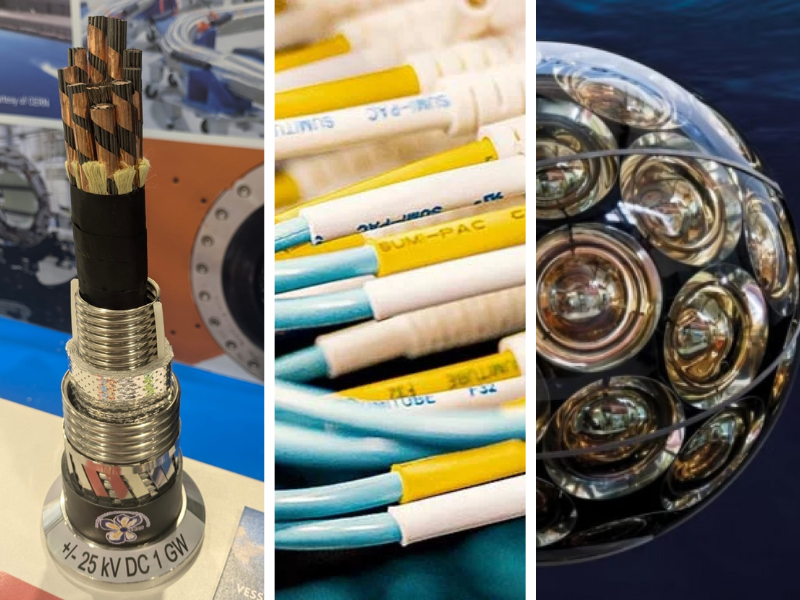
Among the most significant initiatives is KM3NeT4RR, the project supporting the expansion of the Italian site of the KM3NeT underwater neutrino observatory, located off the coast of Capo Passero in Sicily. The funding enabled the accelerated deployment of the ARCA detector, dedicated to the study of cosmic neutrinos. With the completion of 198 detection lines expected by 2030, KM3NeT will become the world’s largest underwater neutrino observatory and a strategic resource for international research into the most energetic phenomena in the Universe. The NAUTILUS project is carrying forward the activities launched under KM3NeT4RR, supporting the continued expansion of the ARCA observatory.

Another key initiative is EuAPS (EuPRAXIA Advanced Photon Sources), established to support the development of the European EuPRAXIA infrastructure. Activities, distributed across INFN’s Frascati National Laboratories, the Southern National Laboratories and CNR facilities in Pisa, aim to develop compact X-ray sources and advanced laser systems based on plasma acceleration technologies. Beyond their relevance for fundamental research, these technologies have applications in advanced imaging, materials science and biomedicine, helping to strengthen Italy’s position in accelerator physics

ai programmi IRIS, TeRABIT e KM3NeT4RR, che proseguono rispettivamente in ASTRA, CREST e NAUTILUS.
The IRIS, TeRABIT and KM3NeT4RR projects, now continuing through the ASTRA, CREST and NAUTILUS initiatives, respectively. (credit INFN)

The PNRR also supported Italy’s bid to host the Einstein Telescope through the ETIC (Einstein Telescope Infrastructure Consortium) project. The initiative funded feasibility studies for the Sos Enattos site in Sardinia and the development of technologies required for the future European gravitational-wave observatory. These activities are continuing through the MITI (Multimessenger Infrastructures and Technologies in Italy) project, which aims to consolidate the scientific, technological and industrial expertise needed to support the Italian candidacy and prepare the territory for the possible construction of the facility.

Alongside these new initiatives, the Plan strengthened established infrastructures. The LNGS-FUTURE project enhanced key facilities at the Gran Sasso National Laboratories, an international reference centre for neutrino physics, dark matter research and nuclear astrophysics. The upgrades focused on technological infrastructure and experimental support services, increasing the laboratories’ capacity to host next-generation scientific programmes.

ICSC inauguration of new HPC and quantum computing systems
The inauguration of the new high-performance computing (HPC) and quantum computing systems at ICSC. (credit INFN)

A significant portion of investment was also dedicated to digital infrastructures. In this area, INFN played a central role in establishing and developing the ICSC, the National Research Centre in High Performance Computing, Big Data and Quantum Computing, one of the five National Centres funded through the PNRR. The Institute promoted and led the creation of the Centre, drawing on expertise built over decades in scientific computing, data management and distributed infrastructures. Today, ICSC is a leading national hub for supercomputing, big data and quantum technologies, with the goal of making these resources available not only to public research but also to industry.

Also within the field of digital infrastructures, the Terabit project delivered a national ultra-high-capacity network dedicated to research, connecting computing centres, laboratories and scientific facilities across Italy through high-speed links. Among its most significant achievements is the strengthening of Sardinia’s connection to the national research network, a strategic asset for the bid to host the Einstein Telescope at Sos Enattos. Such high-performance connectivity is an essential requirement for the operation of a major international scientific infrastructure based on the generation and processing of vast volumes of data. The CREST project (Computing Research Infrastructure for Engineering, Science and Technology) will take forward the legacy of the Terabit project.

Finally, through the IRIS project, the PNRR supported the strengthening of national expertise and infrastructures dedicated to applied superconductivity. The project involves multiple regional hubs and promotes research into technologies with applications not only in fundamental physics but also in the energy, transport and medical sectors. It is an area in which INFN has developed internationally recognised expertise through its long-standing experience in the design and construction of particle accelerators, helping to consolidate a highly specialised strategic technological supply chain. The ASTRA project (Applied Superconductivity for Technology and Research Advancement) is carrying forward the activities initiated under IRIS, capitalising on its achievements and broadening its development prospects.

Collaborations Across the Research Landscape

INFN’s commitment to the PNRR extended far beyond the projects it coordinated directly. The Institute participated as a partner in numerous initiatives led by other organisations within the Italian research system, contributing scientific and technological expertise across a broad range of fields. Among the major research infrastructures, INFN contributed to CTA+, coordinated by INAF and dedicated to the future international gamma-ray astronomy observatory; EBRAINS-Italy, coordinated by the National Research Council (CNR) to strengthen European brain research infrastructures; and ITINERIS, also led by CNR, aimed at integrating Italy’s principal environmental and climate research infrastructures

The Institute also took part in several Innovation Ecosystems established under the PNRR, including SAMOTHRACE in Sicily, ECOSISTER in Emilia-Romagna, RAISE in Liguria, Rome Technopole in Lazio and THE in Tuscany, helping to strengthen links between public research, industry and local communities. Participation also extended to the Extended Partnerships, large national networks bringing together universities, research organisations and industry around strategic themes for the country. Within this framework, INFN was involved in FAIR (Future Artificial Intelligence Research), dedicated to artificial intelligence, and NQSTI (National Quantum Science and Technology Institute), focused on quantum technologies. Alongside these initiatives, the Institute took part in more than one hundred PRIN 2022 and PRIN 2022 PNRR projects, contributed to programmes in the fields of health, energy and digitalisation, and participated in the National Complementary Plan initiatives ANTHEM and DARE, dedicated to the development of innovative technologies for medicine and prevention. Together, these activities broadened INFN’s presence within Italy’s leading research and innovation networks, fostering the sharing of expertise, infrastructures and technologies across diverse scientific communities.

 

Beyond 2026: What Legacy for Italian Research?

As the Plan approaches its conclusion, its impact cannot be measured solely by the resources invested or the milestones achieved. Its most important legacy will lie in the ability of the infrastructures created, the expertise developed and the collaborative networks established over these years to continue generating scientific results and innovation beyond 2026.

For INFN, the Plan has represented an extraordinary opportunity to accelerate strategic projects and strengthen Italy’s ability to address some of the most important challenges in contemporary physics. The infrastructures enhanced or developed through the PNRR will contribute to exploring fundamental questions about the nature of the Universe, from the search for cosmic neutrinos with KM3NeT to the study of dark matter and neutrino properties at the Gran Sasso National Laboratories, and ultimately to the observation of gravitational waves with the next generation of interferometers. A testament to the PNRR’s ability to generate lasting impact, the funding of the ASTRA, CREST and NAUTILUS projects is providing continuity and long-term prospects for some of INFN’s major infrastructures developed or strengthened through the Plan, ensuring that the expertise, technologies and scientific achievements they have generated can continue to deliver value in the years ahead.

Italy’s bid to host the Einstein Telescope in Sardinia is part of this broader vision. The new observatory will enable the exploration of the Universe with unprecedented sensitivity, allowing scientists to study, through gravitational-wave observations, the formation of black holes, the evolution of neutron stars and some of the most extreme phenomena in the cosmos. The investments made through ETIC and the supporting infrastructures developed in recent years already constitute a valuable body of scientific, technological and engineering expertise. Now continued through the MITI project, they provide long-term support for Italy’s candidacy to host the Einstein Telescope at Sos Enattos. At the same time, the PNRR has strengthened areas that are expected to have an increasing impact not only on fundamental research but also on technological innovation. Activities developed through the ICSC National Centre in supercomputing, big data and quantum technologies are creating skills and infrastructures that will be essential for tackling future scientific and industrial challenges, from the simulation of complex systems to new applications in quantum computing and the management of massive datasets.

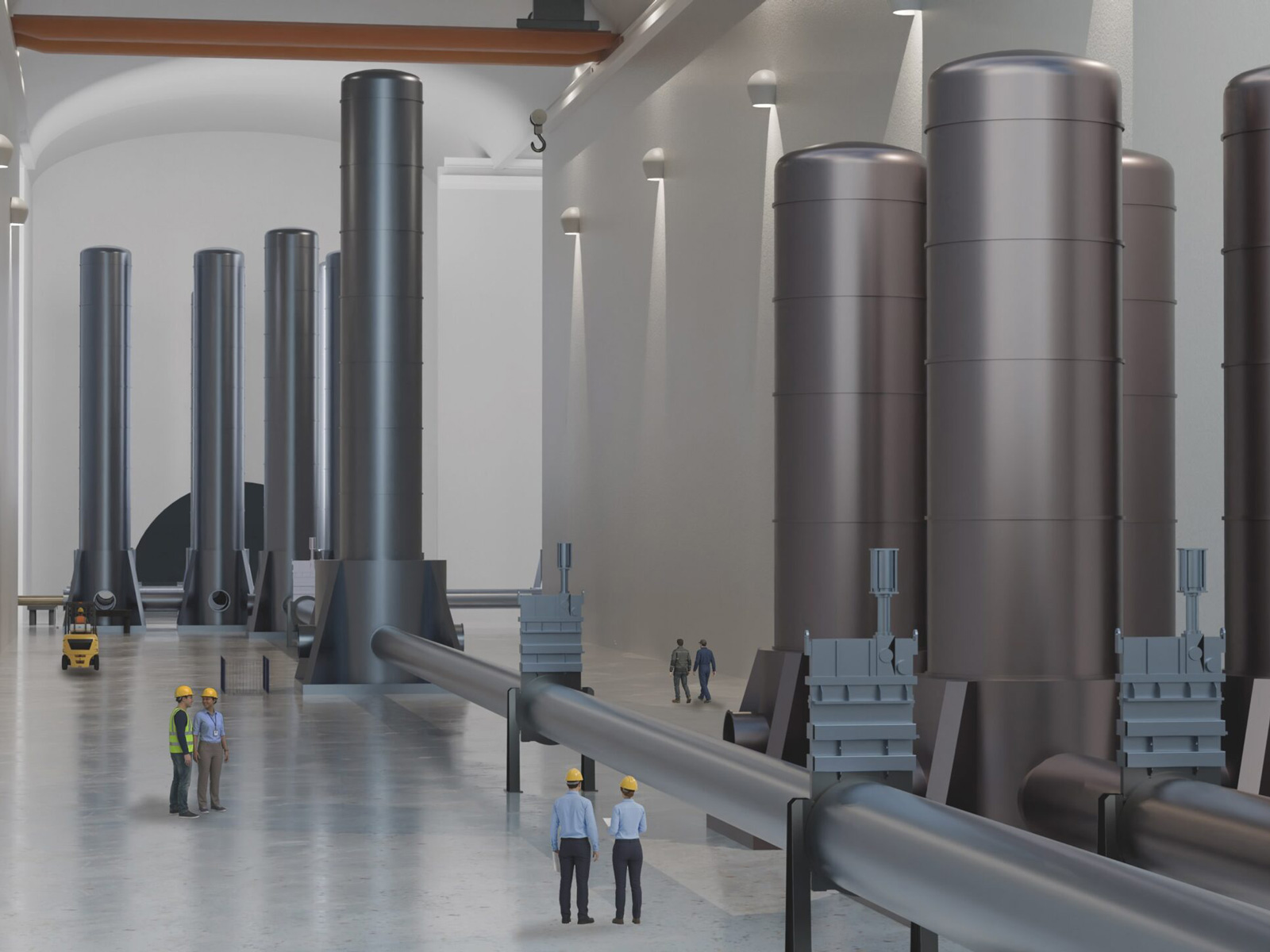
Dettaglio in grafica dell'infrastruttura sotterranea di Einstein Telescope
llustration of the Einstein Telescope underground infrastructure. (credit INFN)

The legacy of the Plan, however, extends beyond infrastructures and technologies. The PNRR has helped train a new generation of researchers, technologists and technical specialists while strengthening INFN’s capacity to design and manage complex initiatives, coordinate large-scale collaborations and transform research results into opportunities for national development. The challenge now is to ensure continuity. The true success of the PNRR will be measured not only by the projects completed and infrastructures delivered, but also by the ability to translate today’s investments into future scientific discoveries, technological innovation and the growth of expertise. In other words, it will depend on ensuring that the infrastructures, people and knowledge developed through the Plan continue to generate value for Italian and international research in the years to come.

You might also be interested in

NOBEL PHYSICS

Rendering of the ET infrastructure (©INFN)

Towards Einstein Telescope

Synchrotron, the first high-energy accelerator built in Italy at the INFN National Laboratories of Frascati.

75 Years of INFN

borexino lngs

70 Years of Neutrinos

Researchers collaborating on the development of quantum technologies at the SQMS Quantum Garage, one of the quantum research facilities developed by the Centre. ©Ryan Postel, Fermilab

From bit to qubit. The quantum future of computing

FCC map overview

Physics looks ahead to FCC