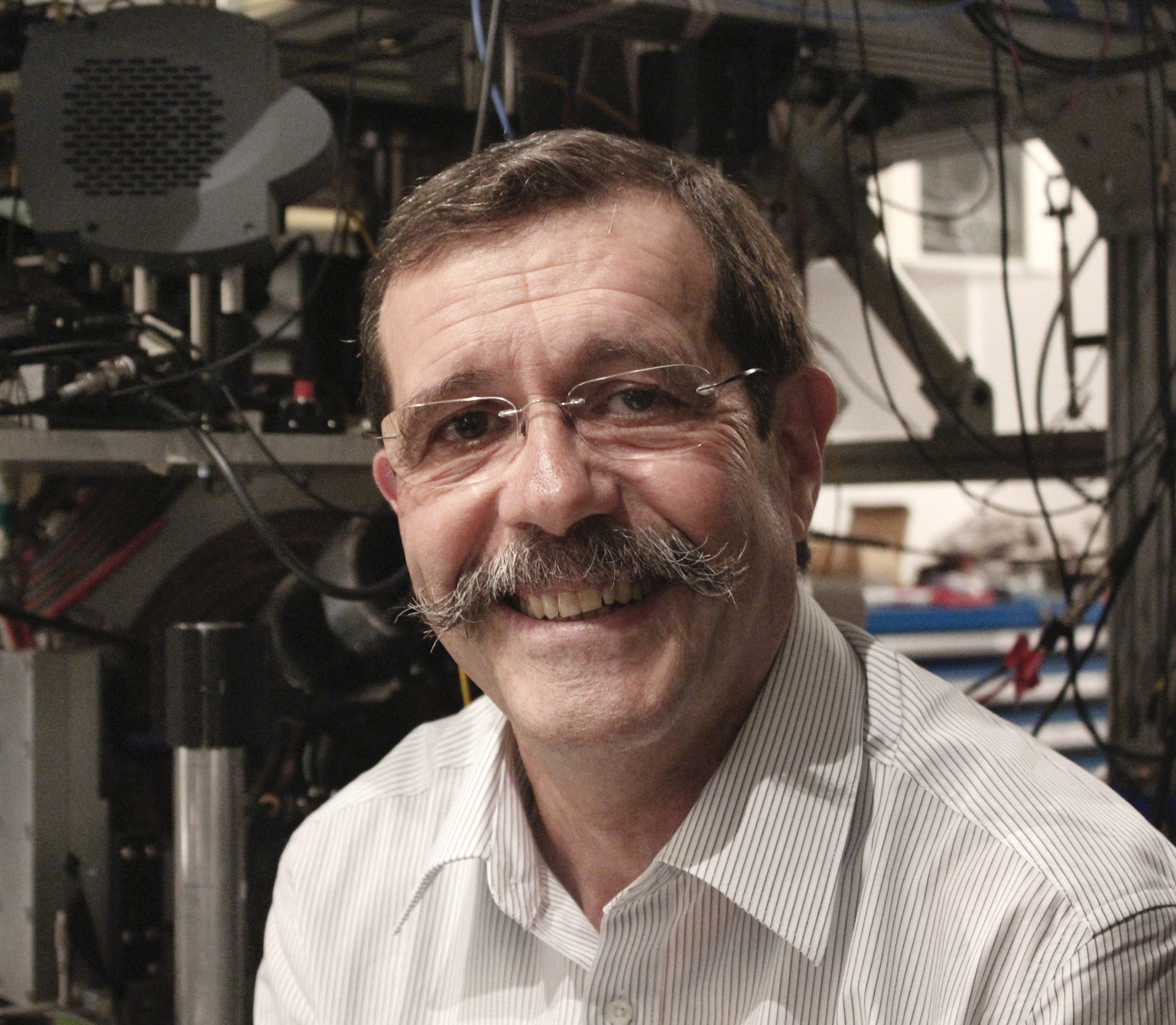
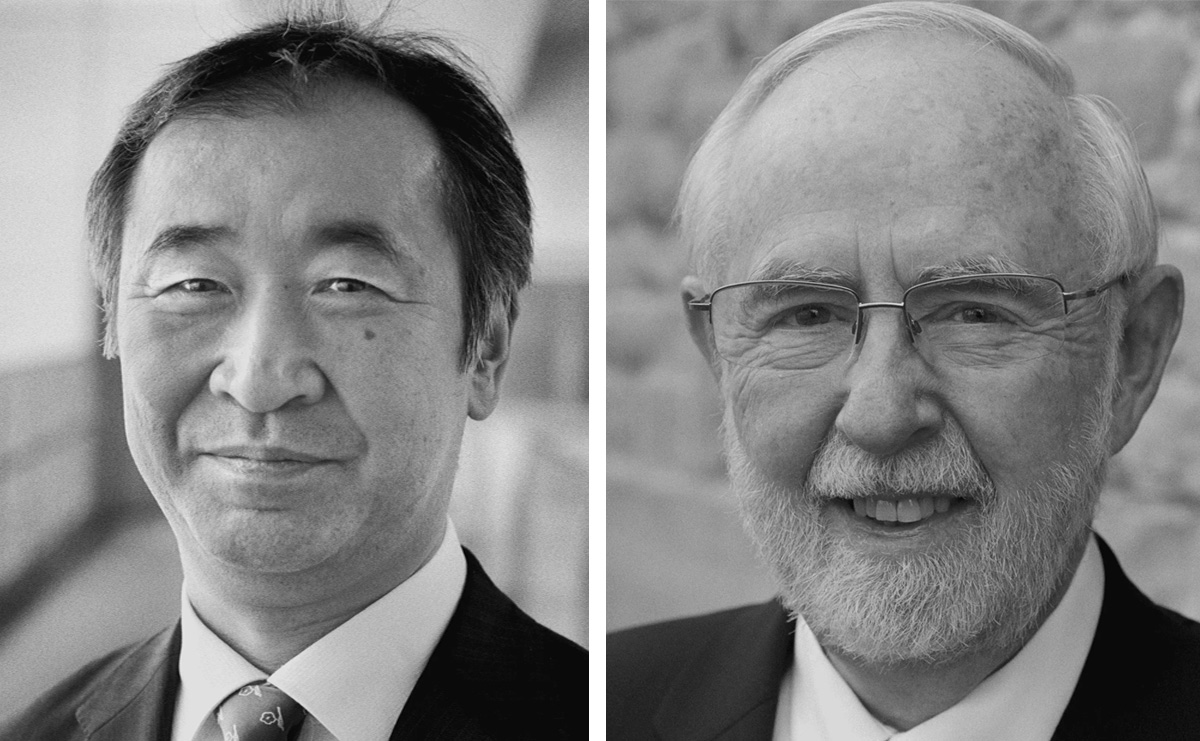
Interview with Alain Aspect, recipient of the Nobel Prize in Physics 2022 for his experiments with entangled photons, that confirmed that quantum mechanics gives a correct description of entanglement, and paved the way for quantum computers, quantum networks and quantum encrypted communication
“If Einstein had known”[1] about your experiments on entanglement, would he have accepted quantum mechanics as a theory capable of describing the world?
Oh, yes, there is no doubt, because our experiments show that quantum mechanics describes the world even in the most surprising situations. Had he known, Einstein would have had to admit that, within his epistemological vision of the world, that we call “local realism”, there is something that must be abandoned. Following our experimental tests, it is no longer possible to uphold both locality and realism at the same time, one must give up at least one of these two assumptions. In the final chapter of my book, I try to answer precisely the question of which of the two it is more reasonable to abandon, but I cannot reveal it here, otherwise I would deprive you of the pleasure of reading it!
How would you explain the experiment that earned you the Nobel Prize to a non-specialist audience?
The experiment is based on a situation where two photons are emitted in opposite directions. They start from the same source and are entangled, meaning that their quantum states have something in common. Then, when they are at a distance – in our case, ten meters apart – a property of each photon is measured, one on one side and one on the other. And the outcome of each individual measurement appears completely random: it may be +1 or -1 with no obvious pattern. But when the two results are compared, the one on one photon and the one on the other photon, it turns out that they are identical: if you obtain +1 on one side, then you obtain +1 on the other side as well; and if you obtain -1 on one side, then you obtain -1 on the other side too. Einstein believed that this phenomenon could only be understood by accepting that, from the outset, the two photons possessed a property stating, for instance, “this time it will be +1”. But Clauser’s[2] experiments and my own demonstrate that this intuitive description does not work. The outcomes are not predetermined, they are established at the moment of measurement: until then, the result can be either +1 or -1. My experiment, specifically, makes it possible to modify the configuration of the apparatus at the very last moment and, thanks to this feature, we were able to observe that the outcome genuinely depends on the conditions present at the moment of measurement, it is not determined in advance.
What implications have these experiments had?
First of all, we experimentally demonstrated what quantum mechanics predicts in a situation of entanglement, and that is truly extraordinary. The idea of non-locality – namely that, until the very last moment, the result can be either +1 or -1 on each side, but that if it is +1 on one side, then it is also +1 on the other – is extraordinary. And it finds applications in several methods of quantum information transmission, such as quantum cryptography and quantum teleportation. Secondly, these experiments have shown that an entangled system contains more information than one would obtain by the sum of the information of the first and the second object. And this additional information becomes enormous when many entangled quantum objects are involved. Let me explain a little more in detail: if I have only two entangled particles, the supplementary information is not very big, but if I have three entangled particles, then I have twice as much additional information, and with four entangled qubits, I must multiply this information by 2 again, and so on. This is exponential growth. Now consider 100 entangled qubits: the amount of information is huge. This is where the idea of quantum computing comes in, as it consists precisely in exploiting the vast quantity of information that can be encoded in a system.
What remains today the deepest limitation of our ability to describe physical reality using quantum mechanics?
Today we know that the equations work. The problem is that, when many entangled systems are involved, these equations lead to calculations that are impossible to make even with the most powerful classical computers. This is why, in condensed matter, for instance, simplified models are constructed, in an attempt to obtain an approximate description of the world. In my view, which is not shared by all physicists, we need simple images to guide our intuition. The big difficulty with entanglement is that there is no natural way of going from the abstract mathematical space, in which calculations are carried out, to our space, in which we seek to develop our intuition.
From fundamental experiments you went on to co-found a company developing scalable neutral-atom quantum processors for industrial applications, Pasqal. Could you talk us through this path?
At present, the startup Pasqal just reproduces a research experiment developed by my former student Antoine Browaeys, who is now a world-known leader in the field. His experiment involves several hundred entangled qubits, manipulated using small lasers. Antoine invented the entire technology, designing it for an academic environment. I make this point because research is focused on developing flexible technologies, that can be modified by experts whenever a new idea emerges, or new tests need to be performed. The requirements of industrial applications, however, are quite different. The idea behind Pasqal, and many other startups following a similar approach, is precisely to transform an academic experiment into a reliable technology that does not require the constant presence of experts, indeed, one that is accessible even to those who do not know exactly what is happening inside the experiment. At present, however, we still do not know the end of the story with quantum computing, and we are not yet in a position to put all efforts in the easy-to-use quantum computer and sacrifice flexibility in favour of accessibility. Academic research, with its advances, developments and new ideas, must continue to progress in parallel with industrial applications.
What advantages does neutral-atom technology offer compared with other approaches?
Nowadays there are many different quantum technologies being tested in laboratories around the world. There are neutral atoms, ions, photons, superconducting circuits, impurities in silicone, and others besides. The big advantage of neutral-atom technology is that it allows us, with hundreds of small laser beams, to manipulate atoms: it is possible to move them around, bring two of them close and make them become entangled, separate them, bring another atom close, create a new entanglement… and it is possible to do this in three dimensions. This is a major advantage, because if one wishes to work with thousands of entangled particles, manipulating them in one dimension becomes almost impossible, and even in two dimensions it is difficult. In three dimensions, by contrast, it is sufficient to arrange the particles in a 10×10×10 configuration to get 1000 qubits. Hence the great advantage of neutral atoms: the ability to manipulate a large number of atoms within a compact volume. And there is another advantage too: thanks to neutral-atom technology, we can minimise decoherence – that is, external disturbances – as much as possible. From this perspective, ions are also very effective, but their natural behaviour is one-dimensional, so the problem of scaling reappears. Then there are photons, which can also be manipulated and used. Indeed, when dealing with a small number of entangled photons, photons are highly efficient. But at present we still do not know how to produce a large number of entangled photons. Then, there is the field of superconducting circuits, in which companies such as Google and IBM are active. We find ourselves in a very interesting situation, in which nobody can tell which of these methods will ultimately prevail. My view is that there is still room for several different technologies and that, maybe at one point, we will find out that one technology is better suited to one kind of problem and another technology solves problems of a different kind.
In your view, what are the most promising frontiers of quantum computing? What can we realistically expect over the next 10-20 years?
I think it is impossible to know what the killer applications will be. The history of science has shown us on several occasions, as with lasers, that we just have to build the apparatus, use it, give it to people who don’t know how it works in detail, and it will probably be these people who come up with the most important applications. At the moment, the most promising applications lie in pharmaceuticals through quantum chemistry, and more specifically in the possibility of determining the structure of large molecules. It seems to be extremely important, when dealing with a large molecule, to understand how water molecules arrange themselves and interact with it. I do not fully understand that myself, but I listen to the experts, and it seems that a quantum computer may be able to provide an answer to this problem. Another application, which I believe I understand and which I find particularly appealing, is the optimisation of complex systems. For instance, in an electric grid, where there are many production centres and many places where electricity is needed – from electric vehicles to homes and industries –, maintaining balance in real time is a challenging task. This is what mathematicians call a “computationally difficult problem”, “difficult” meaning that the size of the problem grows exponentially with the number of nodes involved. When something increases exponentially, it cannot be solved using a classical computer, a quantum computer is required. These are the best ideas we have nowadays. But I am pretty sure that five years from now we will laugh at our predictions and will have applications that nobody has thought yet.
[1] If Einstein had known is Aspect’s third popular science book, published in 2025 by Editions Odile Jacob.
[2] He was also awarded the Nobel Prize in Physics 2022.
BIO
Alain Aspect is Professor at the Institut d’Optique Graduate School, the University Paris-Saclay, the Ecole Polytechnique (Institut Polytechnique de Paris), and is Emeritus senior scientist at CNRS. He earned the Nobel Prize in Physics 2022 for his experiments with entangled photons conducted in 1981–1982, that confirmed that quantum mechanics gives a correct description of entanglement and paved the way for quantum computers, quantum networks and quantum encrypted communication. In addition to the Nobel Prize, he has received many awards, among them the CNRS Gold Medal (2005), the Wolf Prize in Physics (2010), the Balzan Prize for Quantum Information (2013), the Niels Bohr Gold Medal (2013), the Albert Einstein Medal (2013) and the Ives Medal of the Optical Society of America (2013).