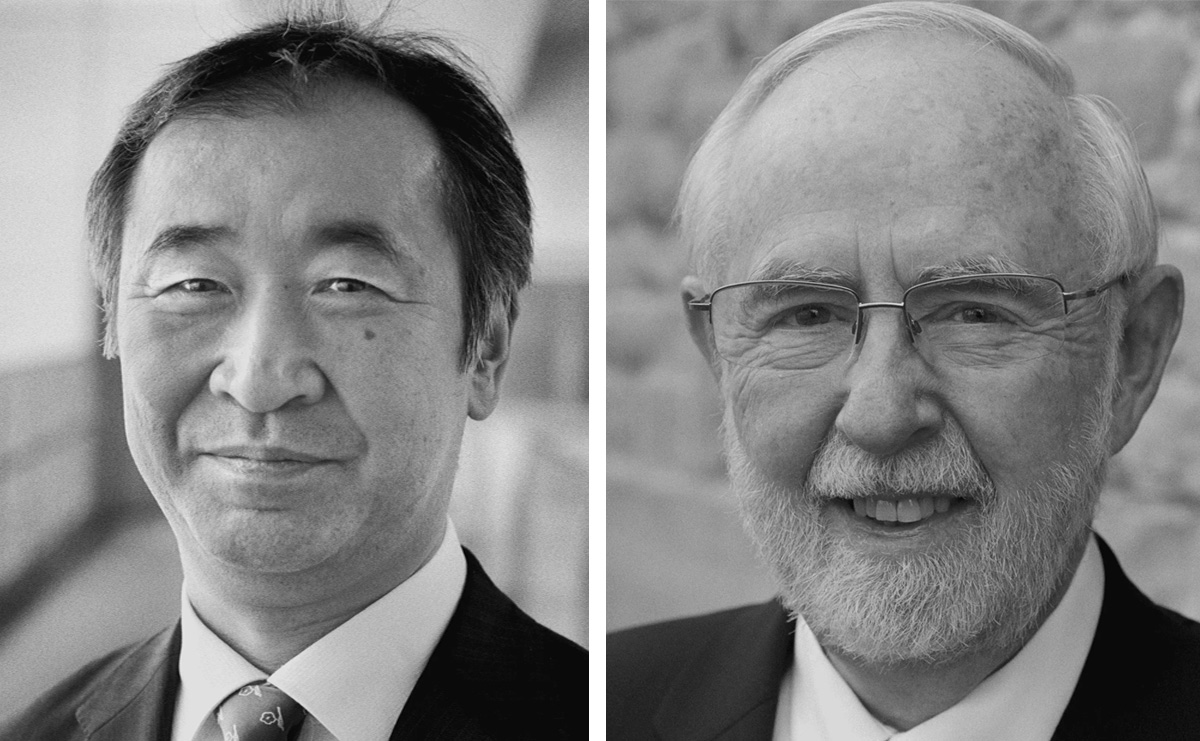
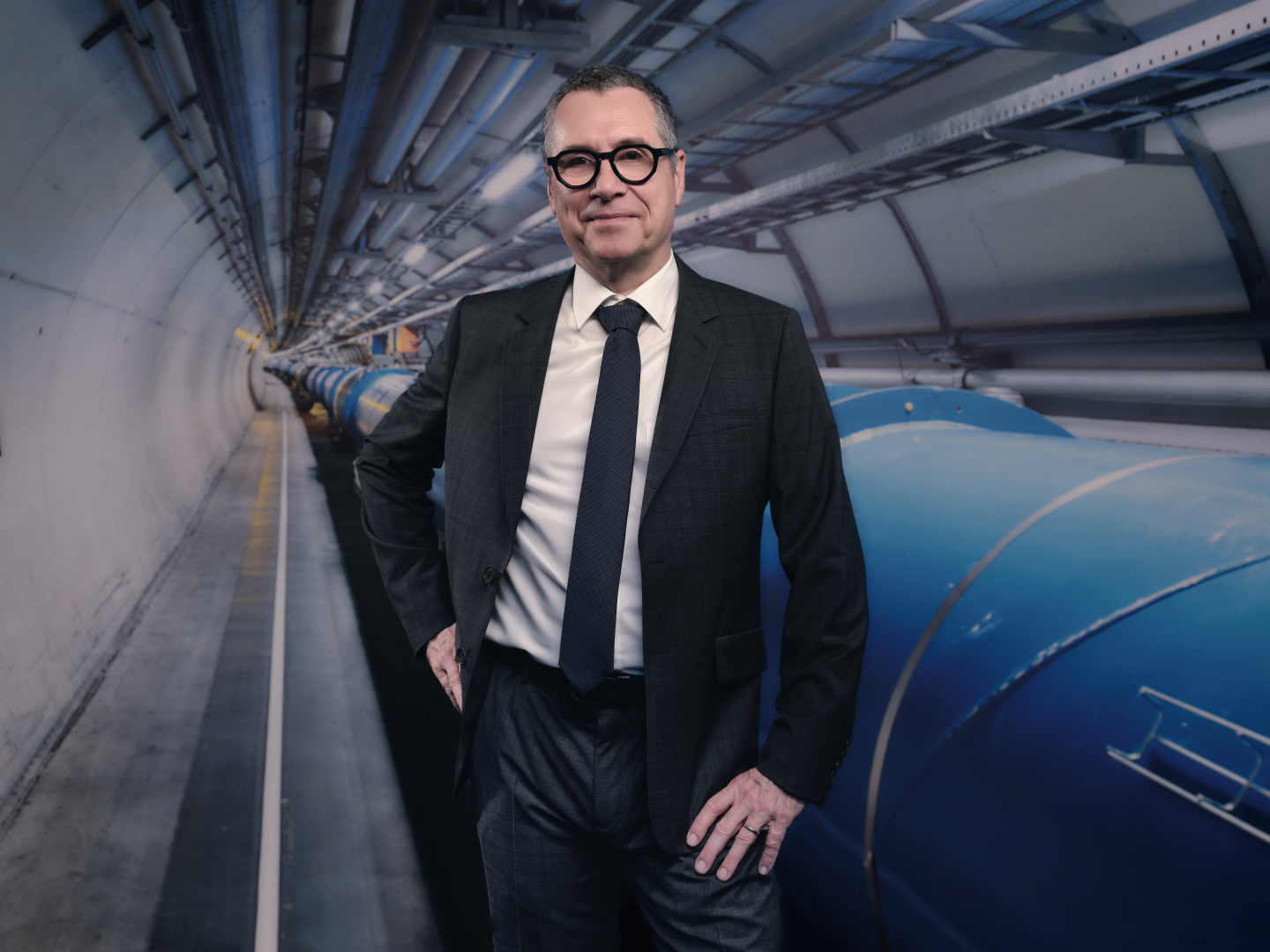
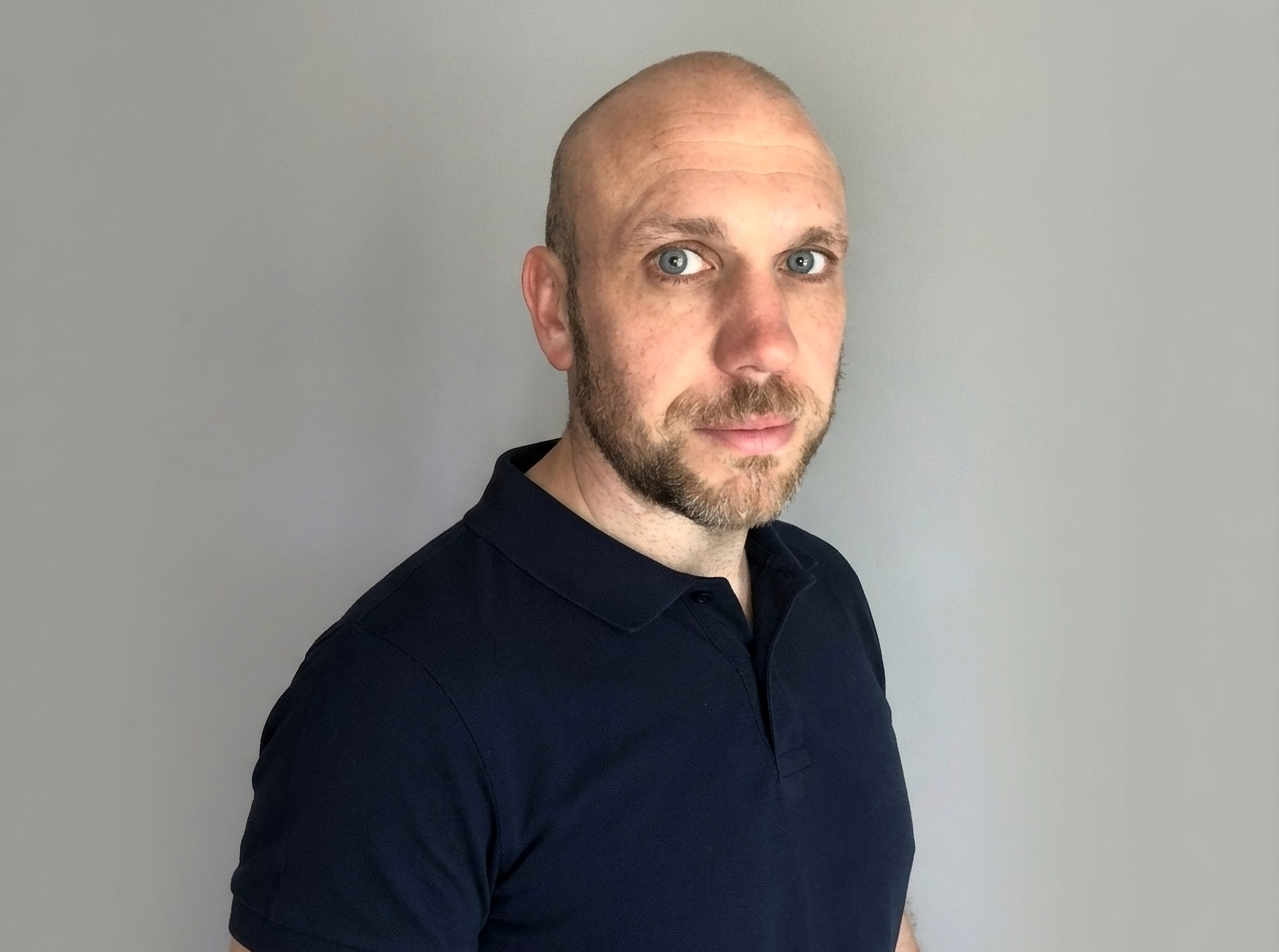
Interview with Takaaki Kajita and Arthur McDonald, winners of the Nobel Prize in Physics 2015 “for the discovery of neutrino oscillations, which shows that neutrinos have mass”. Kajita, who was in charge of data analysis of the atmospheric neutrino detector Super-Kamiokande in Japan, had announced in 1998 the discovery that neutrinos coming from the atmosphere change identity during their journey to the detector. While McDonald, head of the heavy-water counterpart of the Japanese detector, the Sudbury Neutrino Observatory in Canada, in 2000 had demonstrated that neutrinos coming from the Sun do not disappear during their journey to the Earth, but arrive with a different identity. In other words, both experiments had proved that neutrinos change identity, or rather change flavour – a metamorphosis known as oscillation possible only if neutrinos possess mass –, and had thus opened up a new question for the Standard Model, which instead held them to be massless.
Professor McDonald, you were one of the sixteen members who started the SNO (Sudbury Neutrino Observatory) collaboration: what made you believe in the project?
[AM] At the time we started the project, there was a big puzzle in physics, the so-called solar neutrino deficit: electron neutrinos produced by the nuclear reactions occurring in the Sun had been detected on Earth, but in numbers far lower than those predicted by highly sophisticated theories. To solve this puzzle, we had to determine the total number of neutrinos produced in the Sun that reach the Earth. And to do so, we used heavy water as the target in our experiment – water molecules in which the hydrogen has one extra neutron compared with the ordinary –, and observed that the total number of solar neutrinos reaching Earth – given by the sum of the three types of neutrinos, electron, muon, and tau – corresponds exactly to that predicted by theoretical calculations. However, electron neutrinos were found to be only about one third of the total, indicating that they had changed to one of the other types. In this way we discovered the phenomenon of neutrino oscillation, the process by which neutrinos, during their journey from the core of Sun to the Earth, transform from one type to another or, in technical terms, they change flavour: from electron to muon and tau. At the same time, we have thus demonstrated that the models of how the Sun burns are correct, and therefore confirmed that the calculations being used for fusion power here on Earth are accurate. The detector that enabled us to make this discovery was as large as a ten-storey building, and allowed us to observe just one neutrino per hour coming from the Sun. We built it two kilometres underground in an active nickel mine to reduce cosmic rays by a factor of a million or more, and we constructed the entire laboratory to be ultra-clean. In the end, we succeeded in eliminating all interference due to natural radioactivity and in observing neutrinos, using, indeed, heavy water as the target.
Professor Kajita, where does your interest in neutrinos, and particularly in atmospheric neutrinos, originate?
[TK] I was a member of the Kamiokande experiment in Japan, which searched for proton decay. And the background in the search for proton decay consists of neutrinos produced by the interactions of cosmic rays with the atmosphere, known as atmospheric neutrinos. It was therefore essential to study them: my initial motivation arose in this way, from a necessity. Then Kamiokande, and also the Irvine-Michigan-Brookhaven experiment in the United States provided very promising hints of something new, and we built Super-Kamiokande, the successor to Kamiokande. From the beginning, we knew that we might find something extremely interesting by studying atmospheric neutrinos, and we really concentrated on their analysis. We worked in two teams: one on site, essentially Japanese, and one remotely, essentially US. But soon, by comparing the two separate analyses, we realised that we would work more effectively as a single group, and at that point, by joining forces, we committed ourselves fully to understanding every detail, and we succeeded in obtaining a significant result just two years after the experiment began.
Professor McDonald, after being awarded the Nobel Prize you gave an interview in which you spoke about the great unresolved questions, from the value of neutrino mass to dark matter. What does the latter have in common with neutrinos? And how did you come to work on dark matter?
[AM] When we started our measurements, it was thought that neutrinos might possibly be the origin of the so-called dark matter. If you look out on a starry night, gravitational effects indicate that, in our local Milky Way galaxy, there is about five times as much mass in between the stars as there is in the glowing stars themselves. But this dark matter does not appear to have properties similar to those of the particles we already know. It is a big puzzle for fundamental physics, and also for cosmology, because it seems to have significant influence in the formation of galaxies and stars and planets; therefore, it is a strong objective to try to observe it. In the meantime, we have discovered and demonstrated that neutrinos do have mass, which on the basis of other measurements appears to be very small, at least a million times smaller than the mass of an electron. And the topic is exactly how small, but it is certainly too small to explain the properties of dark matter, which must be something different. By having developed underground laboratories with very low radioactivity background, such as SNOLAB in Canada and the INFN Gran Sasso National Laboratories in Italy, where I am actually involved in the DarkSide-20k experiment, we now detect signals of its interaction with large amounts of material. In DarkSide-20k, for example, we have set up over 20 tonnes of liquid argon to record the bursts of light that occasional interactions between dark matter and argon atoms would produce. We have not yet been able to observe these interactions, but the data collected so far, mainly by liquid xenon experiments, has enabled us to push the limits of measurements by a factor of 100,000 compared to the initial experiments. We will keep going in this direction, because even though we do not know yet what it is, we do know that it is important.
Professor Kajita, after the Nobel Prize you remained within the underground Kamioka infrastructure, moving from neutrinos to gravitational waves with KAGRA. What makes underground infrastructures so crucial for frontier measurements? And which unresolved questions led you to move from the study of neutrinos to that of gravitational waves?
[TK] When studying neutrinos, cosmic-ray muons constitute a troublesome background, which we can reduce by going underground. And in the case of gravitational waves as well, any kind of seismic activity poses a problem for their measurement, but it can be greatly mitigated by building an interferometer deep underground. In the underground infrastructure of Kamioka, in Japan, there were already Kamiokande and Super-Kamiokande, and we thought it would be easier to build a new experiment in the same place: KAGRA, an interferometer for the detection of gravitational waves. I started working on the project between 2008 and 2010. At the time gravitational waves had not yet been detected, but there were great expectations that they soon would be and that the new astronomy of gravitational waves would be born. I thought it would be a really new and exciting field, so I decided to shift my research goals. Then, in September 2015, gravitational waves were detected by the collaborations of the two LIGO detectors in the United States and the Virgo detector in Italy, thanks to the two twin LIGO instruments. Since 2015, the LIGO and Virgo collaborations have continued to observe dozens and dozens of events, and since 2020, KAGRA has also joined the global network of gravitational detectors, and is trying to achieve the sensitivity needed to make its own contribution to gravitational wave astronomy.
Professor McDonald, the Gran Sasso Laboratories are often described as a world excellence in underground physics: what is your experience, and which discoveries or experimental confirmations do you expect might come from there in the near future?
[AM] First of all, I would like to remember Antonino Zichichi, the true originator of the Gran Sasso Laboratories, who passed away just this month. He was a tremendous pioneer and an excellent scientist, and his passing represents a significant loss for our field. He conceived the Laboratories strategically, integrating them into the Gran Sasso motorway tunnel project: an insight that made them easily accessible and, at the same time, shielded by the above mountain, thanks to which cosmic rays can be substantially suppressed. They were established as first-rate laboratories for low-radioactivity measurements, and over time they have become a focal point for major experiments at the international level, with collaborations such as DarkSide-20k involving 450 scientists from 14 countries. It would be extraordinary if, in the next ten years, it were possible to observe dark-matter particles interacting with ordinary matter. That would help us a lot in attempting to understand what it is and how it fits into our picture of particle physics. Equally important would be achieving the other objective being pursued at Gran Sasso Laboratories, but also at SNOLAB in Canada, namely the observation of a complex decay called neutrinoless double beta decay. The study of this phenomenon would make it possible to determine fundamental properties of neutrinos and, together with other important measurements carried out with the highest energy accelerators in the world could help us to understand the differences between matter and antimatter. We believe that equal amounts of matter and antimatter were produced in the big bang, but we don’t know why the present universe is made of matter, and why no primordial antimatter has been observed. The theoretical mechanisms that might explain this asymmetry have been developed, and we are now seeking to prove them experimentally, also through long-baseline neutrino oscillation experiments. In the next ten or fifteen years, as these experiments progress, we may obtain answers to very fundamental questions, that I regard as existential: is the theory we have for what happened during and after the big bang correct? Do we understand where we come from? It is precisely the search for answers to these questions that drives the scientists active in this field, particle astrophysics.
Professor Kajita, from which experiments in the field of neutrinos, gravitational waves, and multimessenger astronomy in general, can we expect the most promising results in the coming years?
[TK] I think that both neutrinos and gravitational waves will be extremely important for multimessenger astronomy. It is difficult to make predictions about individual neutrino experiments, because each has its specific scientific target. Hyper-Kamiokande, for example, the successor to Super-Kamiokande, intends to observe CP symmetry violation in neutrinos (that is, the asymmetry between neutrinos and antineutrinos), and if it succeeds it would help us to understand the origin of the asymmetry between matter and antimatter in the universe. But this is only one of the aspects of neutrinos that can be investigated. As for next-generation gravitational-wave experiments, I truly believe that the Einstein Telescope and Cosmic Explorer will be extraordinary. They will be able to observe black-hole mergers at very high redshift, that is very distant in space and time, helping us to understand the history of the formation of black holes and galaxies. I am genuinely excited to see what results they will be able to produce, and I hope that at least one of the new Einstein Telescope laser interferometers will be built in Sardinia, a very suitable location for hosting this kind of infrastructure.
Professor McDonald, you also support Italy’s candidacy to host the Einstein Telescope. Can you tell us why?
[AM] I have a very good experience working with Italy, and Sardinia in particular. We have a facility in the Monte Sinni mine managed by Carbosulcis, in south-western Sardinia, for the final purification of argon for the DarkSide-20K experiment at the Gran Sasso Laboratories, and we have received strong support from the Sardinia Region and the experiment’s funding body, INFN. In addition, the proposed site for the Einstein Telescope, in the centre of the island, is truly ideal, very quiet from a seismic and anthropogenic noise point of view. So I really think that Italy is the right choice for this project; it has an excellent track record for large-scale projects of this type.
BIO
Takaaki Kajita is Professor at the Institute for Cosmic Ray Research (ICRR) at the University of Tokyo and led the data analysis of the Super-Kamiokande experiment, showing that atmospheric neutrinos change flavour, and thus proving their mass. For this discovery, he received the Nobel Prize in Physics in 2015. Today, he is one of the leaders of the KAGRA experiment for the detection of gravitational waves and contributes to the development of multi-messenger astronomy.
Arthur McDonald is Professor Emeritus at Queen’s University in Kingston, Canada. He led the Sudbury Neutrino Observatory (SNO), demonstrating that solar neutrinos change flavour and have mass. For this discovery, he received the Nobel Prize in Physics in 2015. Today, he is actively involved in the development of large underground experiments for the search for dark matter, particularly in the DarkSide collaboration at the INFN’s Gran Sasso National Laboratories.