75 Years of INFN. A Story of Research, Innovation and Community

7 August 2026

The Istituto Nazionale di Fisica Nucleare (INFN, National Institute for Nuclear Physics) was established on 8 August 1951, 75 years ago, by decree of the National Research Council. Building on the legacy of Enrico Fermi, the Institute was founded on a strong scientific tradition in order to continue, after the war, the research he had initiated in the 1930s together with his school, the Via Panisperna Boys.

Marking this anniversary is also a dedicated postage stamp from the thematic series The Excellence of Italy’s Cultural Heritage, issued on 8 August 2026. This recognition pays tribute not only to the history of INFN, but also to the contribution of Italian fundamental physics, now represented by a community acknowledged among the most authoritative at the international level.

Atto costitutivo dell'INFN
INFN Foundation Act, 1951.
Synchrotron, the first high-energy accelerator built in Italy at the INFN National Laboratories of Frascati.

The history of INFN is the story of a community devoted to scientific research that, over the course of 75 years, has succeeded in transforming major questions about nature into new knowledge, technologies and infrastructures. From the construction of the first particle accelerators to participation in major international experiments, from the national laboratories to applications of fundamental research, it is the story of a community that builds the future of science and culture every day.

The history of INFN is the subject of an editorial project that tells the story of the Institute’s people, discoveries and places through the website “INFN History”, which covers a century of history beginning in the 1920s (only Italian version)

https://storia.infn.it/

Furthermore, in the August issue of Particle Chronicle, the INFN newsletter, we publish a joint interview with four INFN Presidents: Luciano Maiani, Enzo Iarocci, Fernando Ferroni and Antonio Zoccoli.


The story, however, continues into the present day

From 2020 to the Present Day: The Future Is Built in the Present

Results in Neutrino Physics

Elusive and difficult to observe, neutrinos have, over the decades, become one of the principal keys to unlocking our understanding of the universe. Their study has driven INFN to develop new technologies and major infrastructures, from laboratories shielded beneath layers of rock to telescopes installed in the depths of the sea, contributing to the growth of a leading international community in the field of astroparticle physics.

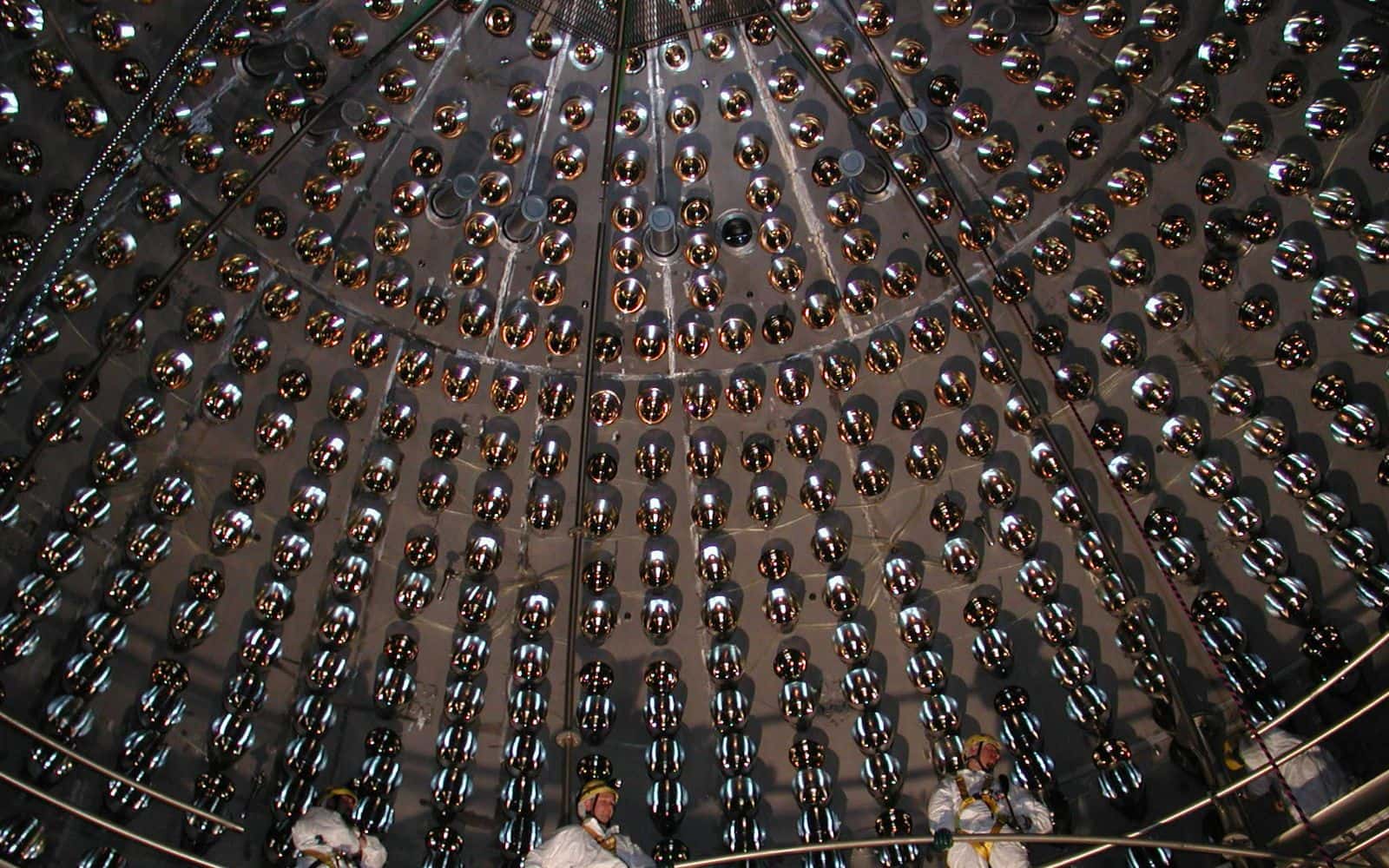
In 2020, while the COVID-19 pandemic profoundly affects people’s lives across the world, scientific research does not stop. Activities continue at INFN laboratories, and on 25 November the international Borexino Collaboration, hosted at the Gran Sasso National Laboratories, announces the first direct observation of neutrinos produced in the Sun through the carbon-nitrogen-oxygen (CNO) cycle, the dominant nuclear fusion process in stars more massive than the Sun. Theorised in 1938 by Hans Bethe and Carl Friedrich von Weizsäcker, the CNO cycle had never before been directly observed. The result concludes a scientific journey that began in the 1990s with the design of the experiment and represents one of the most important achievements in neutrino physics, once again confirming the role of the Gran Sasso National Laboratories as a global reference point for astroparticle research.
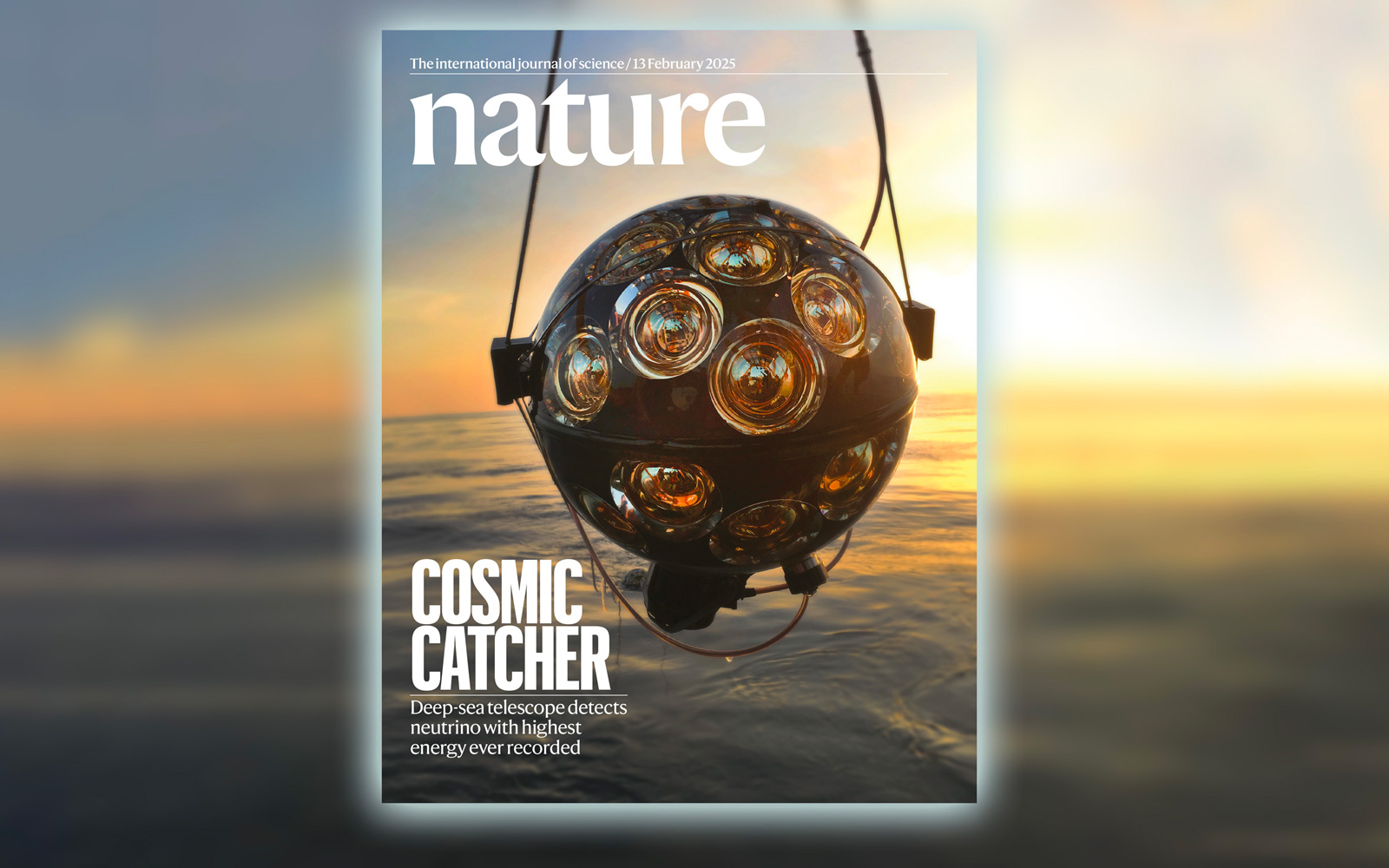
Five years later, a new result confirms INFN’s leading role in neutrino research. In 2025, the international KM3NeT Collaboration announces the observation of the highest-energy cosmic neutrino ever detected, about 220 PeV, an event recorded on 13 February 2023 by the ARCA detector, installed at a depth of 3,500 metres in the Mediterranean Sea, off the Sicilian coast near Portopalo di Capo Passero. The discovery, published in Nature, which also featured it on the cover of the journal, opens a new window onto the most energetic universe and demonstrates the potential of the European undersea neutrino telescope, an infrastructure currently being completed and consisting of the ARCA and ORCA detectors. Data collected by ARCA are transmitted to the onshore station of INFN’s Southern National Laboratories, which play a central role in the development and management of the experiment.

Copertina Mature con KM3Net
Nature cover featuring the KM3NeT result, February 2025. © Nature

Precision Physics for the Search for New Physics

Alongside large infrastructures dedicated to studying the most elusive phenomena in the universe, precision experiments continue to probe the limits of the Standard Model. In 2021, the international Muon g-2 Collaboration, operating at Fermilab in the United States, announces the first result of the measurement of the muon magnetic moment anomaly, one of the most precise quantities ever measured in particle physics. INFN takes part in the experiment, contributing to the construction of key components and to data analysis. The measurement represents an important test bench for the current theory of elementary particles and keeps open the search for possible signs of new physics beyond the Standard Model.


The National Recovery and Resilience Plan (PNRR): A New Season for Research Infrastructures

The National Recovery and Resilience Plan (PNRR) represents a new phase of growth and investment in the country’s scientific infrastructures for INFN. Within the framework of the Plan, the Institute plays a leading role in numerous strategic projects, acting as proposer and coordinator of six major research infrastructures dedicated to the frontiers of fundamental physics and advanced technologies: ETIC (Einstein Telescope Infrastructure Consortium), EuAPS (EuPRAXIA Advanced Photon Sources), IRIS (Innovative Research Infrastructure on Applied Superconductivity), KM3NeT4RR (KM3 Neutrino Telescope for Recovery and Resilience), LNGS-FUTURE (LNGS Facilities Upgrade To Unveil Rare Events) and TeRABIT (Terabit Network for Research and Academic Big Data in Italy). These initiatives are complemented by INFN’s participation in ICSC (National Research Centre in High Performance Computing, Big Data and Quantum Computing), dedicated to developing the Italian ecosystem for high-performance computing, big data and quantum technologies.

To learn more about the INFN-led PNRR projects, please visit: https://www.infn.it/en/infn-institute/national-recovery-and-resilience-plan-pnrr/

These projects strengthen existing infrastructures and lay the foundations for new research capabilities, supporting the development of advanced technologies in gravitational-wave studies, accelerator science, neutrino physics, high-capacity networks, rare-event searches and scientific computing. At the same time, the PNRR encourages new forms of collaboration among research institutions, universities and industry, creating a national ecosystem capable of addressing the major scientific and technological challenges of the coming years.

Through this new season of investment, INFN reinforces a distinctive feature of its history: the ability to transform the search for answers to fundamental questions about nature and the universe into major infrastructures, technological innovation and opportunities for growth for the scientific community and the country.


Scientific Computing and New Technological Challenges

From the first electronic computers of the 1950s to today’s high-performance computing infrastructures, scientific computing has become one of the pillars of fundamental research, essential for addressing the growing complexity of experiments and the formidable challenges involved in simulating theoretical models. The volume of data produced by large experimental facilities, the computing power required for theoretical simulations, the development of artificial intelligence, and the new opportunities offered by quantum technologies now require increasingly advanced expertise, resources, and collaborative networks.

Within this evolution sits ICSC, established under the PNRR to develop an infrastructure dedicated to advanced computing, based on cutting-edge machines, capable of integrating resources distributed across the national territory, and able to become a major European hub in the sector. INFN contributes to the leadership of the Centre, making available the experience it has gained in fundamental research and large international scientific collaborations.

Italy’s first commercially produced electronic calculator. Source: CNR.


Challenges for the Future: New Infrastructures, New Knowledge, New Applications

Scientific research looks to the future: we are designing and developing the large-scale infrastructures where the physics of the coming decades will be carried out. These are projects that inherit 75 years of scientific and technological development and require the collaboration of international communities, universities, research organisations and industry.
At INFN’s Frascati National Laboratories, EuPRAXIA is taking shape, the first major European research infrastructure for the development of plasma-based accelerators. The project aims to create a new generation of accelerators that are more compact and efficient than traditional machines, opening new opportunities for high-energy physics and applications in medicine, materials science and industry. Italy, through INFN and the Frascati National Laboratories, is deeply involved in the construction of the European infrastructure, which includes the establishment of an Italian site dedicated to research and technological development.

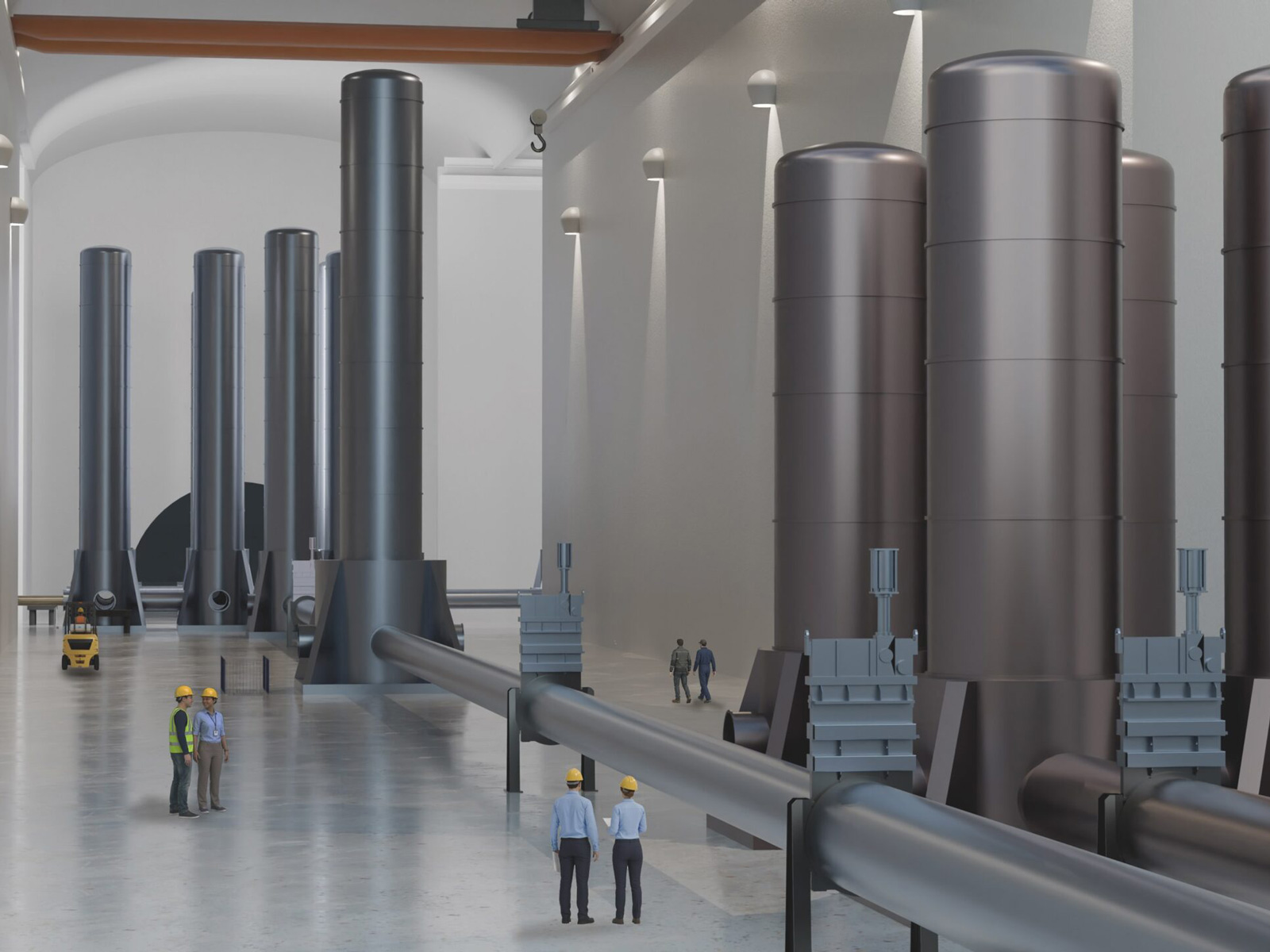
Another major challenge concerns observing the universe through gravitational waves. Through the Einstein Telescope (ET) project, Europe is preparing to build a next-generation observatory capable of dramatically increasing sensitivity compared with current interferometers and studying previously unexplored cosmic phenomena. Italy supports the bid to host ET in Sardinia, in the area of the former Sos Enattos mine, owing to the site’s geological and environmental characteristics and building on the scientific and technological expertise developed through gravitational-wave research with Virgo

In the field of particle physics, the future also looks towards the possible construction of the Future Circular Collider (FCC) at CERN, the next-generation collider designed to explore energies never reached before. FCC is envisaged as the possible successor to the LHC and could enable precision studies of the Standard Model, new investigations into matter and new insights into the fundamental laws of the universe. INFN contributes to the development of the technologies required for the machine, particularly in the fields of superconducting magnets, detectors and accelerator systems.

Rendering dell'infrastruttura di ET (©INFN)
Rendering of the ET infrastructure (©INFN)
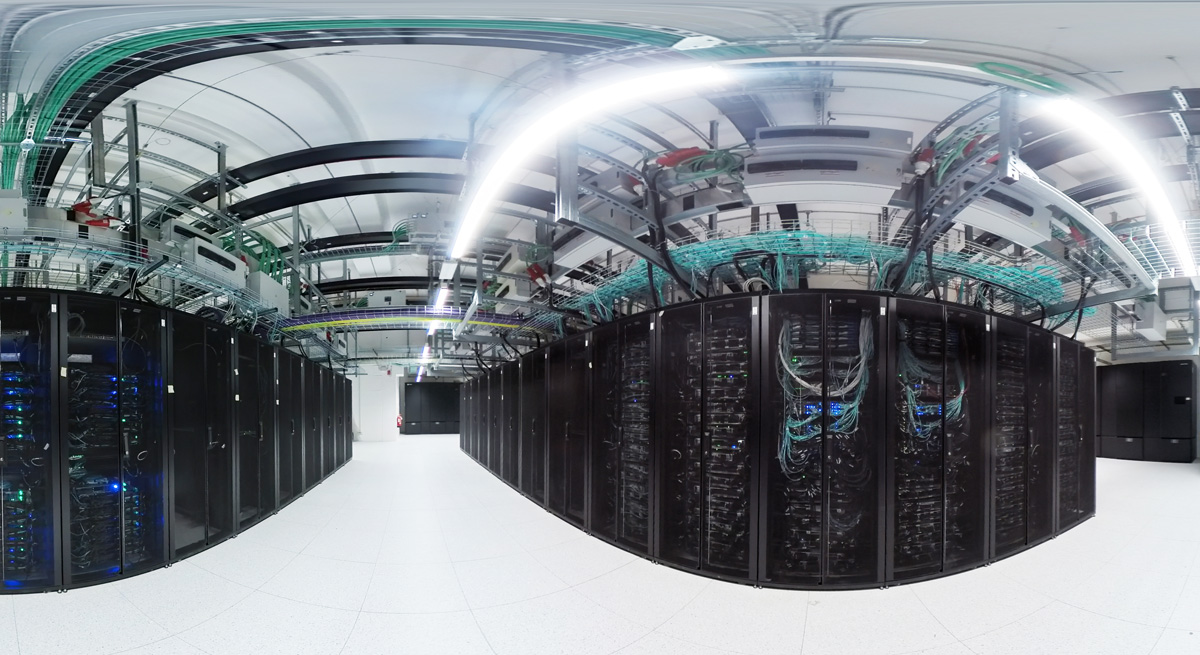
Centro Nazionale di Calcolo CNAF - INFN
CNAF computing centre - INFN ©INFN, Roberto Giacomelli

Alongside major experimental infrastructures, one of the decisive challenges of contemporary research concerns the ability to manage and interpret ever-growing quantities of data. High-performance scientific computing is now more than ever an integral part of the discovery process: it makes it possible to simulate complex phenomena, analyse data produced by experiments, and develop new research methods. The experience gained by INFN in scientific computing, from the first machines dedicated to particle physics to the role of its National Computing Centre, CNAF, in major international collaborations, is now finding new prospects in the integration of supercomputing, artificial intelligence and quantum technologies, also through the Institute’s participation in ICSC, the National Research Centre in High Performance Computing, Big Data and Quantum Computing.

It should not be forgotten that a deeper understanding of physical phenomena arises only from the interplay between the most advanced experimental physics and the original ideas and new models developed by theoretical research, together with the ability to predict their phenomenological implications. The Italian school of theoretical physics, founded by Enrico Fermi, the first full professor of theoretical physics, has developed within INFN in many directions, from the most formal to the most phenomenological approaches, making outstanding contributions to a wide range of topics in fundamental physics and beyond.

The expertise developed through fundamental research also continues to generate applications in many fields, from medicine to cultural heritage, from civil engineering to energy sustainability. Technologies developed for accelerators, detectors and data-analysis systems have given rise to tools for cancer diagnosis and treatment, for the study and preservation of artistic heritage, for monitoring structures and materials, and for developing more energy-efficient solutions. Looking to the future, INFN’s journey over these seventy-five years opens up new prospects in which fundamental research will continue to generate knowledge, innovation and tangible benefits for society.

A Community Building the Future

From the first studies of the atomic nucleus to today’s major international infrastructures, the history of INFN is the story of a scientific community that has transformed fundamental questions about nature into new knowledge, technologies and opportunities.

Over more than seventy years at the frontier of fundamental research, the Institute has inherited the legacy of the Italian scientific tradition and built a great school of physics extending throughout the country, training thousands of researchers who have contributed to all the major achievements in fundamental physics.

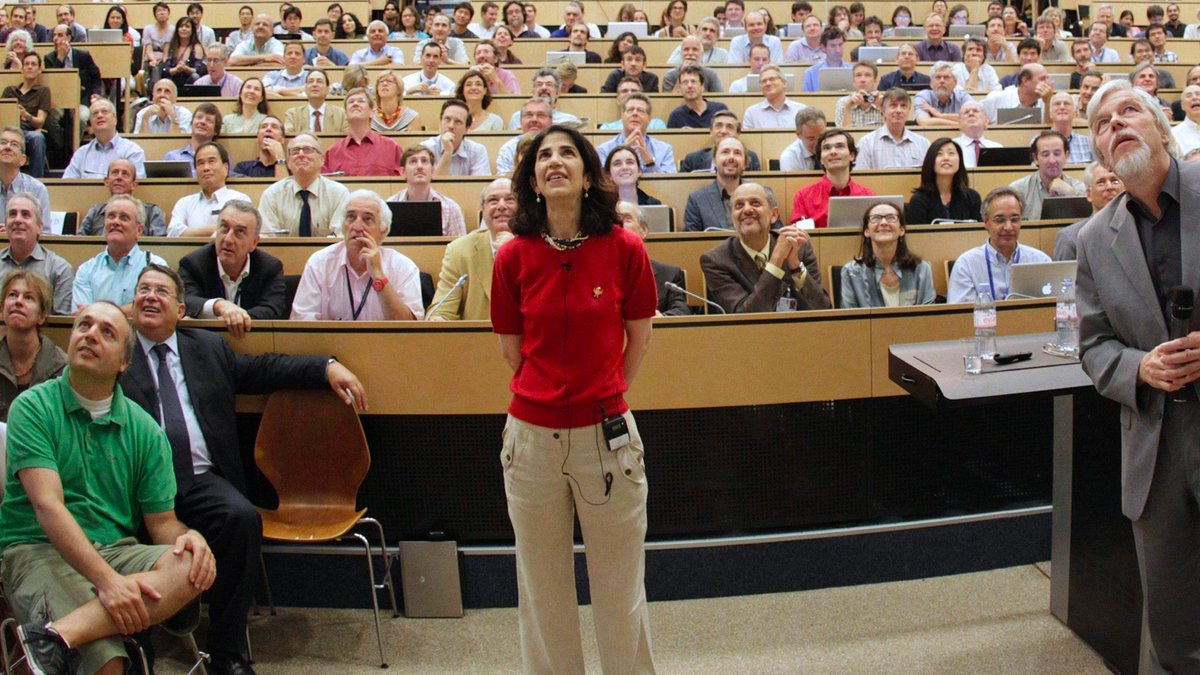
Announcement of the discovery of the Higgs Boson, Cern 4 July 2012 (© CERN)

Today, INFN is a community of more than six thousand people, including researchers, technologists, technicians and administrative staff, engaged in the great challenges of contemporary physics. From individual contributions to national laboratories to global collaborations, from infrastructures for the study of particles and the universe to technologies born from fundamental research, the Institute continues to make knowledge a driver of innovation and one of the country’s scientific excellences, as demonstrated by the postage stamp issued on 8 August, the day of the seventy-fifth anniversary of INFN’s foundation.

You might also be interested in
Rendering dell'infrastruttura di ET (©INFN)

Towards Einstein Telescope

borexino lngs

70 Years of Neutrinos

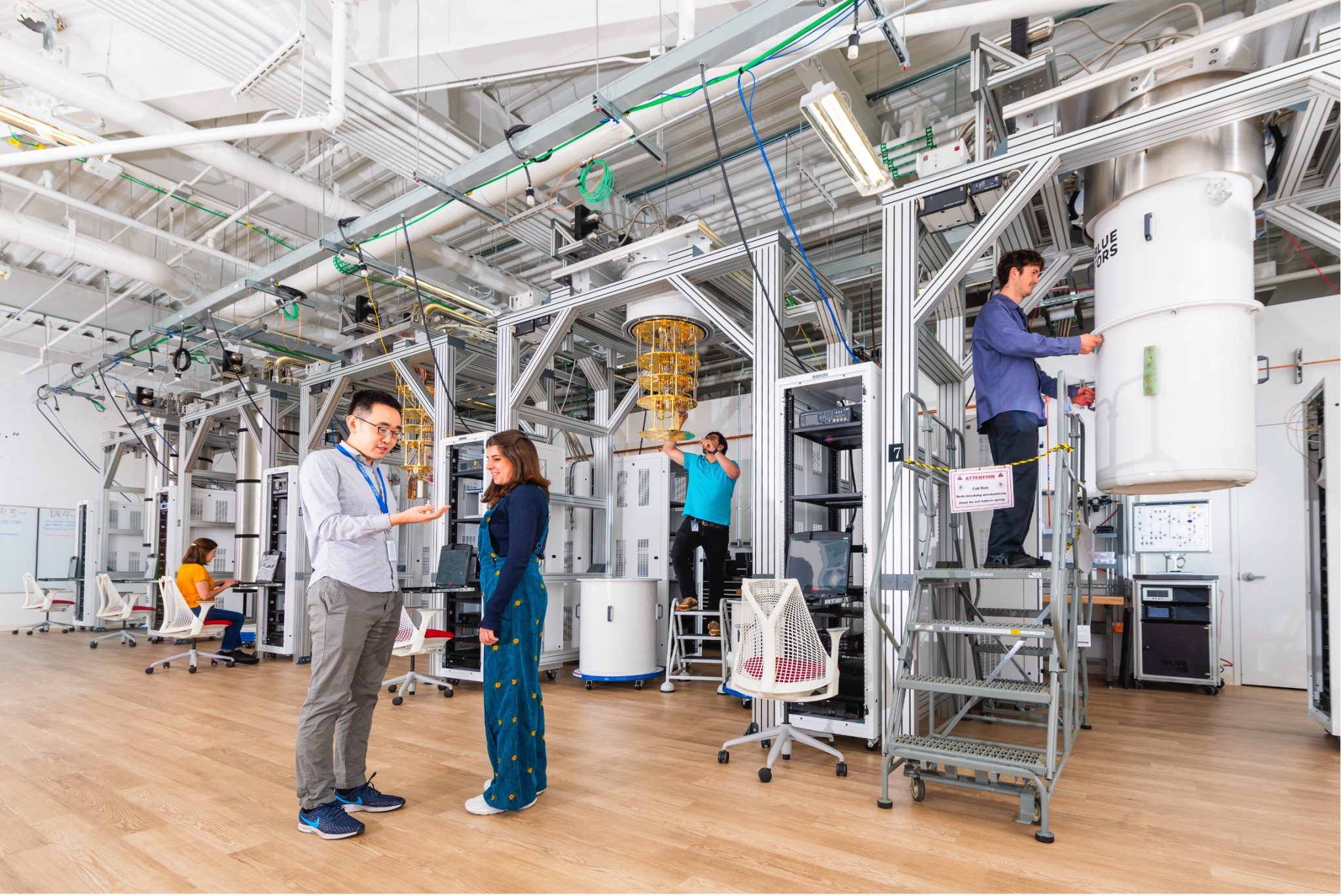
Researchers collaborating on the development of quantum technologies at the SQMS Quantum Garage, one of the quantum research facilities developed by the Centre. ©Ryan Postel, Fermilab

From bit to qubit. The quantum future of computing

Panoramica della mappa di FCC

Physics looks ahead to FCC

April 6, 2026 - A close-up view taken by the Artemis II crew of the moon surface. Credi NASA

Moon

30 April 2026 Read more Moon
gruppo fisici

Investing in knowledge