 Despite its name, dark matter might not be so dark, but associated with electromagnetic radiation. This is the hypothesis of a team of scientists of the INFN Turin, Roma Tre and Trieste sections, of the INAF and of the Chinese Academy of Science. The study, published in Physical Review Letters (PRL), describes a possiblecorrelation between the extragalactic gamma emission captured by the Fermi space telescope, in which INFN and INAF collaborate, and the distribution of cosmic dark matter rebuilt from the catalogue of 2MASS (Two Micron All Sky Survey) galaxies. According to the authors, this could be an indirect imprint of dark matter: its first possible non-gravitational trace. The study shows, in fact, that the signal is compatible with the hypothesis that dark matter could be constituted by so-called Weakly Interacting Massive Particles (WIMP). WIMPs interact weakly and, so, they should go through a possible mutual annihilation or decay process. The goal of the reaserch is looking outside the group of galaxies which is part of our Milky Way, the so-called Local Group, for a gamma signal which can be associated with these processes. To do this, the gamma radiation map measured by the Fermi satellite was correlated with the distribution of 2MASS galaxies and it was possible to demonstrate that the signal that was found in this way is compatible with WIMPs”

La fisica teorica aiuta a svelare i meccanismi molecolari del DNA extra-cromosomale nei tumori

Ai Laboratori Nazionali di Legnaro, si apre un nuovo capitolo nello studio dell’origine degli elementi pesanti

Ai Laboratori Nazionali del Sud, nuove misure sull’elio-4 sfidano i modelli nucleari
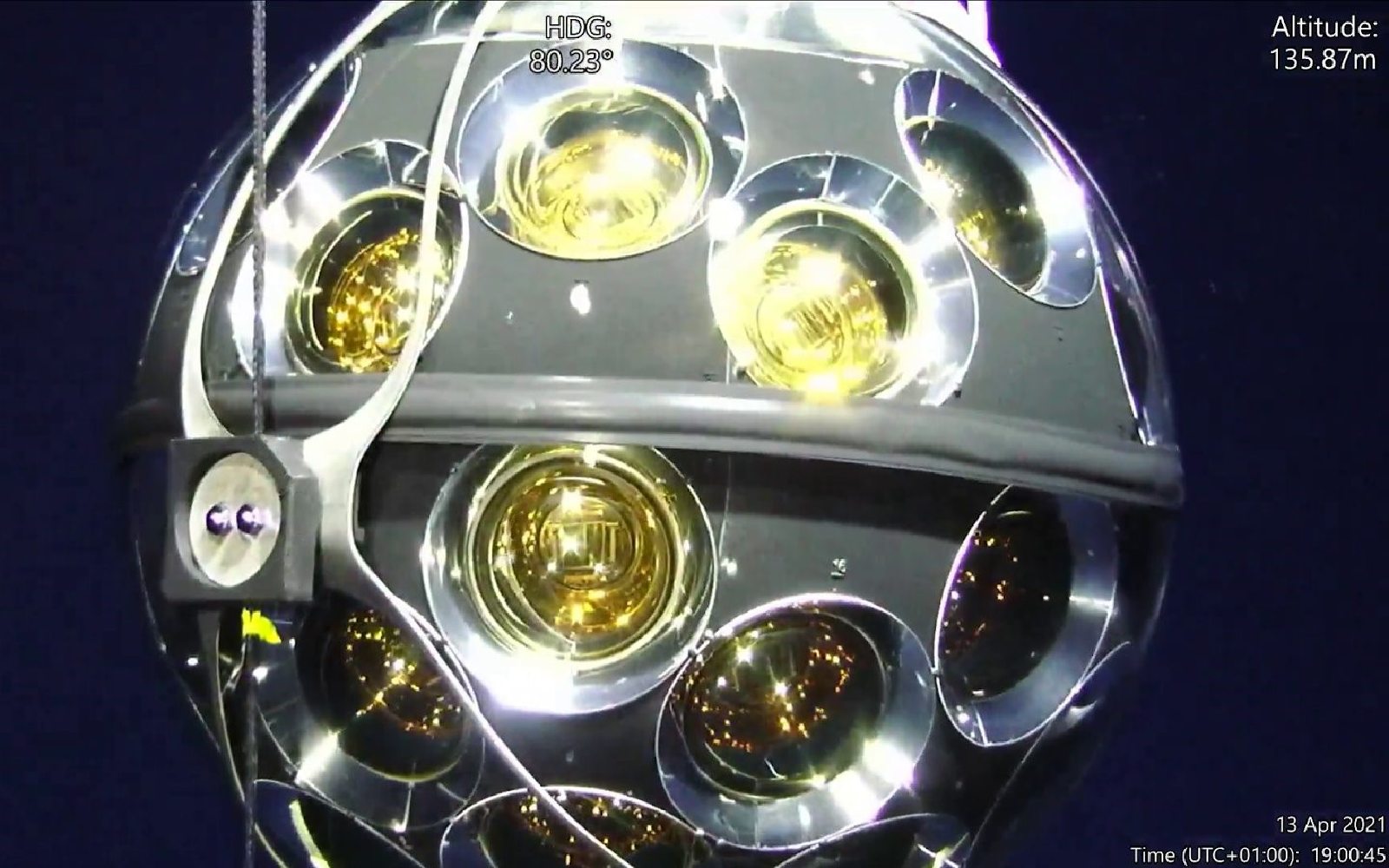
16 milioni di euro dalla Regione Siciliana per il progetto KM3Ne(X)T

Michele Punturo è il direttore di ICRANet
14 Settembre 2026
Leggi di più Michele Punturo è il direttore di ICRANet
