COSMIC ANTIMATTER AT LHCb (2)
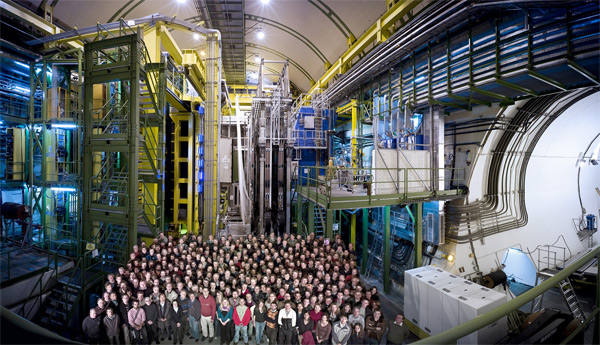 L’esperimento LHCb, al Large Hadron Collider (LHC) del CERN, è riuscito a ricreare in laboratorio le collisioni cosmiche fra protoni, accelerati nell’anello a un’energia di 6,5 TeV, e atomi di elio a riposo. Si tratta della prima misura di produzione di antimateria in collisioni protone-elio, e
The LHCb experiment has managed to recreate in the laboratory cosmic collisions between protons, accelerated in the ring to an energy of 6.5 TeV, and helium atoms at rest. This is the first measurement of the production of antimatter in proton-helium collisions and represents, therefore, a significant step towards a better understanding of the production of secondary antiprotons in the propagation of cosmic rays. In particular, this data is important for a more accurate interpretation of the results of the PAMELA and AMS-02 space experiments on the measurement of the relationship between protons and antiprotons in cosmic rays. To run the new measurement, the LHCb physicists injected a tiny amount of helium gas into the high-vacuum tube where the LHC beams circulate in the vicinity of their detector, using a device evocatively called SMOG. The pressure of the gas is less than a billionth of an atmosphere, which is necessary not to alter the LHC beams, but thanks to the intensity of the proton beams it is nevertheless sufficient to complete the measurement in a few hours. Thanks to the
ability to distinguish the antiprotons from the other charged particles, a speciality of the experiment, the LHCb physicists measured the probability that antiprotons are formed in these collisions, that take place precisely at the energy relevant for the current measurements in space. To measure the density of this gaseous target with accuracy, an ad hoc technique was developed: counting the individual atomic electrons which, “hit” by the protons of the beam, are projected inside the detector. This process is known with great precision, and thus makes it possible to calculate the number of helium atoms exposed to the beam. The measurement carried out could contribute to reducing the current uncertainties on the estimate of the number of secondary antiprotons in cosmic rays, thus providing the possibility of a clearer interpretation of the difficult measurements made on antiprotons by PAMELA and AMS-02. This
is also a clear demonstration of the importance of the multidisciplinary approach in science


